

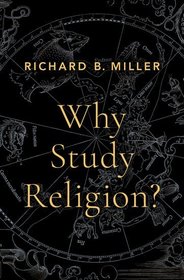
Why Study Religion?
-
20% KEDVEZMÉNY?
- A kedvezmény csak az 'Értesítés a kedvenc témákról' hírlevelünk címzettjeinek rendeléseire érvényes.
- Kiadói listaár GBP 38.99
-
17 603 Ft (16 765 Ft + 5% áfa)
Az ár azért becsült, mert a rendelés pillanatában nem lehet pontosan tudni, hogy a beérkezéskor milyen lesz a forint árfolyama az adott termék eredeti devizájához képest. Ha a forint romlana, kissé többet, ha javulna, kissé kevesebbet kell majd fizetnie.
- Kedvezmény(ek) 20% (cc. 3 521 Ft off)
- Kedvezményes ár 14 083 Ft (13 412 Ft + 5% áfa)
- A kedvezmény érvényes eddig: 2026. június 30.
Iratkozzon fel most és részesüljön kedvezőbb árainkból!
Feliratkozom
17 603 Ft

Beszerezhetőség
Becsült beszerzési idő: A Prosperónál jelenleg nincsen raktáron, de a kiadónál igen. Beszerzés kb. 3-5 hét..
A Prosperónál jelenleg nincsen raktáron.
Why don't you give exact delivery time?
A beszerzés időigényét az eddigi tapasztalatokra alapozva adjuk meg. Azért becsült, mert a terméket külföldről hozzuk be, így a kiadó kiszolgálásának pillanatnyi gyorsaságától is függ. A megadottnál gyorsabb és lassabb szállítás is elképzelhető, de mindent megteszünk, hogy Ön a lehető leghamarabb jusson hozzá a termékhez.
A termék adatai:
- Kiadó OUP USA
- Megjelenés dátuma 2023. január 12.
- ISBN 9780197566817
- Kötéstípus Keménykötés
- Terjedelem384 oldal
- Méret 166x242x32 mm
- Súly 644 g
- Nyelv angol 270
Kategóriák
Rövid leírás:
Why Study Religion? offers an alternative framework, Critical Humanism, for thinking about the purposes of the discipline. Richard B. Miller theorizes about the ends rather than the means of humanistic scholarship. He argues that the future of religious studies will depend on how well it can articulate its goals as a basis for motivating scholarship in the field.
TöbbHosszú leírás:
Can the study of religion be justified? Scholarship in religion, especially work in "theory and method," is preoccupied with matters of research procedure and thus inarticulate about the goals that motivate scholarship in the field. For that reason, the field suffers from a crisis of rationale. Richard B. Miller identifies six prevailing methodologies in the field, and then offers an alternative framework for thinking about the purposes of the discipline. Shadowing these various methodologies, he notes, is a Weberian scientific ideal for studying religion, one that aspires to value-neutrality. This ideal fortifies a "regime of truth" that undercuts efforts to think normatively and teleologically about the field's purpose and value. Miller's alternative framework, Critical Humanism, theorizes about the ends rather than the means of humanistic scholarship.
Why Study Religion? offers an account of humanistic inquiry that is held together by four values: Post-critical Reasoning, Social Criticism, Cross-cultural Fluency, and Environmental Responsibility. Ordered to such purposes, Miller argues, scholars of religion can relax their commitment to matters of methodological procedure and advocate for the value of studying religion. The future of religious studies will depend on how well it can articulate its goals as a basis for motivating scholarship in the field.
This brilliant book is both a powerful criticism of the current state of religious studies and an impassioned plea for an entirely new approach.... Essential.
Tartalomjegyzék:
Acknowledgments
I. A Crisis of Rationale
Chapter 1: On Justifying the Study of Religion
Chapter 2: The Ethics of Religious Studies
II. A Regime of Truth
Chapter 3: Interpretation, Comparison, and the History of Religions
Chapter 4: Scientific Rationality and Causal Explanation
Chapter 5: Existential Symbolism and Theological Anthropology
Chapter 6: Embodied Practice and Materialistic Phenomenology
Chapter 7: Genealogy, Ideology, and Critical Theory
Chapter 8: Philosophy, Normativity, and Metacriticism
III. Purposes, Desires, and Critical Humanism
Chapter 9: Religious Studies and the Values of Critical Humanism
1. The End of Religious Studies
2. Acts and Moral Agency
3. Critical Humanism
4. Four Values
5. Exemplary Works in the Study of Religion
6. Critical Humanism and the Ethics of Religious Studies
Epilogue: Critical Humanism as a Vocation

