

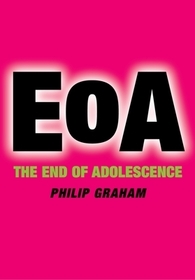
The End of Adolescence
Exposing the Myths About the Teenage Years
Sorozatcím: Oxford Medical Publications;
-
10% KEDVEZMÉNY?
- A kedvezmény csak az 'Értesítés a kedvenc témákról' hírlevelünk címzettjeinek rendeléseire érvényes.
- Kiadói listaár GBP 48.49
-
21 893 Ft (20 850 Ft + 5% áfa)
Az ár azért becsült, mert a rendelés pillanatában nem lehet pontosan tudni, hogy a beérkezéskor milyen lesz a forint árfolyama az adott termék eredeti devizájához képest. Ha a forint romlana, kissé többet, ha javulna, kissé kevesebbet kell majd fizetnie.
- Kedvezmény(ek) 10% (cc. 2 189 Ft off)
- Kedvezményes ár 19 703 Ft (18 765 Ft + 5% áfa)
Iratkozzon fel most és részesüljön kedvezőbb árainkból!
Feliratkozom
21 893 Ft

Beszerezhetőség
Megrendelésre a kiadó utánnyomja a könyvet. Rendelhető, de a szokásosnál kicsit lassabban érkezik meg.
Why don't you give exact delivery time?
A beszerzés időigényét az eddigi tapasztalatokra alapozva adjuk meg. Azért becsült, mert a terméket külföldről hozzuk be, így a kiadó kiszolgálásának pillanatnyi gyorsaságától is függ. A megadottnál gyorsabb és lassabb szállítás is elképzelhető, de mindent megteszünk, hogy Ön a lehető leghamarabb jusson hozzá a termékhez.
A termék adatai:
- Kiadó OUP Oxford
- Megjelenés dátuma 2004. július 1.
- ISBN 9780198526247
- Kötéstípus Puhakötés
- Terjedelem278 oldal
- Méret 234x157x15 mm
- Súly 451 g
- Nyelv angol 0
Kategóriák
Rövid leírás:
On television, in the newspapers, even in textbooks of psychology, the teen years are portrayed as 'bad news'. Adolescents are seen as moody, rebellious, promiscuous, immature, aggressive and lazy. This controversial new book puts forward an entirely new way of looking at adolescence. It will be of great value to parents of teenagers and those whose children are just about to become teenagers, as well as teachers, psychologists, and anyone whose work brings them in touch with young people.
TöbbHosszú leírás:
On television, in the newspapers, even in textbooks of psychology, the teen years are portrayed as 'bad news'. Adolescents are seen as moody, rebellious, promiscuous, immature, aggressive and lazy. Their behaviour is seen as getting worse as we move into the twenty first century. In fact the majority of young people have none of these objectionable characteristics. Adolescents have always been stigmatised as they are today and it is widely thought that it is 'natural' for the teens to be a 'difficult' phase of life. But it is the adult world that has created the world of adolescence and the adult world that is finding it difficult to live with what it has manufactured.
This book puts forward an entirely new way of looking at adolescence. Written by a leading child psychiatrist, it starts by describing the myths that pervade the popular view of adolescence. After a brief description of the history of adolescence, it goes on to examine the way the teens actually function in families, giving particular attention to approaches that result in positive outcomes. Discussing moodiness, conflict, sexual behaviour, drugs and alcohol, and eating patterns, it adopts the same questioning but positive approach. The book then looks at how the sense of frustration and failure many teenagers experience at school and in their neighbourhoods might be overcome by giving them a level of responsibility that matches their competence. This book will be of great value to parents of teenagers and those whose children are just about to become teenagers, as well as teachers, psychologists, and anyone whose work brings them in touch with young people.
The book is full of well-thought-out suggestions for promoting adolescent adjustment and responsibility in the home, school and community. Parents and teachers will come away from reading this book feeling more positive about adolescents and their potential. This is the book's aim - iti s not a 'how to' manual for helping troubled teenagers; it is more about prevention than cure.
Tartalomjegyzék:
Introduction
The unpopular age
The invention of adolescence
Teens in the family
More cheerful than moody
Everyday hassles, conflict and crime
Sex: same hormones, different lives
Alcohol, drugs: having fun or playing with fire?
Eating well and feeling good
Schools: the solution or the problem?
Leisure and work
Joining up the teens again

