

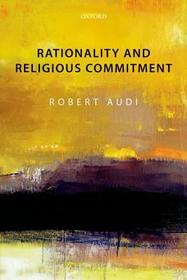
Rationality and Religious Commitment
-
10% KEDVEZMÉNY?
- A kedvezmény csak az 'Értesítés a kedvenc témákról' hírlevelünk címzettjeinek rendeléseire érvényes.
- Kiadói listaár GBP 35.49
-
16 023 Ft (15 260 Ft + 5% áfa)
Az ár azért becsült, mert a rendelés pillanatában nem lehet pontosan tudni, hogy a beérkezéskor milyen lesz a forint árfolyama az adott termék eredeti devizájához képest. Ha a forint romlana, kissé többet, ha javulna, kissé kevesebbet kell majd fizetnie.
- Kedvezmény(ek) 10% (cc. 1 602 Ft off)
- Kedvezményes ár 14 421 Ft (13 734 Ft + 5% áfa)
Iratkozzon fel most és részesüljön kedvezőbb árainkból!
Feliratkozom
16 023 Ft

Beszerezhetőség
Megrendelésre a kiadó utánnyomja a könyvet. Rendelhető, de a szokásosnál kicsit lassabban érkezik meg.
Why don't you give exact delivery time?
A beszerzés időigényét az eddigi tapasztalatokra alapozva adjuk meg. Azért becsült, mert a terméket külföldről hozzuk be, így a kiadó kiszolgálásának pillanatnyi gyorsaságától is függ. A megadottnál gyorsabb és lassabb szállítás is elképzelhető, de mindent megteszünk, hogy Ön a lehető leghamarabb jusson hozzá a termékhez.
A termék adatai:
- Kiadó OUP Oxford
- Megjelenés dátuma 2013. október 10.
- ISBN 9780199686612
- Kötéstípus Puhakötés
- Terjedelem336 oldal
- Méret 234x157x26 mm
- Súly 540 g
- Nyelv angol 0
Kategóriák
Rövid leírás:
Can it be rational to be religious? Robert Audi gives a persuasive positive answer through an account of rationality and a rich, nuanced understanding of what religious commitment means. It is not just a matter of belief, but of emotions and attitudes such as faith and hope, of one's outlook on the world, and of commitment to live in certain ways.
TöbbHosszú leírás:
Rationality and Religious Commitment shows how religious commitment can be rational and describes the place of faith in the postmodern world. It portrays religious commitment as far more than accepting doctrines--it is viewed as a kind of life, not just as an embrace of tenets. Faith is conceived as a unique attitude. It is irreducible to belief but closely connected with both belief and conduct, and intimately related to life's moral, political, and aesthetic dimensions.
Part One presents an account of rationality as a status attainable by mature religious people--even those with a strongly scientific habit of mind. Part Two describes what it means to have faith, how faith is connected with attitudes, emotions, and conduct, and how religious experience may support it.
Part Three turns to religious commitment and moral obligation and to the relation between religion and politics. It shows how ethics and religion can be mutually supportive even though ethics provides standards of conduct independently of theology. It also depicts the integrated life possible for the religiously committed--a life with rewarding interactions between faith and reason, religion and science, and the aesthetic and the spiritual.
The book concludes with two major accounts. One explains how moral wrongs and natural disasters are possible under God conceived as having the knowledge, power, and goodness that make such evils so difficult to understand. The other account explores the nature of persons, human and divine, and yields a conception that can sustain a rational theistic worldview even in the contemporary scientific age.
Audi's qualified acceptance of the possibility of secular human flourishing is most welcome, as some Christian apologists have suggested the denial of this.
Tartalomjegyzék:
Preface
Part I: Epistemological Foundations: Rationality, Justification, and Knowledge
Rationality in Thought and Action
Justification, Knowledge, and Reasonableness
Part II. The Dimensions of Rational Religious Commitment
Belief, Faith, Acceptance, and Hope
The Elements of Religious Commitment
Experiential and Pragmatic Grounds for Religious Commitments
Religious Commitment and Moral Obligation
Part III. The Rationality of Religious Commitment in the Postmodern World
Religious Integration and Human Flourishing
Internal Challenges to the Rationality of Religious Commitment
The Problem of Evil
The Challenge of Naturalism
Conclusion
Bibliography
Index

