

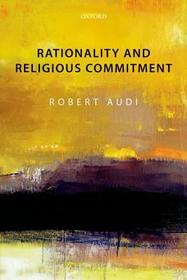
Rationality and Religious Commitment
- Publisher's listprice GBP 35.49
-
16 023 Ft (15 260 Ft + 5% VAT)
The price is estimated because at the time of ordering we do not know what conversion rates will apply to HUF / product currency when the book arrives. In case HUF is weaker, the price increases slightly, in case HUF is stronger, the price goes lower slightly.
- Discount 10% (cc. 1 602 Ft off)
- Discounted price 14 421 Ft (13 734 Ft + 5% VAT)
Subcribe now and take benefit of a favourable price.
Subscribe
16 023 Ft

Availability
printed on demand
Why don't you give exact delivery time?
Delivery time is estimated on our previous experiences. We give estimations only, because we order from outside Hungary, and the delivery time mainly depends on how quickly the publisher supplies the book. Faster or slower deliveries both happen, but we do our best to supply as quickly as possible.
Product details:
- Publisher OUP Oxford
- Date of Publication 10 October 2013
- ISBN 9780199686612
- Binding Paperback
- No. of pages336 pages
- Size 234x157x26 mm
- Weight 540 g
- Language English 0
Categories
Short description:
Can it be rational to be religious? Robert Audi gives a persuasive positive answer through an account of rationality and a rich, nuanced understanding of what religious commitment means. It is not just a matter of belief, but of emotions and attitudes such as faith and hope, of one's outlook on the world, and of commitment to live in certain ways.
MoreLong description:
Rationality and Religious Commitment shows how religious commitment can be rational and describes the place of faith in the postmodern world. It portrays religious commitment as far more than accepting doctrines--it is viewed as a kind of life, not just as an embrace of tenets. Faith is conceived as a unique attitude. It is irreducible to belief but closely connected with both belief and conduct, and intimately related to life's moral, political, and aesthetic dimensions.
Part One presents an account of rationality as a status attainable by mature religious people--even those with a strongly scientific habit of mind. Part Two describes what it means to have faith, how faith is connected with attitudes, emotions, and conduct, and how religious experience may support it.
Part Three turns to religious commitment and moral obligation and to the relation between religion and politics. It shows how ethics and religion can be mutually supportive even though ethics provides standards of conduct independently of theology. It also depicts the integrated life possible for the religiously committed--a life with rewarding interactions between faith and reason, religion and science, and the aesthetic and the spiritual.
The book concludes with two major accounts. One explains how moral wrongs and natural disasters are possible under God conceived as having the knowledge, power, and goodness that make such evils so difficult to understand. The other account explores the nature of persons, human and divine, and yields a conception that can sustain a rational theistic worldview even in the contemporary scientific age.
Audi's qualified acceptance of the possibility of secular human flourishing is most welcome, as some Christian apologists have suggested the denial of this.
Table of Contents:
Preface
Part I: Epistemological Foundations: Rationality, Justification, and Knowledge
Rationality in Thought and Action
Justification, Knowledge, and Reasonableness
Part II. The Dimensions of Rational Religious Commitment
Belief, Faith, Acceptance, and Hope
The Elements of Religious Commitment
Experiential and Pragmatic Grounds for Religious Commitments
Religious Commitment and Moral Obligation
Part III. The Rationality of Religious Commitment in the Postmodern World
Religious Integration and Human Flourishing
Internal Challenges to the Rationality of Religious Commitment
The Problem of Evil
The Challenge of Naturalism
Conclusion
Bibliography
Index

