

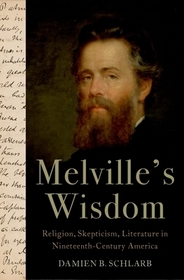
Melville's Wisdom
Religion, Skepticism, and Literature in Nineteenth-Century America
Sorozatcím: AAR Academy Series;
-
10% KEDVEZMÉNY?
- A kedvezmény csak az 'Értesítés a kedvenc témákról' hírlevelünk címzettjeinek rendeléseire érvényes.
- Kiadói listaár GBP 74.00
-
35 353 Ft (33 670 Ft + 5% áfa)
Az ár azért becsült, mert a rendelés pillanatában nem lehet pontosan tudni, hogy a beérkezéskor milyen lesz a forint árfolyama az adott termék eredeti devizájához képest. Ha a forint romlana, kissé többet, ha javulna, kissé kevesebbet kell majd fizetnie.
- Kedvezmény(ek) 10% (cc. 3 535 Ft off)
- Kedvezményes ár 31 818 Ft (30 303 Ft + 5% áfa)
Iratkozzon fel most és részesüljön kedvezőbb árainkból!
Feliratkozom
35 353 Ft

Beszerezhetőség
Becsült beszerzési idő: Várható beérkezés: 2026. január vége.
A Prosperónál jelenleg nincsen raktáron.
Why don't you give exact delivery time?
A beszerzés időigényét az eddigi tapasztalatokra alapozva adjuk meg. Azért becsült, mert a terméket külföldről hozzuk be, így a kiadó kiszolgálásának pillanatnyi gyorsaságától is függ. A megadottnál gyorsabb és lassabb szállítás is elképzelhető, de mindent megteszünk, hogy Ön a lehető leghamarabb jusson hozzá a termékhez.
A termék adatai:
- Kiadó OUP USA
- Megjelenés dátuma 2021. október 12.
- ISBN 9780197585566
- Kötéstípus Keménykötés
- Terjedelem272 oldal
- Méret 166x244x23 mm
- Súly 553 g
- Nyelv angol 203
Kategóriák
Rövid leírás:
In Melville's Wisdom: Religion, Skepticism, Literature in Nineteenth-Century America, Damien B. Schlarb explores the manner in which Herman Melville responds to the spiritual crisis of modernity by using the language of the biblical Old Testament wisdom books to moderate contemporary discourses on religion, skepticism, and literature. Schlarb argues that attending to Melville's engagement with the wisdom books (Job, Proverbs, and Ecclesiastes) can help us understand a paradox at the heart of American modernity: the simultaneous displacement and affirmation of biblical language and religious culture.
TöbbHosszú leírás:
In Melville's Wisdom: Religion, Skepticism, Literature in Nineteenth-Century America, Damien B. Schlarb explores the manner in which Herman Melville responds to the spiritual crisis of modernity by using the language of the biblical Old Testament wisdom books to moderate contemporary discourses on religion, skepticism, and literature. Schlarb argues that attending to Melville's engagement with the wisdom books (Job, Proverbs, and Ecclesiastes) can help us understand a paradox at the heart of American modernity: the simultaneous displacement and affirmation of biblical language and religious culture. In wisdom, which addresses questions of theology, radical skepticism, and the nature of evil, Melville finds an ethos of critical inquiry that allows him to embrace modern analytical techniques, such as higher biblical criticism. In the medium of literature, he articulates a new way of accessing the Bible by marrying the moral and spiritual didacticism of its language with the intellectual distance afforded by critical reflection, a hallmark of modern intellectual style.
Melville's Wisdom joins other works of post secular literary studies in challenging its own discipline's constitutive secularization narrative by rethinking modern, putatively secular cultural formations in terms of their reciprocity with religious concepts and texts. Schlarb foregrounds Melville's sustained, career-spanning concern with biblical wisdom, its formal properties, and its knowledge-creating potential. By excavating this project from his oeuvre, Melville's Wisdom shows how Melville celebrates intellectually rigorous, critical inquisitiveness, an attitude that we often associate with modernity but which Melville saw augured by the wisdom books. He finds in this attitude the means for avoiding the spiritually corrosive effects of skepticism.
It is a rich book filled with astute meditations on the connections between biblical wisdom and Melville's canon that will add a new level of depth and meaning to Melville and 19th century literature. This book would be a welcome addition to a culturally focused 19th century American humanities course and should be embraced in the historiography by Melville scholars.
Tartalomjegyzék:
Introduction
Chapter 1 Divine Justice and Sublime Suffering: The Book of Job
A. The Hoary Deep: Multi-perspectival Inquiry in Mardi
B. The Book of Many Jobs: The Literary Representations in Moby-Dick
C. What Job Taught the Lawyer: Moral Didacticism in "Bartleby; the Scrivener"
D. A Potsherd World: Suffering as Topography in The Encantadas
E. Job Critically Regarded: Materialism and Skepticism in The Confidence-Man
F. What to Do with Job
Chapter 2 Dread, Foolishness, Wisdom: The Book of Proverbs
A. Revolutionary Proverbs: Politics and Jurisprudence in Mardi
B. Fear God and the Rod: Religious Rhetoric of Scientism in "The Lightning-Rod Man"
C. The Avatar of Folly: The Battle against Wisdom in Modernity in The Confidence-Man
D. The Problem of Evil: The Reptilian Moderner in Billy Budd; Sailor
E. Melville and Wisdom Aphorisms
Chapter 3 Moderation, Self-Reflection, and Evil: The Book of Ecclesiastes
A. Wisdom as a Guidebook: Truth-Seeking as Way-Finding in Redburn
B. Wisdom as Corrective: Introspection in Moby-Dick
C. Seeking Too Intensely: The Problem of Radical Inquiry in Pierre
D. The Politics of Moderation: The Civil War as Religious Crisis in Battle-Pieces
E. Reflection and Critique in Wisdom
Conclusion: Melville's Wisdom

