

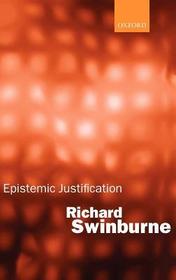
Epistemic Justification
-
10% KEDVEZMÉNY?
- A kedvezmény csak az 'Értesítés a kedvenc témákról' hírlevelünk címzettjeinek rendeléseire érvényes.
- Kiadói listaár GBP 52.00
-
23 478 Ft (22 360 Ft + 5% áfa)
Az ár azért becsült, mert a rendelés pillanatában nem lehet pontosan tudni, hogy a beérkezéskor milyen lesz a forint árfolyama az adott termék eredeti devizájához képest. Ha a forint romlana, kissé többet, ha javulna, kissé kevesebbet kell majd fizetnie.
- Kedvezmény(ek) 10% (cc. 2 348 Ft off)
- Kedvezményes ár 21 130 Ft (20 124 Ft + 5% áfa)
Iratkozzon fel most és részesüljön kedvezőbb árainkból!
Feliratkozom
23 478 Ft

Beszerezhetőség
Megrendelésre a kiadó utánnyomja a könyvet. Rendelhető, de a szokásosnál kicsit lassabban érkezik meg.
Why don't you give exact delivery time?
A beszerzés időigényét az eddigi tapasztalatokra alapozva adjuk meg. Azért becsült, mert a terméket külföldről hozzuk be, így a kiadó kiszolgálásának pillanatnyi gyorsaságától is függ. A megadottnál gyorsabb és lassabb szállítás is elképzelhető, de mindent megteszünk, hogy Ön a lehető leghamarabb jusson hozzá a termékhez.
A termék adatai:
- Kiadó OUP Oxford
- Megjelenés dátuma 2001. június 21.
- ISBN 9780199243785
- Kötéstípus Keménykötés
- Terjedelem270 oldal
- Méret 243x164x20 mm
- Súly 535 g
- Nyelv angol 0
Kategóriák
Rövid leírás:
Richard Swinburne offers an original treatment of a question at the heart of epistemology: what makes a belief a rational one, or one which the believer is justified in holding? He maps the many different accounts of epistemic justification, and distinguishes the different kinds of justification that they identify. He argues that while most kinds of justification are worth having, only one kind --internalist justification -- can guide a believer's actions. And he shows how probability theory can illuminate the role of empirical evidence in the justification of belief.
TöbbHosszú leírás:
Richard Swinburne offers an original treatment of a question at the heart of epistemology: what makes a belief a rational one, or one which the believer is justified in holding? He maps the various totally different and purportedly rival accounts that philosophers give of epistemic justification ('internalist' and 'externalist'), and argues that they are really accounts of different concepts. He distinguishes (as most epistemologists do not) between synchronic justification (justification at a time) and diachronic justification (synchronic justification resulting from adequate investigation) -- both internalist and externalist. He argus that most kinds of justification are worth having because (for different reasons) indicative of truth. However, it is only justification of intermalist kinds that can guide a believer's actions. Swinburne goes on to show the usefulness of the probability calculus in elucidating how empirical evidence makes beliefs probably true: every proposition has an intrinsic probability (an a priori probability independent of empirical evidence) which may be increased or decreased by empirical evidence.
This innovative and challenging book will refresh epistemology and rewrite its agenda.
Readers of Swinburne's rewarding book will get a glimpse from the inside of how a sophisticated doxastic foundationalist understands epistemic justification ... careful and meticulous exposition.
Tartalomjegyzék:
Introduction
Theory of Synchronic Justification
Belief
Probability
The Criteria of Logical Probability
Basicality
The Value of Synchronic Justification
The Value of Diachronic Justification
Knowledge
Appendix: Predictivism, Additional Notes, Index

