

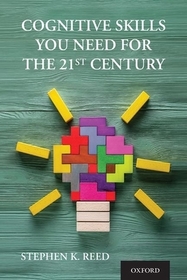
Cognitive Skills You Need for the 21st Century
-
10% KEDVEZMÉNY?
- A kedvezmény csak az 'Értesítés a kedvenc témákról' hírlevelünk címzettjeinek rendeléseire érvényes.
- Kiadói listaár GBP 31.99
-
15 283 Ft (14 555 Ft + 5% áfa)
Az ár azért becsült, mert a rendelés pillanatában nem lehet pontosan tudni, hogy a beérkezéskor milyen lesz a forint árfolyama az adott termék eredeti devizájához képest. Ha a forint romlana, kissé többet, ha javulna, kissé kevesebbet kell majd fizetnie.
- Kedvezmény(ek) 10% (cc. 1 528 Ft off)
- Kedvezményes ár 13 754 Ft (13 100 Ft + 5% áfa)
Iratkozzon fel most és részesüljön kedvezőbb árainkból!
Feliratkozom
15 283 Ft

Beszerezhetőség
Becsült beszerzési idő: Várható beérkezés: 2026. január vége.
A Prosperónál jelenleg nincsen raktáron.
Why don't you give exact delivery time?
A beszerzés időigényét az eddigi tapasztalatokra alapozva adjuk meg. Azért becsült, mert a terméket külföldről hozzuk be, így a kiadó kiszolgálásának pillanatnyi gyorsaságától is függ. A megadottnál gyorsabb és lassabb szállítás is elképzelhető, de mindent megteszünk, hogy Ön a lehető leghamarabb jusson hozzá a termékhez.
A termék adatai:
- Kiadó OUP USA
- Megjelenés dátuma 2020. augusztus 13.
- ISBN 9780197529003
- Kötéstípus Keménykötés
- Terjedelem300 oldal
- Méret 145x211x20 mm
- Súly 454 g
- Nyelv angol 87
Kategóriák
Rövid leírás:
Cognitive Skills You Need for the 21st Century begins with a Future of Jobs report that contrasts trending and declining skills required by the workforce in the year 2022. Trending skills include analytical thinking and innovation, active learning strategies, creativity, reasoning, and complex problem solving, and Reed discusses each in detail. Research in Cognitive Psychology, Education, and AI provides the foundation for acquiring these skills. Reed presents problems and personal anecdotes to encourage reflection, and concludes with three chapters on educating 21st century skills at all levels of instruction.
TöbbHosszú leírás:
In Cognitive Skills You Need for the 21st Century, Stephen Reed discusses a Future of Jobs report that contrasts trending and declining skills required by the workforce in the year 2022. Trending skills include analytical thinking and innovation, active learning strategies, creativity, reasoning, and complex problem solving. Part One on Acquiring Knowledge contains chapters on cognitive processes that are critical for learning. Part Two on Organizing Knowledge explains how matrices, networks, and hierarchies offer contrasting methods for visualizing organization. Part Three on Reasoning discusses visuospatial reasoning, reasoning from imperfect knowledge, and reasoning strategies. Part Four on Problem Solving focuses on the knowledge and strategies required to solve different types of problems, including those that involve design and dynamic changes. Part Five on Artificial Intelligence contains chapters on the Data Sciences, Explanatory Models, the Information Sciences, and General AI. Part Six on Education consists of three chapters on educating 21st century skills at all levels of instruction. Research in Cognitive Psychology, Education, and AI provides the foundation for acquiring these skills.
After helping our children during the past pandemic year with their homework, we are ready for a book offering cognitive self-help. In this work addressing the contemporary need for cross-disciplinary skills and creativity in problem-solving, Reed introduces, among other ideas, a newer more modern approach to learning mathematics. He begins by citing a study undertaken by the Educational Testing Service to determine the types of skills needed for success in the modern workforce. Key to Reed's purpose is to build connections between his own expertise in cognitive psychology and the call to understand and embrace aspects of artificial intelligence. Reed contextualizes his argument for different audiences. The book is well referenced and features an excellent index.
Tartalomjegyzék:
TOC
Preface
Introduction
Part One. Acquiring Knowledge
Chapter 1. Comprehension
Chapter 2. Action
Chapter 3. Categorization
Chapter 4. Abstraction
Part Two. Organizing Knowledge
Chapter 5. Matrices
Chapter 6. Networks
Chapter 7. Hierarchies
Part Three. Reasoning
Chapter 8. Visuospatial Reasoning
Chapter 9. Imperfect Knowledge
Chapter 10. Reasoning Strategies
Part Four. Problem Solving
Chapter 11. Problems
Chapter 12. Design
Chapter 13. Dynamics
Part Five. Artificial Intelligence
Chapter 14. Data Sciences
Chapter 15. Explainable AI
Chapter 16. Information Sciences
Chapter 17. General AI
Part Six. Education
Chapter 18. Complex Systems
Chapter 19. Computational and Mathematical Thinking
Chapter 20. Continuing Education
Notes
References

