

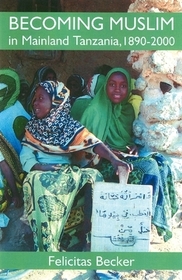
Becoming Muslim in Mainland Tanzania, 1890-2000
The Spread of Islam Beyond the Indian Ocean Coast
Sorozatcím: British Academy Monographs;
-
10% KEDVEZMÉNY?
- A kedvezmény csak az 'Értesítés a kedvenc témákról' hírlevelünk címzettjeinek rendeléseire érvényes.
- Kiadói listaár GBP 75.00
-
33 862 Ft (32 250 Ft + 5% áfa)
Az ár azért becsült, mert a rendelés pillanatában nem lehet pontosan tudni, hogy a beérkezéskor milyen lesz a forint árfolyama az adott termék eredeti devizájához képest. Ha a forint romlana, kissé többet, ha javulna, kissé kevesebbet kell majd fizetnie.
- Kedvezmény(ek) 10% (cc. 3 386 Ft off)
- Kedvezményes ár 30 476 Ft (29 025 Ft + 5% áfa)
Iratkozzon fel most és részesüljön kedvezőbb árainkból!
Feliratkozom
33 862 Ft

Beszerezhetőség
Becsült beszerzési idő: A Prosperónál jelenleg nincsen raktáron, de a kiadónál igen. Beszerzés kb. 3-5 hét..
A Prosperónál jelenleg nincsen raktáron.
Why don't you give exact delivery time?
A beszerzés időigényét az eddigi tapasztalatokra alapozva adjuk meg. Azért becsült, mert a terméket külföldről hozzuk be, így a kiadó kiszolgálásának pillanatnyi gyorsaságától is függ. A megadottnál gyorsabb és lassabb szállítás is elképzelhető, de mindent megteszünk, hogy Ön a lehető leghamarabb jusson hozzá a termékhez.
A termék adatai:
- Kiadó OUP Oxford
- Megjelenés dátuma 2008. szeptember 11.
- ISBN 9780197264270
- Kötéstípus Keménykötés
- Terjedelem390 oldal
- Méret 241x161x26 mm
- Súly 756 g
- Nyelv angol
- Illusztrációk 12 plates, 2 maps 0
Kategóriák
Rövid leírás:
Tanzania has moved from widespread conversion to Islam in the early twentieth century to recent bitter disputes over Islamic radicalism. Using a combination of government, mission and oral records, this volume examines the intellectual and social forces behind these transitions.
TöbbHosszú leírás:
We know that many people converted to Islam in colonial East Africa, but the why and how remain obscure. Recently, these Muslim congregations have come under scrutiny for producing Islamic radicals, but again the causes are poorly understood.
This book traces the history of Muslim congregations in a mainland Tanzanian region from their inception in the early twentieth century to the early 2000s, using the records of governments and missions as well as hundreds of interviews. It argues that rural villagers became Muslim of their own initiative, in the pursuit of more equitable relations with Muslim townspeople and among themselves. The egalitarian ethos of these rural Muslims resonated with that of Tanzania's movement for independence, in which they strongly participated. The current conflicts among Muslims are rooted partly in their shifting and problematic relationship with successive post-independence governments, but also in the transitions in gender relations, education and ritual observance to which Islamization has contributed.
This is a highly valuable book, which covers a lot of ground and is based on extensive archival research, including German colonial and missionary records. It also draws extensively on oral history - including about 300 interviews with local informants.
Tartalomjegyzék:
Introduction
Migration, trade, and religious change at the onset of colonialism, 1890-1905
From Muslim big men to rural waalimu, 1905-27
Teachers, elders and shehe: how Islam came to the villages
The growth of rural madrasa
The book, the wilderness, and the family: Islamic doctrine and African practice
The heritage of slavery and the educationalist shehe of the Sufi brotherhoods
New horizons: the era of independence, 1954-67
Internal debates and international influences: the rise of Islamic radicalism in the 1990s
Conclusion

