

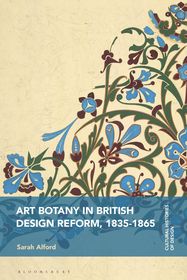
Art Botany in British Design Reform, 1835-1865
Sorozatcím: Cultural Histories of Design;
-
20% KEDVEZMÉNY?
- A kedvezmény csak az 'Értesítés a kedvenc témákról' hírlevelünk címzettjeinek rendeléseire érvényes.
- Kiadói listaár GBP 85.00
-
38 377 Ft (36 550 Ft + 5% áfa)
Az ár azért becsült, mert a rendelés pillanatában nem lehet pontosan tudni, hogy a beérkezéskor milyen lesz a forint árfolyama az adott termék eredeti devizájához képest. Ha a forint romlana, kissé többet, ha javulna, kissé kevesebbet kell majd fizetnie.
- Kedvezmény(ek) 20% (cc. 7 675 Ft off)
- Kedvezményes ár 30 702 Ft (29 240 Ft + 5% áfa)
- A kedvezmény érvényes eddig: 2026. június 30.
Iratkozzon fel most és részesüljön kedvezőbb árainkból!
Feliratkozom
38 377 Ft

Beszerezhetőség
Becsült beszerzési idő: A Prosperónál jelenleg nincsen raktáron, de a kiadónál igen. Beszerzés kb. 3-5 hét..
A Prosperónál jelenleg nincsen raktáron.
Why don't you give exact delivery time?
A beszerzés időigényét az eddigi tapasztalatokra alapozva adjuk meg. Azért becsült, mert a terméket külföldről hozzuk be, így a kiadó kiszolgálásának pillanatnyi gyorsaságától is függ. A megadottnál gyorsabb és lassabb szállítás is elképzelhető, de mindent megteszünk, hogy Ön a lehető leghamarabb jusson hozzá a termékhez.
A termék adatai:
- Kiadó Bloomsbury Publishing (UK)
- Megjelenés dátuma 2024. december 12.
- Kötetek száma Hardback
- ISBN 9781350350526
- Kötéstípus Keménykötés
- Terjedelem224 oldal
- Méret 236x160x20 mm
- Súly 660 g
- Nyelv angol
- Illusztrációk 61 bw illus 663
Kategóriák
Hosszú leírás:
Drawing on the fields of design history and the history of science, this book examines the important role that botanical science played in the emergence of Victorian design theory.
In early 19th-century Britain, a rapid influx of plants from other countries began to confuse the orders of classification. As these new specimens arrived in nurseries and conservatories, botanists revised and promoted a new taxonomy: the Natural System. In parallel, in 1835, British manufacturers faced a government inquiry in order to improve the output of the British design industry. They needed a nationally identifiable design aesthetic and the inquiry led to the creation of the Government Schools of Design and the Design Reform movement. This book explores how, whilst botanists used drawings to clarify new systems of plant classification, designers learnt 'art botany', the practice of basing decorative form and ornament on the hidden, natural laws that govern plant growth and structure. Design reformers used botany as a model for how to create and identify what is new and incorporate it into what was already familiar and meaningful, all within the purview of developing a professional field of practice.
Sarah Alford provides a rich, interdisciplinary study of how the fields of design and botanical science came together. Through a framework of material culture, Alford sheds new light on the work of leading botanists, designers and illustrators such as Sarah Drake, John Lindley, Richard Redgrave, Owen Jones and Christopher Dresser. This book reveals how the designation of what design reformers deemed appropriate for the surface decoration of material structures as varied as carpets, jugs, wallpaper, and furniture, was an embrace of botanical science as a source of fantasy and imagination.
Tartalomjegyzék:
Acknowledgments
List of Figures
Introduction
1. Multiple Affinities
2. Well-Spring
3. The Well-Spring and the Orchid
4. Natural Philosophy and the Crow's Foot Claret Jug
5. Plans and Elevations of Flowers
Conclusion
Bibliography
Index

