

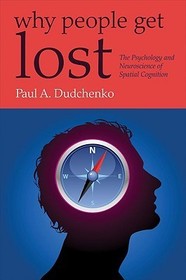
Why People Get Lost
The Psychology and Neuroscience of Spatial Cognition
-
10% KEDVEZMÉNY?
- A kedvezmény csak az 'Értesítés a kedvenc témákról' hírlevelünk címzettjeinek rendeléseire érvényes.
- Kiadói listaár GBP 75.00
-
40 957 Ft (32 250 Ft + 27% áfa)
Az ár azért becsült, mert a rendelés pillanatában nem lehet pontosan tudni, hogy a beérkezéskor milyen lesz a forint árfolyama az adott termék eredeti devizájához képest. Ha a forint romlana, kissé többet, ha javulna, kissé kevesebbet kell majd fizetnie.
- Kedvezmény(ek) 10% (cc. 4 096 Ft off)
- Kedvezményes ár 36 862 Ft (29 025 Ft + 27% áfa)
Iratkozzon fel most és részesüljön kedvezőbb árainkból!
Feliratkozom
40 957 Ft

Beszerezhetőség
Megrendelésre a kiadó utánnyomja a könyvet. Rendelhető, de a szokásosnál kicsit lassabban érkezik meg.
Why don't you give exact delivery time?
A beszerzés időigényét az eddigi tapasztalatokra alapozva adjuk meg. Azért becsült, mert a terméket külföldről hozzuk be, így a kiadó kiszolgálásának pillanatnyi gyorsaságától is függ. A megadottnál gyorsabb és lassabb szállítás is elképzelhető, de mindent megteszünk, hogy Ön a lehető leghamarabb jusson hozzá a termékhez.
A termék adatai:
- Kiadó OUP Oxford
- Megjelenés dátuma 2010. július 1.
- ISBN 9780199210862
- Kötéstípus Térkép
- Terjedelem314 oldal
- Méret 241x163x24 mm
- Súly 648 g
- Nyelv angol 0
Kategóriák
Rövid leírás:
At some point in our lives, most of us have been lost. How does this happen? What are the limits of our ability to find our way? Do we have an innate sense of direction? 'How people get lost' is a exciting exploration of the psychology and neuroscience of how we find our way.
TöbbHosszú leírás:
At some point in our lives, most of us have been lost. How does this happen? What are the limits of our ability to find our way? Do we have an innate sense of direction?
'How people get lost' reviews the psychology and neuroscience of navigation. It starts with a history of studies looking at how organisms solve mazes. It then reviews contemporary studies of spatial cognition, and the wayfinding abilities of adults and children. It then considers how specific parts of the brain provide a cognitive map and a neural compass. This book also considers the neurology of spatial disorientation, and the tendency of patients with Alzheimer's disease to lose their way.
Within the book, the author proposes that we get lost because our brain's compass becomes misoriented.
This book is written for anyone with an interest in navigation and the brain. It assumes no specialised knowledge of neuroscience, but covers recent advances in our understanding of how the brain represents space.
Tartalomjegyzék:
Preface
Acknowledgements
Dedication
On being lost
A history of "maze" psychology
Contemporary studies of spatial cognition
Human navigation
Spatial cognition in children
The hippocampus as a cognitive map
Place cells and brain imaging
The neural basis for a sense of direction: head direction neurons
Alzheimer's disease, the parietal lobe, and topographical disorientation
Why we get lost

