

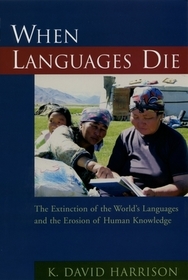
When Languages Die
The Extinction of the World's Languages and the Erosion of Human Knowledge
-
10% KEDVEZMÉNY?
- A kedvezmény csak az 'Értesítés a kedvenc témákról' hírlevelünk címzettjeinek rendeléseire érvényes.
- Kiadói listaár GBP 24.49
-
11 057 Ft (10 530 Ft + 5% áfa)
Az ár azért becsült, mert a rendelés pillanatában nem lehet pontosan tudni, hogy a beérkezéskor milyen lesz a forint árfolyama az adott termék eredeti devizájához képest. Ha a forint romlana, kissé többet, ha javulna, kissé kevesebbet kell majd fizetnie.
- Kedvezmény(ek) 10% (cc. 1 106 Ft off)
- Kedvezményes ár 9 951 Ft (9 477 Ft + 5% áfa)
Iratkozzon fel most és részesüljön kedvezőbb árainkból!
Feliratkozom
11 057 Ft

Beszerezhetőség
Csak rendelésre kapható a kiadónál, kissé időigényes.
Why don't you give exact delivery time?
A beszerzés időigényét az eddigi tapasztalatokra alapozva adjuk meg. Azért becsült, mert a terméket külföldről hozzuk be, így a kiadó kiszolgálásának pillanatnyi gyorsaságától is függ. A megadottnál gyorsabb és lassabb szállítás is elképzelhető, de mindent megteszünk, hogy Ön a lehető leghamarabb jusson hozzá a termékhez.
A termék adatai:
- Kiadó OUP USA
- Megjelenés dátuma 2008. július 24.
- ISBN 9780195372069
- Kötéstípus Puhakötés
- Terjedelem304 oldal
- Méret 233x167x17 mm
- Súly 426 g
- Nyelv angol
- Illusztrációk halftones, figures, tables 0
Kategóriák
Hosszú leírás:
It is commonly agreed by linguists and anthropologists that the majority of languages spoken now around the globe will likely disappear within our lifetime. The phenomenon known as language death has started to accelerate as the world has grown smaller.
This extinction of languages, and the knowledge therein, has no parallel in human history. K. David Harrison's book is the first to focus on the essential question, what is lost when a language dies? What forms of knowledge are embedded in a language's structure and vocabulary? And how harmful is it to humanity that such knowledge is lost forever?
Harrison spans the globe from Siberia, to North America, to the Himalayas and elsewhere, to look at the human knowledge that is slowly being lost as the languages that express it fade from sight. He uses fascinating anecdotes and portraits of some of these languages' last remaining speakers, in order to demonstrate that this knowledge about ourselves and the world is inherently precious and once gone, will be lost forever. This knowledge is not only our cultural heritage (oral histories, poetry, stories, etc.) but very useful knowledge about plants, animals, the seasons, and other aspects of the natural world--not to mention our understanding of the capacities of the human mind. Harrison's book is a testament not only to the pressing issue of language death, but to the remarkable span of human knowledge and ingenuity. It will fascinate linguists, anthropologists, and general readers.
In this scholarly yet very readable study, Harrison writes powerfully of the value and beauty of these vanishing knowledge systems.

