

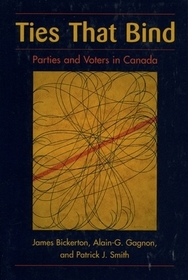
Ties that Bind
Parties and Voters in Canada
-
10% KEDVEZMÉNY?
- A kedvezmény csak az 'Értesítés a kedvenc témákról' hírlevelünk címzettjeinek rendeléseire érvényes.
- Kiadói listaár GBP 26.99
-
12 185 Ft (11 605 Ft + 5% áfa)
Az ár azért becsült, mert a rendelés pillanatában nem lehet pontosan tudni, hogy a beérkezéskor milyen lesz a forint árfolyama az adott termék eredeti devizájához képest. Ha a forint romlana, kissé többet, ha javulna, kissé kevesebbet kell majd fizetnie.
- Kedvezmény(ek) 10% (cc. 1 219 Ft off)
- Kedvezményes ár 10 967 Ft (10 445 Ft + 5% áfa)
Iratkozzon fel most és részesüljön kedvezőbb árainkból!
Feliratkozom
12 185 Ft

Beszerezhetőség
Csak rendelésre kapható a kiadónál, kissé időigényes.
Why don't you give exact delivery time?
A beszerzés időigényét az eddigi tapasztalatokra alapozva adjuk meg. Azért becsült, mert a terméket külföldről hozzuk be, így a kiadó kiszolgálásának pillanatnyi gyorsaságától is függ. A megadottnál gyorsabb és lassabb szállítás is elképzelhető, de mindent megteszünk, hogy Ön a lehető leghamarabb jusson hozzá a termékhez.
A termék adatai:
- Kiadó OUP Canada
- Megjelenés dátuma 1999. szeptember 16.
- ISBN 9780195412765
- Kötéstípus Puhakötés
- Terjedelem260 oldal
- Méret 229x153x15 mm
- Súly 368 g
- Nyelv angol 0
Kategóriák
Hosszú leírás:
Viewed from afar, electoral politics in Canada may seem a strange amalgam of predictability and surprise, stability and volatility. At the close of the twentieth century, the party in power is the same one that governed at the beginning of the century and for an inordinate amount of time in between. Yet the contemporary party system seems to bear little relation to that which characterized either turn-of-the-century or mid-century Canadian politics. In fact, several dramatic upheavals have taken place in the relationship between parties and voters. Elections clarify for parties and voters the current character of their relations. Partially obscured, vaguely calibrated, or hidden perils in the voter-party relationship will often rise to the surface during election periods, and the ties that bind diverse communities of voters to particular parties are tested.
Clearly, the relationship between Canadian voters and their political parties has seldom been an easy one, especially at election time. However, to describe it as unstable or volatile would be misleading. There have always been strong currents of continuity and stability in voter-party relations in Canada that are deeply rooted in regional political cultures and party histories, in enduring ties between ethnocultural or linguistic groupings and particualr parties, and in the economic and class cleavages that influence left-right ideological divisions.
Ties That Bind looks at the socio-economic, ethnolinguistic, and demographic factors in party support; the enduring quality of these social bases; the importance of geography in structuring variations in the voter-party relationship; and electoral change as a function of the strategic decisions of the parties and their leaders and the voter response these decisions evoke.
This is an excellent, nontechnical history and analysis of Canada's political parties and their relationship with the electorate since the country's inception....Useful for undergraduate courses in Canadian politics, political parties, and even Canadian history.
Tartalomjegyzék:
Acknowledgements
Notes on the Authors
Parties and Voters in Canada
the Progressive Conservatives: Broken Ties, Broken Dreams
The Liberals: Canada's 'Government Party'
The New Democrats: What's Left in Party Politics in Canada
The Reform Party: Reaching for the Right
The Bloc Quebecois and its Nationalist Predecessors: The Thread of Continuity in Quebec History
Continuity and Change in a New Era of Party Politics
Apendices

