

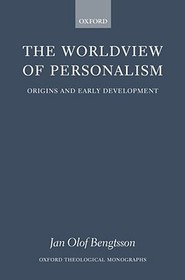
The Worldview of Personalism
Origins and Early Development
Sorozatcím: Oxford Theological Monographs;
-
10% KEDVEZMÉNY?
- A kedvezmény csak az 'Értesítés a kedvenc témákról' hírlevelünk címzettjeinek rendeléseire érvényes.
- Kiadói listaár GBP 187.50
-
84 656 Ft (80 625 Ft + 5% áfa)
Az ár azért becsült, mert a rendelés pillanatában nem lehet pontosan tudni, hogy a beérkezéskor milyen lesz a forint árfolyama az adott termék eredeti devizájához képest. Ha a forint romlana, kissé többet, ha javulna, kissé kevesebbet kell majd fizetnie.
- Kedvezmény(ek) 10% (cc. 8 466 Ft off)
- Kedvezményes ár 76 191 Ft (72 563 Ft + 5% áfa)
Iratkozzon fel most és részesüljön kedvezőbb árainkból!
Feliratkozom
84 656 Ft

Beszerezhetőség
Megrendelésre a kiadó utánnyomja a könyvet. Rendelhető, de a szokásosnál kicsit lassabban érkezik meg.
Why don't you give exact delivery time?
A beszerzés időigényét az eddigi tapasztalatokra alapozva adjuk meg. Azért becsült, mert a terméket külföldről hozzuk be, így a kiadó kiszolgálásának pillanatnyi gyorsaságától is függ. A megadottnál gyorsabb és lassabb szállítás is elképzelhető, de mindent megteszünk, hogy Ön a lehető leghamarabb jusson hozzá a termékhez.
A termék adatai:
- Kiadó OUP Oxford
- Megjelenés dátuma 2006. november 2.
- ISBN 9780199297191
- Kötéstípus Keménykötés
- Terjedelem320 oldal
- Méret 240x160x25 mm
- Súly 635 g
- Nyelv angol 0
Kategóriák
Rövid leírás:
A comprehensive and detailed account of the history of personalism - the system of thought that maintains the primacy and uniqueness of the human or divine person, on the basis that reality only has meaning through the conscious mind.
TöbbHosszú leírás:
Personalism is understood today as the name of an important current in twentieth-century thought which, inspired by the Christian and humanistic traditions of the West, has sought to deepen our understanding of the meaning and value of human personhood. Opposing both individualism and collectivism, personalism has stressed the uniqueness of each person, the meaning and value of interpersonal relations, and the unity that holds persons together and is, ultimately, also personal in itself: the person of God. Personalism's insights into the nature of personhood have broad implications for our view of ethics, politics, education, and religion. The history of personalism has, however, been poorly understood. Jan Olof Bengtsson shows that personalism began as early as the eighteenth century and was a central, international current of thought throughout the nineteenth century - that it was, in fact, more characteristic of the nineteenth century than of the twentieth.
Once in a great while a book comes along that is so crucial to an area of study as to be assured of setting the tone in that domain of scholarship for many decades to come... The fuller story of personalism's history was delayed largely because the research required to unearth it would have to be done in Europe and England and by a person fully fluent in at least English, German, and French. What was needed was a first-rate historian of ideas, and one willing to invest a decade in the project. Fortunately for us, such a scholar eventually appeared. Jan Olof Bengtsson has completed the book many other scholars awaited and sincerely hoped someone else would write. The result has been gratifying. The book... will become the handbook of those who study personalism and the reference book for those whose areas touch upon it... The book is economical in its language but grand in its sweep.
Tartalomjegyzék:
Introduction
The current view of personalism and its origins
Personal `reason' and impersonal `understanding'
The personal absolute
Personal unity-in-diversity
Early personalism and its meaning

