

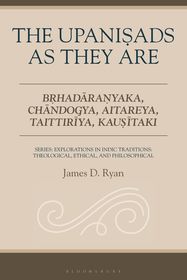
The Upanisads as They Are
Brhadaranyaka, Chandogya, Aitareya, Taittiriya, Kausitaki
Sorozatcím: Explorations in Indic Traditions: Theological, Ethical, and Philosophical;
-
20% KEDVEZMÉNY?
- A kedvezmény csak az 'Értesítés a kedvenc témákról' hírlevelünk címzettjeinek rendeléseire érvényes.
- Kiadói listaár GBP 85.00
-
38 377 Ft (36 550 Ft + 5% áfa)
Az ár azért becsült, mert a rendelés pillanatában nem lehet pontosan tudni, hogy a beérkezéskor milyen lesz a forint árfolyama az adott termék eredeti devizájához képest. Ha a forint romlana, kissé többet, ha javulna, kissé kevesebbet kell majd fizetnie.
- Kedvezmény(ek) 20% (cc. 7 675 Ft off)
- Kedvezményes ár 30 702 Ft (29 240 Ft + 5% áfa)
- A kedvezmény érvényes eddig: 2026. június 30.
Iratkozzon fel most és részesüljön kedvezőbb árainkból!
Feliratkozom
38 377 Ft

Beszerezhetőség
Még nem jelent meg, de rendelhető. A megjelenéstől számított néhány héten belül megérkezik.
Why don't you give exact delivery time?
A beszerzés időigényét az eddigi tapasztalatokra alapozva adjuk meg. Azért becsült, mert a terméket külföldről hozzuk be, így a kiadó kiszolgálásának pillanatnyi gyorsaságától is függ. A megadottnál gyorsabb és lassabb szállítás is elképzelhető, de mindent megteszünk, hogy Ön a lehető leghamarabb jusson hozzá a termékhez.
A termék adatai:
- Kiadó Bloomsbury Publishing (UK)
- Megjelenés dátuma 2026. június 11.
- ISBN 9798765158975
- Kötéstípus Keménykötés
- Terjedelem216 oldal
- Méret 228.6x152.4 mm
- Nyelv angol 700
Kategóriák
Rövid leírás:
"This book reads the Upanisads ""as they are,"" emphasizing aspects of them that are often completely overlooked, among them."
TöbbHosszú leírás:
"
This book argues that the early classical Upanisads constitute a ""field of wildflowers"" of insight that later Vedanta has tried to fashion into a proper garden.
These Upanisads (c. 800-300 BCE) are almost always read from the point of view of the later Vedantins, but they do not share in the neatly tailored characteristics of the mature Vedantic philosophies, representing, instead, divergent, variegated and even conflicting narratives. The author focuses on the earliest of these Upanisads: B?hadara?yaka, Chandogya, Aitareya, Taittiriya and Kau?itaki Upani?ads. These Upani?ads are read ""as they are,"" emphasizing aspects of these texts that are often completely overlooked, among them: their Vedic approach to contradiction, their frequent acceptance of means other than gnostic knowledge of or veneration of atman/brahman as a means for liberation, their positing of entities/realities other than atman or brahman as totalistic, and their frequent depiction of the human body or embodied human as a microcosm of or in identity with the universe. In course, the interpretations of the Upani?adic view, the Vedantic view, for each of these Upani?ads, of Sa?karacarya (c. 800 CE) and Ramanujacarya (c. 1100 CE), as primary examples in the range of Upani?adic interpreters, will be examined and often refuted
Tartalomjegyzék:
Preface
Abbreviations
Introduction
Chapter 1: B?hadara?yaka Upani?ad
Chapter 2: Chandogya Upani?ad
Chapter 3: Aitareya Upani?ad
Chapter 4: Taittiriya Upani?ad
Chapter 5: Kau?itaki Upani?ad
Conclusion
References
Endnotes

