

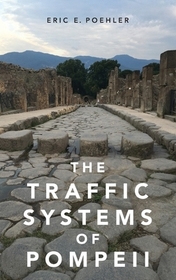
The Traffic Systems of Pompeii
-
20% KEDVEZMÉNY?
- A kedvezmény csak az 'Értesítés a kedvenc témákról' hírlevelünk címzettjeinek rendeléseire érvényes.
- Kiadói listaár GBP 107.50
-
48 536 Ft (46 225 Ft + 5% áfa)
Az ár azért becsült, mert a rendelés pillanatában nem lehet pontosan tudni, hogy a beérkezéskor milyen lesz a forint árfolyama az adott termék eredeti devizájához képest. Ha a forint romlana, kissé többet, ha javulna, kissé kevesebbet kell majd fizetnie.
- Kedvezmény(ek) 20% (cc. 9 707 Ft off)
- Kedvezményes ár 38 829 Ft (36 980 Ft + 5% áfa)
- A kedvezmény érvényes eddig: 2026. június 30.
Iratkozzon fel most és részesüljön kedvezőbb árainkból!
Feliratkozom
48 536 Ft

Beszerezhetőség
Becsült beszerzési idő: A Prosperónál jelenleg nincsen raktáron, de a kiadónál igen. Beszerzés kb. 3-5 hét..
A Prosperónál jelenleg nincsen raktáron.
Why don't you give exact delivery time?
A beszerzés időigényét az eddigi tapasztalatokra alapozva adjuk meg. Azért becsült, mert a terméket külföldről hozzuk be, így a kiadó kiszolgálásának pillanatnyi gyorsaságától is függ. A megadottnál gyorsabb és lassabb szállítás is elképzelhető, de mindent megteszünk, hogy Ön a lehető leghamarabb jusson hozzá a termékhez.
A termék adatai:
- Kiadó OUP USA
- Megjelenés dátuma 2017. november 2.
- ISBN 9780190614676
- Kötéstípus Keménykötés
- Terjedelem296 oldal
- Méret 239x155x27 mm
- Súly 590 g
- Nyelv angol
- Illusztrációk 62 illustrations 0
Kategóriák
Rövid leírás:
The Traffic Systems of Pompeii is the first sustained examination of the development of road infrastructure in Pompeii--from the archaic age to the eruption of Mt. Vesuvius in 79 CE--and its implications for urbanism in the Roman empire.
TöbbHosszú leírás:
The Traffic Systems of Pompeii is the first sustained examination of the development of road infrastructure in Pompeii--from the archaic age to the eruption of Mt. Vesuvius in 79 CE--and its implications for urbanism in the Roman empire. Eric E. Poehler, an authority on Pompeii's uniquely preserved urban structure, distills over five hundred instances of street-level "wear and tear" to reveal for the first time the rules of the ancient road. From his analysis of curbstones, cobbled surfaces, and ruts emerge the intricacies of the Pompeian traffic system and the changes to its operation over time. Though archaeological expertise forms the backbone of this book, its findings have equally important historical and architectural implications. Later chapters probe the impact of design and infrastructure on social roles and hierarchies among property owners in Pompeii, illuminating the economic forces that push and pull upon the shape of urban space. The final chapters set the road system into its broader context as one major infrastructural and administrative artifact of the Roman empire's deeply urban culture. Where does Pompeii's system fit within the history of Roman traffic control? Is it unique for its innovation, or only for the preservation that permitted its discovery? Poehler marshals evidence from across the Roman world to examine these questions. His measured and thoroughly researched answers make this study a critical step forward in our understanding of infrastructure in the ancient world.
This is a thorough, and very well documented book about a topic that has been waiting for a systematic treatment for decades.... The main line of argument always remains clear, and is where necessary clearly illustrated with high-quality maps, and pictures. This, in other words, is a book that will last. It has a clear relevance now, and will still have its relevance in twenty, thirty years' time.
Tartalomjegyzék:
Table of Contents:
Preface
Acknowledgements
List of Figures
List of Tables
Chapter One: Introduction
Chapter 2: The Development of Pompeii's Urban Street Network
Chapter Three: Surfaces of the Streetl
Chapter Four: Architecture of the Street
Chapter Five: Evidence of Traffic
Chapter Six: The Traffic Systems of Pompeii
Chapter 7: World of the Mulio
Chapter Eight: Traffic in the Roman World
Chapter Nine: Conclusion
Bibliography
Index

