

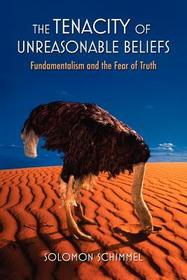
The Tenacity of Unreasonable Beliefs
Fundamentalism and the Fear of Truth
-
10% KEDVEZMÉNY?
- A kedvezmény csak az 'Értesítés a kedvenc témákról' hírlevelünk címzettjeinek rendeléseire érvényes.
- Kiadói listaár GBP 33.49
-
15 999 Ft (15 237 Ft + 5% áfa)
Az ár azért becsült, mert a rendelés pillanatában nem lehet pontosan tudni, hogy a beérkezéskor milyen lesz a forint árfolyama az adott termék eredeti devizájához képest. Ha a forint romlana, kissé többet, ha javulna, kissé kevesebbet kell majd fizetnie.
- Kedvezmény(ek) 10% (cc. 1 600 Ft off)
- Kedvezményes ár 14 399 Ft (13 713 Ft + 5% áfa)
Iratkozzon fel most és részesüljön kedvezőbb árainkból!
Feliratkozom
15 999 Ft

Beszerezhetőség
Megrendelésre a kiadó utánnyomja a könyvet. Rendelhető, de a szokásosnál kicsit lassabban érkezik meg.
Why don't you give exact delivery time?
A beszerzés időigényét az eddigi tapasztalatokra alapozva adjuk meg. Azért becsült, mert a terméket külföldről hozzuk be, így a kiadó kiszolgálásának pillanatnyi gyorsaságától is függ. A megadottnál gyorsabb és lassabb szállítás is elképzelhető, de mindent megteszünk, hogy Ön a lehető leghamarabb jusson hozzá a termékhez.
A termék adatai:
- Kiadó OUP USA
- Megjelenés dátuma 2012. december 20.
- ISBN 9780199964451
- Kötéstípus Puhakötés
- Terjedelem294 oldal
- Méret 234x156x15 mm
- Súly 413 g
- Nyelv angol 0
Kategóriák
Rövid leírás:
This book is a passionate yet analytical critique of Jewish, Christian, and Muslim scriptural fundamentalists. Schimmel examines the ways in which otherwise intelligent and educated Jews, Christians, and Muslims defend their belief in the divine authorship of the Bible or of the Koran, and other religious beliefs derived from those claims, against overwhelming evidence and argument to the contrary from science, scholarship, common sense, and rational analysis.
TöbbHosszú leírás:
The Tenacity of Unreasonable Beliefs is a passionate yet analytical critique of Jewish, Christian, and Muslim scriptural fundamentalists. Schimmel examines the ways in which otherwise intelligent and educated Jews, Christians, and Muslims defend their belief in the divine authorship of the Bible or of the Koran, and other religious beliefs derived from those claims, against overwhelming evidence and argument to the contrary from science, scholarship, common sense, and rational analysis. He also examines the motives, fears, and anxieties of scriptural fundamentalists that induce them to cling so tenaciously to their unreasonable beliefs.
Schimmel begins with reflections on his own journey from commitment to Orthodox Judaism, through doubts about its theological dogmas and doctrines, to eventual denial of their truth. He follows this with an examination of theological and philosophical debates about the proper relationships between faith, reason, and revelation. Schimmel then devotes separate chapters to Jewish, Christian, and Muslim scriptural fundamentalism, noting their similarities and differences. He analyzes in depth the psychological and social reasons why people acquire, maintain, and protect unreasonable religious beliefs, and how they do so. Schimmel also discusses unethical and immoral consequences of scriptural fundamentalism, such as gender inequality, homophobia, lack of intellectual honesty, self-righteousness, intolerance, propagation of falsehood, and in some instances, the advocacy of violence and terrorism. He concludes with a discussion of why, when, and where it is appropriate to critique, challenge, and combat scriptural fundamentalists. The Tenacity of Unreasonable Beliefs is thoughtful and provocative, written to encourage self-reflection and self-criticism, and to stimulate and to enlighten all who are interested in the psychology of religion and in religious fundamentalism.
This is a long-overdue book about a pressing subject by a brilliant writer qualified not only by his professional expertise but by his own life experiences. The question of why otherwise thoughtful people accept irrational religious fundamentalism is a difficult one to address in our age of oversensitivity about challenging deeply held religious beliefs. But Schimmel confronts the challenge head- on?
Tartalomjegyzék:
Chaper 1: Why This Book? Autobiographical Reflections
Chapter 2: Faith, Revelation, and Reason
Chapter 3: Jewish Biblical Fundamentalism
Chapter 4: Christian Biblical Fundamentalism
Chapter 5: Muslim Koranic Fundamentalism
Chapter 6: Acquiring and Protecting Unreasonable Beliefs
Chapter 7: On "Defundamentalizing" Fundamentalists
Notes
Bibliography
Index

