

-
10% KEDVEZMÉNY?
- A kedvezmény csak az 'Értesítés a kedvenc témákról' hírlevelünk címzettjeinek rendeléseire érvényes.
- Kiadói listaár GBP 88.00
-
39 732 Ft (37 840 Ft + 5% áfa)
Az ár azért becsült, mert a rendelés pillanatában nem lehet pontosan tudni, hogy a beérkezéskor milyen lesz a forint árfolyama az adott termék eredeti devizájához képest. Ha a forint romlana, kissé többet, ha javulna, kissé kevesebbet kell majd fizetnie.
- Kedvezmény(ek) 10% (cc. 3 973 Ft off)
- Kedvezményes ár 35 759 Ft (34 056 Ft + 5% áfa)
Iratkozzon fel most és részesüljön kedvezőbb árainkból!
Feliratkozom
39 732 Ft

Beszerezhetőség
Megrendelésre a kiadó utánnyomja a könyvet. Rendelhető, de a szokásosnál kicsit lassabban érkezik meg.
Why don't you give exact delivery time?
A beszerzés időigényét az eddigi tapasztalatokra alapozva adjuk meg. Azért becsült, mert a terméket külföldről hozzuk be, így a kiadó kiszolgálásának pillanatnyi gyorsaságától is függ. A megadottnál gyorsabb és lassabb szállítás is elképzelhető, de mindent megteszünk, hogy Ön a lehető leghamarabb jusson hozzá a termékhez.
A termék adatai:
- Kiadó OUP USA
- Megjelenés dátuma 2022. augusztus 16.
- ISBN 9780197581032
- Kötéstípus Keménykötés
- Terjedelem244 oldal
- Méret 164x239x26 mm
- Súly 499 g
- Nyelv angol
- Illusztrációk 4 b/w halftones 229
Kategóriák
Rövid leírás:
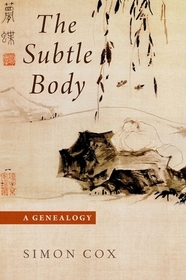
How does the soul relate to the body? Through the ages many religions and intellectual movements have posed answers to this question. Many have gravitated to the notion of the "subtle body," positing some kind of subtle entity that is neither soul nor body, but some mixture of the two. This book traces the history of this idea from the late Roman empire to the present day, touching on how philosophers, wizards, scholars, occultists, psychologists, and mystics have engaged with the idea over the past two thousand years.
TöbbHosszú leírás:
How does the soul relate to the body? Through the ages, innumerable religious and intellectual movements have proposed answers to this question. Many have gravitated to the notion of the "subtle body," positing some sort of subtle entity that is neither soul nor body, but some mixture of the two. Simon Cox traces the history of this idea from the late Roman Empire to the present day, touching on how philosophers, wizards, scholars, occultists, psychologists, and mystics have engaged with the idea over the past two thousand years.
This study is an intellectual history of the subtle body concept from its origins in late antiquity through the Renaissance into the Euro-American counterculture of the 1960's and 70's. It begins with a prehistory of the idea, rooted as it is in third-century Neoplatonism. It then proceeds to the signifier "subtle body" in its earliest English uses amongst the Cambridge Platonists. After that, it looks forward to those Orientalist fathers of Indology, who, in their earliest translations of Sanskrit philosophy relied heavily on the Cambridge Platonist lexicon, and thereby brought Indian philosophy into what had hitherto been a distinctly platonic discourse. At this point, the story takes a little reflexive stroll into the source of the author's own interest in this strange concept, looking at Helena Blavatsky and the Theosophical import, expression, and popularization of the concept. Cox then zeroes in on Aleister Crowley, focusing on the subtle body in fin de siècle occultism. Finally, he turns to Carl Jung, his colleague Frederic Spiegelberg, and the popularization of the idea of the subtle body in the Euro-American counterculture. This book is for anyone interested in yogic, somatic, or energetic practices, and will be very useful to scholars and area specialists who rely on this term in dealing with Hindu, Daoist, and Buddhist texts.
Finally—a book that tracks the idea of a subtle body within Western history. Cox starts from early Greek formulations of a subtle body through its renaissance renditions up through the especially fruitful period of modernity, with the West's extensive borrowing from Indian traditions, to offer a history of how we acquired that ubiquitous phantasm of the new-age subtle body. With his own story interspersed, Cox's delightful history captivates throughout.
Tartalomjegyzék:
Introduction: Restoring the Body of Light
1. Resurrecting an Old Idea
2. Morphologies of the Subtle Body
Chapter One: Vehicles of the Soul from Plato to Philoponus
1. Porphyry's Compounded Vehicle
2. The Divine Iamblichus
3. Platonism in Theory and Practice
4. Proclus: The Great Systematizer
5. Damascius: The Last Scholarch
6. John Philoponus and the Incredible Myth
Chapter Two: The Body of Light in Renaissance England
1. Subtle Bodies, Descartes, and Hobbes
2. Ralph Cudworth's Vehicles of the Soul
3. Plastick Nature as Ontological Mediator
4. Henry More's Cosmology
5. The Philosophical Romance of Joseph Glanvill
6. Anne Conway's Spiritual Monism
7. Cambridge Kabbalah
8. Arguing with Machines
Chapter Three: Oriental Origins
1. Chevalier de Ramsay and Chinese Orientalism
2. Henry Thomas Colebrooke
3. The Sheaths of Vedanta
4. Beyond Colebrooke
5. Max Müller's Six Systems
Kuden: Day of the Samurai
Chapter Four: The Wisdom of the Mahatmas
1. Tibetological Foundations
2. Helena Blavatsky and the Tibetan Mahatmas
3. Subtle Embodiment in Isis Unveiled
4. Subtle Bodies in The Secret Doctrine
5. The Creolization of the Subtle Body
6. Tibet Beyond Blavatsky
Kuden: The Secret Body of the Ninja
Chapter Five: Theosophical Gnosis and Astral Hermeneutics
1. Blavatsky's Astral Bodies
2. Annie Besant's Esoteric Christianity
3. Leadbeater's Christian Gnosis
4. G.R.S. Mead, the Subtle Body, and the Esoteric Tradition
5. Gnostic Bodies Unleashed
Chapter Six: Crowley, Orient, and Occult
1. From Theosophy to Crowleyanity
2. The Magus and the Orient
3. Crowley's Ontology?
4. The Subtle Body in Practice
5. From Creole to Hybrid
Kuden: The Daoist Alchemical Body
Chapter Seven: The Alchemical Body of Carl Jung
1. From Mead to Jung
2. The Secret of the Golden Flower
3. Subtle Bodies Top-Down or Ground-Up?
4. The Yogas of India and Tibet
5. Nietzsche, Snake, and Eagle
6. Subtle Body and Eschaton
Kuden: The Tibetan Vajra Body
Chapter Eight: From Eranos to Esalen
1. The Religion of No-Religion
2. Stanford Counterculture
3. Out of Esalen
Conclusion: What is the Subtle Body?
1. Radical Somatic Mutability
2. Last Thoughts on the Subtle Body
Bibliography

