

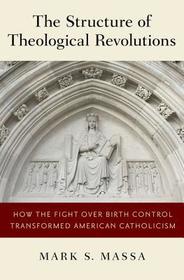
The Structure of Theological Revolutions
How the Fight Over Birth Control Transformed American Catholicism
-
10% KEDVEZMÉNY?
- A kedvezmény csak az 'Értesítés a kedvenc témákról' hírlevelünk címzettjeinek rendeléseire érvényes.
- Kiadói listaár GBP 30.99
-
13 991 Ft (13 325 Ft + 5% áfa)
Az ár azért becsült, mert a rendelés pillanatában nem lehet pontosan tudni, hogy a beérkezéskor milyen lesz a forint árfolyama az adott termék eredeti devizájához képest. Ha a forint romlana, kissé többet, ha javulna, kissé kevesebbet kell majd fizetnie.
- Kedvezmény(ek) 10% (cc. 1 399 Ft off)
- Kedvezményes ár 12 592 Ft (11 993 Ft + 5% áfa)
Iratkozzon fel most és részesüljön kedvezőbb árainkból!
Feliratkozom
13 991 Ft

Beszerezhetőség
Megrendelésre a kiadó utánnyomja a könyvet. Rendelhető, de a szokásosnál kicsit lassabban érkezik meg.
Why don't you give exact delivery time?
A beszerzés időigényét az eddigi tapasztalatokra alapozva adjuk meg. Azért becsült, mert a terméket külföldről hozzuk be, így a kiadó kiszolgálásának pillanatnyi gyorsaságától is függ. A megadottnál gyorsabb és lassabb szállítás is elképzelhető, de mindent megteszünk, hogy Ön a lehető leghamarabb jusson hozzá a termékhez.
A termék adatai:
- Kiadó OUP USA
- Megjelenés dátuma 2018. szeptember 27.
- ISBN 9780190851408
- Kötéstípus Keménykötés
- Terjedelem228 oldal
- Méret 160x236x20 mm
- Súly 476 g
- Nyelv angol 0
Kategóriák
Rövid leírás:
Drawing inspiration from Thomas Kuhn's classic work The Structure of Scientific Revolutions, Mark Massa argues that Pope Paul VI's encyclical Humanae Vitae caused a paradigm shift in American Catholic thought, one that has had far-reaching repercussions. How can theology-the study of God, whose nature is imagined to be eternal and unchanging- change over time? This is the essential question that The Structure of Theological Revolutions sets out to answer. Massa makes the controversial claim that Roman Catholic teaching on a range of important issues is considerably more provisional and arbitrary than many Catholics think.
TöbbHosszú leírás:
On July 29, 1968, Pope Paul VI ended years of discussion and study by Catholic theologians and bishops by issuing an encyclical on human sexuality and birth control entitled Humanae Vitae: "On Human Life." That document, which declared that "each and every marriage act must remain open to the transmission of life," lead to widespread dissent and division within the Church, particularly in the United States. The divide that Humanae Vitae opened up is still with us today.
Mark Massa argues that American Catholics did not simply ignore and dissent from the encyclical's teachings on birth control, but that they also began to question the entire system of natural law theology that had undergirded Catholic thought since the days of Aquinas. Natural law is central to Catholic theology, as some of its most important teachings on issues such as birth control, marriage, and abortion rest on natural law arguments. Drawing inspiration from Thomas Kuhn's classic work The Structure of Scientific Revolutions, Massa argues that Humanae Vitae caused a paradigm shift in American Catholic thought, one that has had far-reaching repercussions.
How can theology-the study of God, whose nature is imagined to be eternal and unchanging- change over time? This is the essential question that The Structure of Theological Revolutions sets out to answer. Massa makes the controversial claim that Roman Catholic teaching on a range of important issues is considerably more provisional and arbitrary than many Catholics think.
Ultimately, Massa provides a thorough discussion of four important thinkers within Catholic natural law traditions, all of whom have influenced Catholic discourse surrounding contraception.
Tartalomjegyzék:
Introduction: On How and Why Theology Changes
Part I: 1968
Chapter One: The End of the Catholic 19th Century in 1968
Part II: Paradigm Revolutions, 1960 to 1966
Chapter Two: The Structure of Scientific Revolutions
Chapter Three: "A Period of Crisis"
Part III: Other Voices, Other Paradigms
Chapter Four: Charles Curran and "Loyal Dissent"
Chapter Five: Germain Grisez and the "New Natural Law"
Chapter Six: Jean Porter and the Historical Project of Robust Realism
Chapter Seven: Lisa Sowle Cahill and the "Middle Way"
Part IV: So Now What?
Chapter Eight: "In the Beginning Was the Grab Bag"
Acknowledgements
Endnotes
Index

