

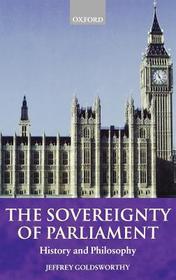
The Sovereignty of Parliament
History and Philosophy
-
10% KEDVEZMÉNY?
- A kedvezmény csak az 'Értesítés a kedvenc témákról' hírlevelünk címzettjeinek rendeléseire érvényes.
- Kiadói listaár GBP 185.00
-
83 527 Ft (79 550 Ft + 5% áfa)
Az ár azért becsült, mert a rendelés pillanatában nem lehet pontosan tudni, hogy a beérkezéskor milyen lesz a forint árfolyama az adott termék eredeti devizájához képest. Ha a forint romlana, kissé többet, ha javulna, kissé kevesebbet kell majd fizetnie.
- Kedvezmény(ek) 10% (cc. 8 353 Ft off)
- Kedvezményes ár 75 175 Ft (71 595 Ft + 5% áfa)
Iratkozzon fel most és részesüljön kedvezőbb árainkból!
Feliratkozom
83 527 Ft

Beszerezhetőség
Megrendelésre a kiadó utánnyomja a könyvet. Rendelhető, de a szokásosnál kicsit lassabban érkezik meg.
Why don't you give exact delivery time?
A beszerzés időigényét az eddigi tapasztalatokra alapozva adjuk meg. Azért becsült, mert a terméket külföldről hozzuk be, így a kiadó kiszolgálásának pillanatnyi gyorsaságától is függ. A megadottnál gyorsabb és lassabb szállítás is elképzelhető, de mindent megteszünk, hogy Ön a lehető leghamarabb jusson hozzá a termékhez.
A termék adatai:
- Kiadó Clarendon Press
- Megjelenés dátuma 1999. július 29.
- ISBN 9780198268932
- Kötéstípus Keménykötés
- Terjedelem330 oldal
- Méret 242x163x22 mm
- Súly 631 g
- Nyelv angol 0
Kategóriák
Rövid leírás:
In British constitutional law, the doctrine of parliamentary sovereignty maintains that Parliament has unlimited legislative authority. Critics have recently challenged this doctrine, on historical and philosophical grounds. This book describes its historical origins and development. The author identifies the reasons why it was adopted, examines its current legal basis, and responds to the critics. The book will be of interest to anyone involved in the legal, historical, or philosophical foundations of the British Constitution.
TöbbHosszú leírás:
The doctrine of parliamentary sovereignty has long been regarded as the most fundamental element of the British Constitution. It holds that Parliament has unlimited legislative authority, and that the courts have no authority to judge statutes invalid. This doctrine has now been criticized on historical and philosophical grounds and critics claim that it is a relatively recent invention of academic lawyers that superseded an earlier tradition in which Parliament's authority was limited to common law. The critics also argue that it is based on a misunderstanding of the relationship between statutory and common law, and is morally indefensible.
The Sovereignty of Parliament: History and Philosophy responds to these criticisms. It first defines and clarifies the concept of legislative sovereignty and then describes the historical origins and the development of the doctrine from the thirteenth to the end of the nineteenth century. Professor Goldsworthy goes on to identify many different reasons why persuaded statesmen, lawyers, and political theorists have endorsed the doctrine. He discusses the ideas of a large number of legal and political thinkers, including Fortescue, St German, Hooker, Coke, Bacon, Parker, Milton, Hobbes, Hale, Locke, Bolingbroke, Blackstone, and Burke. He shows that judges in Great Britain have never had authority to invalidate statutes, and that the doctrine is much older than is generally realized.
The book concludes by dealing with philosophical criticisms of the doctrine. Combining the insights of earlier thinkers with those of contemporary legal philosophers, it demonstrates that these criticisms are based on a defective understanding of the nature and foundations of law, and of the relationship between legislative authority and the common law. It argues that the doctrine is morally defensible, and refutes the thesis that the judges have authority to modify or reject it.
Professor Goldsworthy has written an important and valuable book, and historians of English political thought will find in it a broad and thoroughly informed account of the development of ideas on parliamentary sovereignty.
Tartalomjegyzék:
Introduction
Defining Parliamentary Sovereignty
A. Parliament and Sovereignty Defined
B. Sovereignty and Higher Law
From Bracton to the Reformation
A. Medieval Kingship, Law and Politics
B. Parliament and its Authority
C. Parliament as a Law-maker
D. Parliament and the Courts
E. Parliament in Legal Theory
F. Parliament and the Church
The Sixteenth Century
A. The Authority of Parliament Extended
B. The Supremacy of Parliament Recognised
C. Two Theories of the Authority of Parliament
D. Royalist Theories
E. Parliamentarian Theories
F. Prelude to the Seventeenth Century
From James I to the Restoration
A. Political Theories in Early Stuart England
B. Royalist Theories of the Authority of Parliament
C. Parliamentarian Theories of the Authority of Parliament
D. Common Law Theories of the Authority of Parliament
E. Parliamentary Sovereignty Affirmed
F. The Interregnum
From the Restoration to the Revolution
A. Monarchist Ideologies
B. Whig Ideology
After the Revolution
A. Whig and Tory Consensus
B. The Union of England and Scotland
C. Legal Sovereignty, Popular Sovereignty, and the Right of Resistance
D. Law-Making Power and Constitutional Principle
E. British Opinion During the American Crisis
F. Judicial Opinion and Legal Theory
G. American Revolutionary Constitutional Theory
H. The Reform Movement in Britain
The Nineteenth Century
Historical Conclusions
The Philosophical Foundations of Parliamentary Sovereignty
A. Parliamentary Sovereignty and Legal Philosophy
B. Law as the Foundation of Law-making Authority
C. The Common Law as the Foundation of Law-making Authority
D. Legal Principles as the Foundation of Law-making Authority
E. The Practice of British Officials
F. Official Consensus as the Foundation of Law-making Authority
G. The Argument From Extreme Cases
H. Further Arguments
I. The Alleged Necessity of Judicially Enforceable Constitutional Rights
Bibliography

