

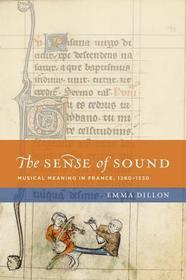
The Sense of Sound
Musical Meaning in France, 1260-1330
Sorozatcím: The New Cultural History of Music Series;
-
10% KEDVEZMÉNY?
- A kedvezmény csak az 'Értesítés a kedvenc témákról' hírlevelünk címzettjeinek rendeléseire érvényes.
- Kiadói listaár GBP 83.00
-
37 474 Ft (35 690 Ft + 5% áfa)
Az ár azért becsült, mert a rendelés pillanatában nem lehet pontosan tudni, hogy a beérkezéskor milyen lesz a forint árfolyama az adott termék eredeti devizájához képest. Ha a forint romlana, kissé többet, ha javulna, kissé kevesebbet kell majd fizetnie.
- Kedvezmény(ek) 10% (cc. 3 747 Ft off)
- Kedvezményes ár 33 727 Ft (32 121 Ft + 5% áfa)
Iratkozzon fel most és részesüljön kedvezőbb árainkból!
Feliratkozom
37 474 Ft

Beszerezhetőség
Megrendelésre a kiadó utánnyomja a könyvet. Rendelhető, de a szokásosnál kicsit lassabban érkezik meg.
Why don't you give exact delivery time?
A beszerzés időigényét az eddigi tapasztalatokra alapozva adjuk meg. Azért becsült, mert a terméket külföldről hozzuk be, így a kiadó kiszolgálásának pillanatnyi gyorsaságától is függ. A megadottnál gyorsabb és lassabb szállítás is elképzelhető, de mindent megteszünk, hogy Ön a lehető leghamarabb jusson hozzá a termékhez.
A termék adatai:
- Kiadó OUP USA
- Megjelenés dátuma 2012. május 31.
- ISBN 9780199732951
- Kötéstípus Keménykötés
- Terjedelem400 oldal
- Méret 163x239x38 mm
- Súly 717 g
- Nyelv angol 0
Kategóriák
Rövid leírás:
The Sense of Sound is a radical recontextualization of French song, 1260-1330. Situating musical sound against sonorities of the city, madness, charivari, and prayer, it argues that the effect of verbal confusion popular in music abounds with audible associations, and that there was meaning in what is often heard as nonsensical.
TöbbHosszú leírás:
Among the most memorable innovations of music and poetry in thirteenth-century France was a genre that seemed to privilege sound over sense. The polytextual motet is especially well-known to scholars of the Middle Ages for its tendency to conceal complex allegorical meaning in a texture that, in performance, made words less, rather than more, audible. It is with such musical sound that this book is concerned. What did it mean to create a musical effect so potentially independent from the meaning of words? Is it possible such supermusical effects themselves had significance? The Sense of Sound offers a radical recontextualization of French song in the heyday of the motet c.1260-1330, and makes the case for listening to musical sound against a range of other potently meaningful sonorities, often premised on non-verbal meaning. In identifying new audible interlocutors to music, it opens our ears to a broad spectrum of sounds often left out of historical inquiry, from the hubbub of the medieval city; to the eloquent babble of madmen; to the violent clamor of charivari; to the charismatic chatter of prayer. Drawing on a rich array of artistic evidence (music, manuscripts, poetry, and images) and contemporary cultural theory, it locates musical production in this period within a larger cultural environment concerned with representing sound and its emotional, ethical, and social effects. In so doing, The Sense of Sound offers an experiment in how we might place central the most elusive aspect of music's history: sound's vibrating, living effect.
Dillons is a major contribution to a rich field of study. It deserves a wide readership.
Tartalomjegyzék:
Acknowledgements
Abbreviations
A Note to the Reader
About the Companion Website
Prologue
Chapter One Listening to the Past, Listening in the Past
Chapter Two Sound and the City
Chapter Three Charivari
Chapter Four Madness and the Eloquence of Nonsense
Chapter Five Sound in Prayer
Chapter Six Sound in Prayer Books
Chapter Seven Praying with Sound: The Hours of Jeanne d'Evreux and
Walters 102
Chapter Eight Devotional Listening and the Montpellier Codex
Epilogue
Bibliography

