

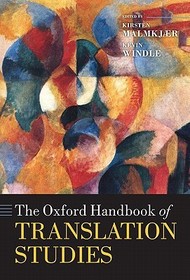
The Oxford Handbook of Translation Studies
Sorozatcím: Oxford Handbooks;
-
10% KEDVEZMÉNY?
- A kedvezmény csak az 'Értesítés a kedvenc témákról' hírlevelünk címzettjeinek rendeléseire érvényes.
- Kiadói listaár GBP 142.50
-
64 338 Ft (61 275 Ft + 5% áfa)
Az ár azért becsült, mert a rendelés pillanatában nem lehet pontosan tudni, hogy a beérkezéskor milyen lesz a forint árfolyama az adott termék eredeti devizájához képest. Ha a forint romlana, kissé többet, ha javulna, kissé kevesebbet kell majd fizetnie.
- Kedvezmény(ek) 10% (kb. 6 433 Ft)
- Kedvezményes ár 57 905 Ft (55 148 Ft + 5% áfa)
Iratkozzon fel most és részesüljön kedvezőbb árainkból!
Feliratkozom
64 338 Ft

Beszerezhetőség
Megrendelésre a kiadó utánnyomja a könyvet. Rendelhető, de a szokásosnál kicsit lassabban érkezik meg.
Why don't you give exact delivery time?
A beszerzés időigényét az eddigi tapasztalatokra alapozva adjuk meg. Azért becsült, mert a terméket külföldről hozzuk be, így a kiadó kiszolgálásának pillanatnyi gyorsaságától is függ. A megadottnál gyorsabb és lassabb szállítás is elképzelhető, de mindent megteszünk, hogy Ön a lehető leghamarabb jusson hozzá a termékhez.
A termék adatai:
- Kiadó OUP Oxford
- Megjelenés dátuma 2011. március 17.
- ISBN 9780199239306
- Kötéstípus Keménykötés
- Terjedelem626 oldal
- Méret 252x181x39 mm
- Súly 1240 g
- Nyelv angol 0
Kategóriák
Rövid leírás:
This book covers the history of the theory and practice of translation from Cicero to the digital age. It examines all major processes of translation, offers critical accounts of current research, and compares theoretical perspectives on the problems of translation ranging from sacred texts and drama to science and diplomatic interpretation.
TöbbHosszú leírás:
This book covers the history of the theory and practice of translation from Cicero to the digital age. It examines all major processes of translation, offers critical accounts of current research, and compares competing theoretical perspectives. It considers all kinds of translation from sacred texts, poetry, fiction, and sign language to remote, consecutive, and simultaneous interpretation in legal, diplomatic, and commercial contexts. The two opening parts of the book consider the history of translation theory and central concepts in the study of translation. Parts III, IV, and V cover the written text, the interpretation of speech and sign language, and the role of translation in mixed-mode and multimedia contexts. Part VI considers the contributions and challenges of information technology including the uses and limitations of machine technology. The final part looks at the teaching and training of translators and interpreters. The book concludes with a comprehensive bibliography and index.
Designed as a state-of-the-art reference and practical guide the book will serve the needs of all those involved in translation, whether as professional translators and interpreters, researchers in translation studies and allied disciplines, or as undergraduate or postgraduate students. This is, in sum, an essential work in a vibrant, fast-moving, and fascinating field.
Tartalomjegyzék:
Part I: The History of Translation Theory
European Thinking on Secular Translation
Secular Translation Asian Perspectives
Translating the Sacred
part II: Central Concepts in the Study of Translation
Linguistic Approaches to Translation
Stylistics and Translation
Translation Universals
The Translator as Cross-Cultural Mediator
Meaning and Translation
Studying the Translation Process
Part III: The Written Text
The Translation of Literary Prose
The Translation of Drama
The Translation of Poetry
The Translation of Song
The Translation of Literature for Children
Public Service Translation
Legal Translation
Scientific, Technical, and Medical Translation
Advertising and Localization
Part IV: Interpreting
Simultaneous Interpreting
Consecutive Interpreting
Conference Interpreting
Courtroom Interpreting
Public Service Interpreting
Signed Language Interpreting
Part V: Mixed-Mode and Multi-Media
Spoken Word to Written Text - Subtitling
Translation for Dubbing and Voice-Over
Website Localization
Part VI: Information Technology
Machine Translation History, Development, and Limitations
Recent Developments in the use and Application of Machine Translation
Electronic Tools and Resources for Translators
Part VII: Pedagogy and Training
Training Translators
Training Interpreters
References
Index of Subjects and Personal Names

