

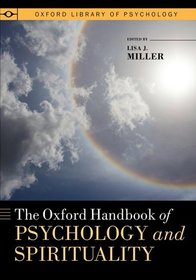
The Oxford Handbook of Psychology and Spirituality
Sorozatcím: Oxford Library of Psychology;
-
10% KEDVEZMÉNY?
- A kedvezmény csak az 'Értesítés a kedvenc témákról' hírlevelünk címzettjeinek rendeléseire érvényes.
- Kiadói listaár GBP 72.00
-
32 508 Ft (30 960 Ft + 5% áfa)
Az ár azért becsült, mert a rendelés pillanatában nem lehet pontosan tudni, hogy a beérkezéskor milyen lesz a forint árfolyama az adott termék eredeti devizájához képest. Ha a forint romlana, kissé többet, ha javulna, kissé kevesebbet kell majd fizetnie.
- Kedvezmény(ek) 10% (kb. 3 251 Ft)
- Kedvezményes ár 29 257 Ft (27 864 Ft + 5% áfa)
Iratkozzon fel most és részesüljön kedvezőbb árainkból!
Feliratkozom
32 508 Ft

Beszerezhetőség
Megrendelésre a kiadó utánnyomja a könyvet. Rendelhető, de a szokásosnál kicsit lassabban érkezik meg.
Why don't you give exact delivery time?
A beszerzés időigényét az eddigi tapasztalatokra alapozva adjuk meg. Azért becsült, mert a terméket külföldről hozzuk be, így a kiadó kiszolgálásának pillanatnyi gyorsaságától is függ. A megadottnál gyorsabb és lassabb szállítás is elképzelhető, de mindent megteszünk, hogy Ön a lehető leghamarabb jusson hozzá a termékhez.
A termék adatai:
- Kiadó OUP USA
- Megjelenés dátuma 2013. november 7.
- ISBN 9780199357345
- Kötéstípus Puhakötés
- Terjedelem656 oldal
- Méret 251x180x30 mm
- Súly 1134 g
- Nyelv angol 0
Kategóriák
Rövid leírás:
Postmaterial spiritual psychology posits that consciousness can contribute to the unfolding of material events and that the human brain can detect broad, non-material communications. In this regard, this emerging field of postmaterial psychology marks a stark departure from psychology's traditional quantum measurements and tenets.
TöbbHosszú leírás:
Postmaterial spiritual psychology posits that consciousness can contribute to the unfolding of material events and that the human brain can detect broad, non-material communications. In this regard, this emerging field of postmaterial psychology marks a stark departure from psychology's traditional assumptions about materialism, making this text particularly attractive to the current generation of students in psychology and related health and wellness disciplines.
The Oxford Handbook of Psychology and Spirituality codifies the leading empirical evidence in the support and application of postmaterial psychological science. Sections in this volume include:
- personality and social psychology factors and implications
- spiritual development and culture
- spiritual dialogue, prayer, and intention in Western mental health
- Eastern traditions and psychology
- physical health and spirituality
- positive psychology
- scientific advances and applications related to spiritual psychology
With chapters from leading scholars in psychology, medicine, physics, and biology, The Oxford Handbook of Psychology and Spirituality is an interdisciplinary reference for a rapidly emerging approach to contemporary science. This overarching work provides both a foundation and a roadmap for what is truly a new ideological age.
[The Oxford Handbook of Psychology and Spirituality] is truly a landmark and potentially revolutionary volume that deserves the widest possible readership.
Tartalomjegyzék:
Introduction by Lisa J. Miller
Part One: Epistemological and Ontological Assumptions in History and Culture
1. History and Current State of Research on Psychology of Religion
Ralph W. Hood Jr.
2. Theoretical and Epistemological Foundations
James M. Nelson and Brent Slife
3. Parameters and Limitations of Current Conceptualizations
Fraser N. Watts
4. Progress in Physics and Psychological Science Affects the Psychology of Religion and Spirituality
Everett L. Worthington Jr.
5. Complementarities in Physics and Psychology
C. Edward Richards
Part Two: Personality and Social Psychology: Universalism, Absolutism, and Relativism
6. Personality, Spirituality, and Religion
Eric D. Rose and Julie J. Exline
7. Overview and Development of a Trait-Based Measure of Numinous Constructs: the Assessment of Spirituality and Religious Sentiments (ASPIRES) Scale
Ralph L. Piedmont
8. Good and Evil in Religion: The Interpersonal Context
Christopher T. Burris and John K. Rempel
9. Religion, Altruism, and Prosocial Behavior: Conceptual and Empirical Approaches
Elizabeth Midlarsky, Anthony S. J. Mullin, and Samuel H. Barkin
Part Three: Spiritual Development, Family, and Culture
10. Spiritual Development During Childhood and Adolescence
Chris J. Boyatzis
11. Questions Left Unaddressed by Religious Familism: Is Spirituality Relevant to Non-traditional Families?
Annette Mahoney and Elizabeth J. Krumrei
12. Motherhood and Female Faith Development: Feminine Tapestry of Religion, Spirituality, Creativity, and Intuition
Carole A. Rayburn
13. Colored Spirituality: The Centrality of Spirit among Ethnic Minorities
Lillian Comas-Díaz
14. Models of Spiritual Development
Harris Friedman, Stanley Krippner, Linda Riebel, and Chad Johnson ^l
Part Four: Spiritual Dialogue, Prayer and Intention in Mental Health: Western Traditions Moving Forward
15. Spiritually-Sensitive Psychotherapy: An Impending Paradigm Shift in Theory and Practice
Len Sperry
16. Honoring Religious Diversity and Universal Spirituality in Psychotherapy
P. Scott Richards
17. Counseling and Psychotherapy within and across Faith Traditions
Mark R. McMinn, Kimberly N. Snow, and Justin J. Orton
18. Psychoanalysis, Psi Phenomena, and Spiritual Space: Common Ground
Ruth Rosenbaum
19. Spiritual Aspects of Jungian Analytical Psychology: Individuation; Jung's Psychological Equivalent of a Spiritual Journey
Joseph P. Wagenseller
Part Five: Mind, Awareness, and Spirituality in Mental Health: Eastern Traditions Engage Psychology
20. Contemplative Traditions and Meditation
Brendan D. Kelly
21. Translation of Eastern Meditative Disciplines into Western Psychotherapy
Randye J. Semple and Sean P. Hatt
22. Eastern Traditions, Consciousness, and Spirituality
Kartikeya C. Patel
Part Six: Physical Health, Prayer, and Spirituality
23. Spirituality, Science, and the Human Body
Wayne B. Jonas, Matt Fritts, Gail Christopher, Maeba Jonas, and Susan Jonas
24. Spirituality, Emotions, and Physical Health
Crystal L. Park and Jeanne M. Slattery
25. Spirituality, Religion, and Psychological Counseling
Thomas G. Plante
26. Spirituality and Recovery from Serious Mental Problems
David Lukoff
Part Seven: Positive Psychology and Spirituality
27. Positive Psychology and Spirituality: A Virtue-informed Approach to Well-Being
Joseph W. Ciarrocchi
28. Spirituality, Resilience, and Positive Emotions
Bruce W. Smith, J. Alexis Ortiz, Kathryn T. Wiggins, Jennifer F. Bernard, and Jeanne Dalen
29. Constructing the Connection between Spirituality, Work, and Family
Lee Joyce Richmond
30. Spirituality and Positive Youth Development
Peter L. Benson, Eugene C. Roehlkepartain, and Peter C. Scales ^l
Part Eight: The Brain and Spiritual Experience
31. Transformation of Brain Structure and Spiritual Experience
Andrew B. Newberg
32. Neuroimaging and Spiritual Practice
Mario Beauregard
33. The Psychology of Near-Death Experiences and Spirituality
Bruce Greyson
Part Nine: Postmaterial Spiritual Psychology: Scientific Advances in a Spiritual Ontology for Psychology
34. Nonlocality, Intention, and Observer Effects in Healing Studies: Laying a Foundation for the Future
Stephan Schwartz and Larry Dossey
35. Spirituality, Connection, and Healing with Intent: Reflections on Cancer Experiments on Laboratory Mice
William F. Bengston
36. Knowledge, Intention, and Matter
William A. Tiller
37. Consciousness, Spirituality, and Post-Materialist Science: An Empirical and Experiential Approach
Gary E. Schwartz
38. A Post-Materialist Human Science and Its Implications for Spiritual Activism
Amit Goswami
Part Ten: Conclusion
39. Conclusion
Lisa J. Miller

