

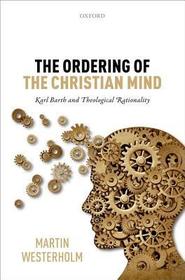
The Ordering of the Christian Mind
Karl Barth and Theological Rationality
-
10% KEDVEZMÉNY?
- A kedvezmény csak az 'Értesítés a kedvenc témákról' hírlevelünk címzettjeinek rendeléseire érvényes.
- Kiadói listaár GBP 140.00
-
66 885 Ft (63 700 Ft + 5% áfa)
Az ár azért becsült, mert a rendelés pillanatában nem lehet pontosan tudni, hogy a beérkezéskor milyen lesz a forint árfolyama az adott termék eredeti devizájához képest. Ha a forint romlana, kissé többet, ha javulna, kissé kevesebbet kell majd fizetnie.
- Kedvezmény(ek) 10% (cc. 6 689 Ft off)
- Kedvezményes ár 60 197 Ft (57 330 Ft + 5% áfa)
Iratkozzon fel most és részesüljön kedvezőbb árainkból!
Feliratkozom
66 885 Ft

Beszerezhetőség
Megrendelésre a kiadó utánnyomja a könyvet. Rendelhető, de a szokásosnál kicsit lassabban érkezik meg.
Why don't you give exact delivery time?
A beszerzés időigényét az eddigi tapasztalatokra alapozva adjuk meg. Azért becsült, mert a terméket külföldről hozzuk be, így a kiadó kiszolgálásának pillanatnyi gyorsaságától is függ. A megadottnál gyorsabb és lassabb szállítás is elképzelhető, de mindent megteszünk, hogy Ön a lehető leghamarabb jusson hozzá a termékhez.
A termék adatai:
- Kiadó OUP Oxford
- Megjelenés dátuma 2015. november 12.
- ISBN 9780198753124
- Kötéstípus Keménykötés
- Terjedelem264 oldal
- Méret 240x174x21 mm
- Súly 568 g
- Nyelv angol 0
Kategóriák
Rövid leírás:
This work takes up the long-standing concern that the theology of Karl Barth has little to offer to consideration of Christian reason and instead shows that Barth's work contains a theologically weighty and spiritually bracing account of the proper ordering of Christian thought.
TöbbHosszú leírás:
The adequacy of Karl Barth's conception of theological reasoning is a decisive point of contention in assessments of the legacy and potential of twentieth-century theology. Barth's work is a formative point from which other twentieth-century figures take their orientation; later thinkers have most often taken their leave from his work by suggesting that it reflects an underdeveloped conception of the activities of human reason. The regularity with which other thinkers orient themselves in relation to Barth by pointing to a positivism, faith subjectivism, or fideism in his work elevates the question of theological reasoning to a decisive point in the comprehension of twentieth-century theology.
The Ordering of the Christian Mind facilitates evaluation of Barth's work by reconstructing his conception of the activities of reason. It does so, first, by reframing the question. Martin Westerholm shows that Barth's understanding of the moral structure of the relation between God and creatures demands that the question of theological reasoning be approached through an ethical inquiry into the proper ordering of the activities of the mind. Secondly, Westerholm deploys a new set of categories through which Barth's work can be described. He shows that, by working through an account of the noetic corollaries of faith and of the understanding of faith, Barth develops a coherent and compelling account of the standpoint, orientation, and freedom of theological reasoning. Development of this material is accompanied by new accounts of Barth's earlier theology of the resurrection, his theological development, and the significance of his engagement with Anselm.
The Ordering of the Christian Mind is a dense, rich, careful study that rewards the attention it requires.
Tartalomjegyzék:
Introduction
The Question of the Ordering of Thought
Part I: Paul, Faith, and the Question of the Ordering of Christian Thought
Paul and the Problem of the Ordering of Thought
Resurrection and the Ordering of Christian Thought
Part II: Anselm, Understanding, and the Question of the Ordering of Christian Thought
The Question of the Ordering of Thought between Paul and Anselm
Anselm, Understanding, and the Ordering of Christian Thought
Conclusion

