

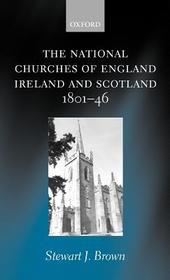
The National Churches of England, Ireland, and Scotland 1801-46
-
10% KEDVEZMÉNY?
- A kedvezmény csak az 'Értesítés a kedvenc témákról' hírlevelünk címzettjeinek rendeléseire érvényes.
- Kiadói listaár GBP 202.50
-
91 428 Ft (87 075 Ft + 5% áfa)
Az ár azért becsült, mert a rendelés pillanatában nem lehet pontosan tudni, hogy a beérkezéskor milyen lesz a forint árfolyama az adott termék eredeti devizájához képest. Ha a forint romlana, kissé többet, ha javulna, kissé kevesebbet kell majd fizetnie.
- Kedvezmény(ek) 10% (cc. 9 143 Ft off)
- Kedvezményes ár 82 286 Ft (78 368 Ft + 5% áfa)
Iratkozzon fel most és részesüljön kedvezőbb árainkból!
Feliratkozom
91 428 Ft

Beszerezhetőség
Megrendelésre a kiadó utánnyomja a könyvet. Rendelhető, de a szokásosnál kicsit lassabban érkezik meg.
Why don't you give exact delivery time?
A beszerzés időigényét az eddigi tapasztalatokra alapozva adjuk meg. Azért becsült, mert a terméket külföldről hozzuk be, így a kiadó kiszolgálásának pillanatnyi gyorsaságától is függ. A megadottnál gyorsabb és lassabb szállítás is elképzelhető, de mindent megteszünk, hogy Ön a lehető leghamarabb jusson hozzá a termékhez.
A termék adatai:
- Kiadó OUP Oxford
- Megjelenés dátuma 2001. december 6.
- ISBN 9780199242351
- Kötéstípus Keménykötés
- Terjedelem472 oldal
- Méret 226x146x29 mm
- Súly 669 g
- Nyelv angol 0
Kategóriák
Rövid leírás:
The book provides a comparative study of the national Churches of England, Ireland, and Scotland: the Churches established by law to instruct the people and serve as guardians of the nation's faith. It traces the end of the confessional State idea in the United Kingdom from 1801 to 1846, and explores the movements to assert the spiritual independence of the Churches from State control.
TöbbHosszú leírás:
In 1801, the United Kingdom was a semi-confessional State, and the national established Churches of England, Ireland and Scotland were vital to the constitution. They expressed the religious conscience of the State and served as guardians of the faith. Through their parish structures, they provided religious and moral instruction, and rituals for common living.
This book explores the struggle to strengthen the influence of the national Churches in the first half of the nineteenth century. For many, the national Churches would help form the United Kingdom into a single Protestant nation-state, with shared beliefs, values and a sense of national mission. Between 1801 and 1825, the State invested heavily in the national Churches. But during the 1830s the growth of Catholic nationalism in Ireland and the emergence of liberalism in Britain thwarted the efforts to unify the nation around the established Churches. Within the national Churches themselves, moreover, voices began calling for independence from the State connection - leading to the Oxford Movement in England and the Disruption of the Church of Scotland.
Stewart Brown is the first in the modern period to have tried to produce a comprehensive study setting all three churches in comparative perspective. With a wealth of material to hand, this was an ambitious task. The result is a triumph of clarity and scholarship ... this will become a vital resource for historians of British religion.

