

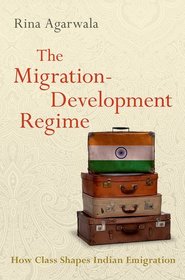
The Migration-Development Regime
How Class Shapes Indian Emigration
Sorozatcím: MODERN SOUTH ASIA SERIES;
-
20% KEDVEZMÉNY?
- A kedvezmény csak az 'Értesítés a kedvenc témákról' hírlevelünk címzettjeinek rendeléseire érvényes.
- Kiadói listaár GBP 25.99
-
11 734 Ft (11 175 Ft + 5% áfa)
Az ár azért becsült, mert a rendelés pillanatában nem lehet pontosan tudni, hogy a beérkezéskor milyen lesz a forint árfolyama az adott termék eredeti devizájához képest. Ha a forint romlana, kissé többet, ha javulna, kissé kevesebbet kell majd fizetnie.
- Kedvezmény(ek) 20% (cc. 2 347 Ft off)
- Kedvezményes ár 9 387 Ft (8 940 Ft + 5% áfa)
- A kedvezmény érvényes eddig: 2026. június 30.
Iratkozzon fel most és részesüljön kedvezőbb árainkból!
Feliratkozom
11 734 Ft

Beszerezhetőség
Becsült beszerzési idő: A Prosperónál jelenleg nincsen raktáron, de a kiadónál igen. Beszerzés kb. 3-5 hét..
A Prosperónál jelenleg nincsen raktáron.
Why don't you give exact delivery time?
A beszerzés időigényét az eddigi tapasztalatokra alapozva adjuk meg. Azért becsült, mert a terméket külföldről hozzuk be, így a kiadó kiszolgálásának pillanatnyi gyorsaságától is függ. A megadottnál gyorsabb és lassabb szállítás is elképzelhető, de mindent megteszünk, hogy Ön a lehető leghamarabb jusson hozzá a termékhez.
A termék adatai:
- Kiadó OUP USA
- Megjelenés dátuma 2022. december 16.
- ISBN 9780197586402
- Kötéstípus Puhakötés
- Terjedelem288 oldal
- Méret 157x232x20 mm
- Súly 381 g
- Nyelv angol 263
Kategóriák
Rövid leírás:
In The Migration-Development Regime, Rina Agarwala seeks to understand how international migration is affecting sending countries and migrants themselves. Specifically, she examines the case of India, the world's largest emigrant exporter and the world's largest remittance receiver. Rather than seeing emigration as simply a neoliberal disaster or a panacea for globalization, this book shows how the Indian state has long used and controlled its poor and elite emigrants differently to further Indian development, and how Indian emigrants have differentially reacted to state practices over time. These findings help Agarwala expose what is truly novel about India's contemporary emigration practices, which have deepened class inequalities within India more than ever before.
TöbbHosszú leírás:
A sweeping history of how India has used its poor and elite emigrants to further Indian development and how Indian emigrants have reacted, resisted, and re-shaped India's development in response.
How can states and migrants themselves explain the causes and effects of global migration? The Migration-Development Regime introduces a novel analytical framework to help answer this question in India, the world's largest emigrant exporter and the world's largest remittance-receiving country. Drawing on an archival analysis of Indian government documents, an original data base of Indian migrants' transnational organizations, and over 200 interviews with poor and elite Indian emigrants, recruiters, and government officials, this book exposes the vital role the Indian state (from the colonial era to the present day) has long played in forging and legitimizing class inequalities within India through the management of international emigration. It also exposes how poor and elite emigrants have differentially resisted and re-shaped state emigration practices over time. By taking a long and class-based view, this book recasts contemporary migration not simply as a problematic function of neoliberalism or as a development panacea for sending countries, but as a dynamic historical process that sending states and migrants have long used to shape local development. In doing so, it re-defines the primary problems of global migration, exposes the material and ideological impact that migration has on sending state development, and isolates what is truly novel about contemporary migration.
This beautifully written, lucidly argued book is distinguished by two unusual analytic moves. Agarwala is among the few scholars to explore the historical dynamics of migration from the perspective of a sending state rather than that of destination countries. In addition, she relentlessly excavates class differences, comparing the trajectories of elite and poor Indian emigrants and the contrasting policies shaping their divergent experiences. A provocative and essential contribution.
Tartalomjegyzék:
Chapter 1: Introduction
Chapter 2: Migration-Development Regimes (MDRs)
Chapter 3: The Rise and Fall of the Coolie MDR (1834-1947): Racialized Class Exploitation
Chapter 4: The Rise and Fall of the Nationalist MDR (1947-1977): Erasing the Indian Emigrant
Chapter 5: The CEO MDR (1977-present): Liberalizing Emigration and Tapping Emigrants' Financial Contributions
Chapter 6: The CEO MDR: Tapping Elite Emigrants' Ideological Contributions and Forging an Elite Class Pact of "Global Indians"
Chapter 7: Experiencing the CEO MDR From Below: Poor Emigrants
Chapter 8: Experiencing the CEO MDR from Below: Elite Emigrants
Chapter 9: Vulnerabilities in the CEO MDR and a Future Trajectory
References
Index

