

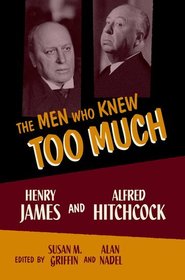
The Men Who Knew Too Much
Henry James and Alfred Hitchcock
-
10% KEDVEZMÉNY?
- A kedvezmény csak az 'Értesítés a kedvenc témákról' hírlevelünk címzettjeinek rendeléseire érvényes.
- Kiadói listaár GBP 112.50
-
50 793 Ft (48 375 Ft + 5% áfa)
Az ár azért becsült, mert a rendelés pillanatában nem lehet pontosan tudni, hogy a beérkezéskor milyen lesz a forint árfolyama az adott termék eredeti devizájához képest. Ha a forint romlana, kissé többet, ha javulna, kissé kevesebbet kell majd fizetnie.
- Kedvezmény(ek) 10% (cc. 5 079 Ft off)
- Kedvezményes ár 45 714 Ft (43 538 Ft + 5% áfa)
Iratkozzon fel most és részesüljön kedvezőbb árainkból!
Feliratkozom
50 793 Ft

Beszerezhetőség
Megrendelésre a kiadó utánnyomja a könyvet. Rendelhető, de a szokásosnál kicsit lassabban érkezik meg.
Why don't you give exact delivery time?
A beszerzés időigényét az eddigi tapasztalatokra alapozva adjuk meg. Azért becsült, mert a terméket külföldről hozzuk be, így a kiadó kiszolgálásának pillanatnyi gyorsaságától is függ. A megadottnál gyorsabb és lassabb szállítás is elképzelhető, de mindent megteszünk, hogy Ön a lehető leghamarabb jusson hozzá a termékhez.
A termék adatai:
- Kiadó OUP USA
- Megjelenés dátuma 2012. március 1.
- ISBN 9780199764426
- Kötéstípus Keménykötés
- Terjedelem288 oldal
- Méret 160x239x17 mm
- Súly 536 g
- Nyelv angol
- Illusztrációk 40 illustrations 0
Kategóriák
Rövid leírás:
The Men Who Knew Too Much innovatively pairs these two greats, showing them to be at once classic and contemporary. Over a dozen major scholars and critics take up works by James and Hitchcock, in paired sets, to explore the often surprising ways that reading James helps us watch Hitchcock and what watching Hitchcock tells us about reading James.
TöbbHosszú leírás:
Henry James and Alfred Hitchcock knew too much. Self-imposed exiles fully in the know, they approached American and European society as inside-outsiders, a position that afforded them a kind of double vision. Masters of their arts, manipulators of their audiences, prescient and pathbreaking in their techniques, these demanding and meticulous artists fiercely defended authorial and directorial control. Their fictions and films are obsessed with knowledge and its powers: who knows what? What is there to know?
The Men Who Knew Too Much innovatively pairs these two greats, showing them to be at once classic and contemporary. Over a dozen major scholars and critics take up works by James and Hitchcock, in paired sets, to explore the often surprising ways that reading James helps us watch Hitchcock and what watching Hitchcock tells us about reading James. A wide-range of approaches offer fresh insights about spectatorship, narrative structure, and cinematic representation, as well as the relationship between technology and art, the powers of silence, sensory-and sensational-experiences, the impact of cognition, and the uncertainty of interpretation. The essays explore the avowal and disavowal of familial bonds, as well as questions of Victorian convention, female agency, and male anxiety. And they fruitfully engage issues related to patriarchy, colonialism, national, transnational, and global identities. The capacious collection, with its brilliant insights and intellectual surprises, is equally compelling in its range and cogency for James readers and film theorists, for Hitchcock fans and James scholars.
The Men Who Knew Too Much offers a series of inspiring discussions about the process of adaptation as experienced by Hitchcock, James, and their respective protagonists. Combining close textual analysis with suggestive theoretical insights, the book shows how individuals in different socio-historical contexts negotiate important issue of gender, social identity, knowledge and authority. By reflecting on their struggles, we might learn something about ourselves and our future courses of action.
Tartalomjegyzék:
Reading James with Hitchcock, Reading Hitchcock with James
National Bodies
Secrets, Lies, and "Virtuous Attachments": The Ambassadors and The 39 Steps
Henry James and Alfred Hitchcock after the American Century: Circulation and Non-Return in The American Scene and Strangers on a Train
Colonial Discourse and the Unheard Other in Washington Square and The Man Who Knew Too Much
Bump: Concussive Knowledge in James and Hitchcock
James's Birdcage/Hitchcock's Birds
Sounds of Silence in The Wings of the Dove and Blackmail
The Perfect Enigma
Hands, Objects and Love in James and Hitchcock: Reading the Touch in The Golden Bowl and Notorious
The Touch of the Real: Circumscribing Vertigo
Specters of Respectability: Victorian Horrors in The Turn of the Screw and Psycho
Caged Heat: Feminist Rebellion in Henry James's In the Cage and Alfred Hitchcock's Rear Window
Shadows of Modernity: What Maisie Knew and Shadow of a Doubt
Awkward Ages: James and Hitchcock In Between
Works Cited
Contributors
Index

