

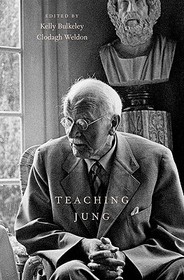
Teaching Jung
Sorozatcím: AAR Teaching Religious Studies;
-
10% KEDVEZMÉNY?
- A kedvezmény csak az 'Értesítés a kedvenc témákról' hírlevelünk címzettjeinek rendeléseire érvényes.
- Kiadói listaár GBP 97.00
-
43 795 Ft (41 710 Ft + 5% áfa)
Az ár azért becsült, mert a rendelés pillanatában nem lehet pontosan tudni, hogy a beérkezéskor milyen lesz a forint árfolyama az adott termék eredeti devizájához képest. Ha a forint romlana, kissé többet, ha javulna, kissé kevesebbet kell majd fizetnie.
- Kedvezmény(ek) 10% (cc. 4 380 Ft off)
- Kedvezményes ár 39 416 Ft (37 539 Ft + 5% áfa)
Iratkozzon fel most és részesüljön kedvezőbb árainkból!
Feliratkozom
43 795 Ft

Beszerezhetőség
Megrendelésre a kiadó utánnyomja a könyvet. Rendelhető, de a szokásosnál kicsit lassabban érkezik meg.
Why don't you give exact delivery time?
A beszerzés időigényét az eddigi tapasztalatokra alapozva adjuk meg. Azért becsült, mert a terméket külföldről hozzuk be, így a kiadó kiszolgálásának pillanatnyi gyorsaságától is függ. A megadottnál gyorsabb és lassabb szállítás is elképzelhető, de mindent megteszünk, hogy Ön a lehető leghamarabb jusson hozzá a termékhez.
A termék adatai:
- Kiadó OUP USA
- Megjelenés dátuma 2011. október 13.
- ISBN 9780199735426
- Kötéstípus Keménykötés
- Terjedelem304 oldal
- Méret 234x156x20 mm
- Súly 635 g
- Nyelv angol 0
Kategóriák
Rövid leírás:
This book offers a collection of original articles presenting several different approaches to Jung's psychology in relation to religion, theology, and contemporary culture. The contributors describe their teaching of Jung in different academic contexts, with special attention to the pedagogical and theoretical challenges that arise in the classroom.
TöbbHosszú leírás:
Swiss psychologist Carl Jung (1875-1961) has made a major, though still contested, impact on the field of religious studies. Alternately revered and reviled, the subject of adoring memoirs and scathing exposes, Jung and his ideas have had at least as much influence on religious studies as have the psychoanalytic theories of his mentor, Sigmund Freud. Many of Jung's key psychological terms (archetypes, collective unconscious, individuation, projection, synchronicity, extroversion and introversion) have become standard features of religious studies discourse, and his extensive commentaries on various religious traditions make it clear that Jung's psychology is, at one level, a significant contribution to the study of human religiosity. His characterization of depth psychology as a fundamentally religious response to the secularizing power of modernity has left a lasting imprint on the relationship between religious studies and the psychological sciences. This book offers a collection of original articles presenting several different approaches to Jung's psychology in relation to religion, theology, and contemporary culture. The contributors describe their teaching of Jung in different academic contexts, with special attention to the pedagogical and theoretical challenges that arise in the classroom.
Jung remains an important figure in the humanistic study of religion because he stood for a number of key insights-about the limits of rationalism, about the universality of the human psyche, about the reality of the paranormal, and about the necessity and dangers of religion-that remain as potent now as when he first articulated them. Teaching Jung admirably explores this promise and this scandal through the prisms of pedagogy and classroom practice.
Tartalomjegyzék:
Introduction: Teaching With and Against Jung
Kelly Bulkeley and Clodagh Weldon
Part I. Different Educational Settings
Chapter One: The Challenge of Teaching Jung in the University
David Tacey
Chapter Two: Misprision:
Pitfalls in Teaching Jung in a University Religious Studies Department
David L. Miller
Chapter Three: Teaching Jung in a Theological Seminary and a Graduate School of Religion
Ann Belford Ulanov
Chapter Four: Teaching Jung in an Analytic Psychology Institute
Murray Stein
Part II. The Interpretation of Religious Texts and Experiences
Chapter Five: Jung's Approach to Myth
Robert Alan Segal
Chapter Six: Jung's Engagement with Christian Theology
Charlene Burns
Chapter Seven: God on the Couch:
Teaching Jung's Answer to Job
Clodagh Weldon
Chapter Eight: Type-wise:
Using Jung's Theory of Psychological Types in Teaching Religious Studies Undergraduate and Graduate Students
Christopher Ross
Part III. Jung's Life, Work, and Critics
Chapter Nine: Personal Secrets, Ethical Questions
John Haule
Chapter Ten: Anima, Gender, Feminism
Susan Rowland
Chapter Eleven: Jung as Nature Mystic
Meredith Sabini
Chapter Twelve: Teaching Jung in Asia
Jeremy Taylor
Part IV. Jungian Practices in the Classroom and Beyond
Chapter Thirteen: Teaching Jung and Dreams
Kelly Bulkeley
Chapter Fourteen: Jung and Winnicott in the Classroom:
Holding, Mirroring, Potential Space and the Self
Laurel McCabe
Chapter Fifteen: Jung and the Numinous Classroom
Bonnelle Strickling
Chapter Sixteen: Can There Be a Science of the Symbolic?
John Beebe

