

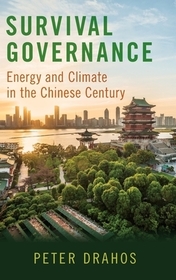
Survival Governance
Energy and Climate in the Chinese Century
-
10% KEDVEZMÉNY?
- A kedvezmény csak az 'Értesítés a kedvenc témákról' hírlevelünk címzettjeinek rendeléseire érvényes.
- Kiadói listaár GBP 31.99
-
15 283 Ft (14 555 Ft + 5% áfa)
Az ár azért becsült, mert a rendelés pillanatában nem lehet pontosan tudni, hogy a beérkezéskor milyen lesz a forint árfolyama az adott termék eredeti devizájához képest. Ha a forint romlana, kissé többet, ha javulna, kissé kevesebbet kell majd fizetnie.
- Kedvezmény(ek) 10% (cc. 1 528 Ft off)
- Kedvezményes ár 13 754 Ft (13 100 Ft + 5% áfa)
Iratkozzon fel most és részesüljön kedvezőbb árainkból!
Feliratkozom
15 283 Ft

Beszerezhetőség
Becsült beszerzési idő: Várható beérkezés: 2026. január vége.
A Prosperónál jelenleg nincsen raktáron.
Why don't you give exact delivery time?
A beszerzés időigényét az eddigi tapasztalatokra alapozva adjuk meg. Azért becsült, mert a terméket külföldről hozzuk be, így a kiadó kiszolgálásának pillanatnyi gyorsaságától is függ. A megadottnál gyorsabb és lassabb szállítás is elképzelhető, de mindent megteszünk, hogy Ön a lehető leghamarabb jusson hozzá a termékhez.
A termék adatai:
- Kiadó OUP USA
- Megjelenés dátuma 2021. április 15.
- ISBN 9780197534755
- Kötéstípus Keménykötés
- Terjedelem272 oldal
- Méret 155x236x27 mm
- Súly 499 g
- Nyelv angol 154
Kategóriák
Rövid leírás:
To deal with the climate crisis we need a new paradigm of technological and social development aimed at the restoration of ecological systems--the bio-digital energy paradigm. How do we get to this paradigm? The book draws on more than 250 interviews across 17 key countries to present a practical answer this question. We need a strong state to lead. There are four possible leaders--the EU, US, China and India. China is best placed to lead. It is building experimental cities like eco-cities and sponge cities out of which could grow the climate survival governance that the world badly needs.
TöbbHosszú leírás:
To deal with the climate crisis we need a new paradigm of technological and social development aimed at the restoration of ecological systems--the bio-digital energy paradigm--and China is the world power best positioned to lead this change.
The climate and energy crisis requires a strong state to change the direction, speed, and scale of innovation in world capitalism. There are only a few possible contenders for catalyzing this governance of survival: China, the European Union, India, and the United States. While China is an improbable leader--and in fact the world's biggest emitter of greenhouse gasses--Peter Drahos explains in Survival Governance why this authoritarian state is actually more likely to implement systemic change swiftly and effectively than any other power. Drawing on more than 250 interviews, carried out in 17 countries--including the world's four largest carbon emitters--Drahos shows what China is doing to make its vast urban network sustainable and why all states must work toward a "bio-digital energy paradigm" based on a globalized, city-based network of innovation.
As Drahos explains, America is incapable of reducing the power of its fossil fuel industry. For its part, the European Union's approach is too incremental and slowed by complex internal negotiations to address a crisis that demands a rapid response. India's capacity to be a global leader on energy innovation is questionable. To be sure, China faces hurdles too. Its coal-based industrial system is enormous, and the US, worried about losing technological superiority, is trying to slow China's development. Even so, China is currently urbanizing innovation on a historically unprecedented scale, building eco-cities, hydrogen cities, forest cities, and sponge cities (designed to cope with flooding). This has the potential to move cities into a new relationship with their surrounding ecosystems. China--given the size of its economy and the central government's ability to dictate thoroughgoing policy change--is, despite all of its flaws, presently our best hope for implementing the sort of policy overhaul that can begin to slow climate change.
Drawing on more than 250 interviews, carried out in 17 countries including the world's four largest carbon emitters—Drahos shows what China is doing to make its vast urban network sustainable and why all states must work toward a "bio-digital energy paradigm" based on a globalized, city-based network of innovation.
Tartalomjegyzék:
Preface
1. The Argument in Summary
2. Choosing Among Implausible Leaders
3. Technology choices
4. The Geo-Energy Trilemma and its Mis-Management
5. "Winners" and "Losers" in Hotter Worlds
6. China's Limits to Growth
7. Backing the Bio-Digital Energy Paradigm?
8. City Pathways to the Bio-Digital Energy Paradigm
9. India, the Janus Energy Sovereign
10. Survival Governance

