

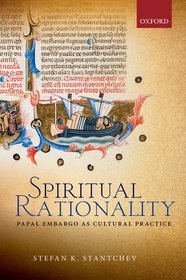
Spiritual Rationality
Papal Embargo as Cultural Practice
-
10% KEDVEZMÉNY?
- A kedvezmény csak az 'Értesítés a kedvenc témákról' hírlevelünk címzettjeinek rendeléseire érvényes.
- Kiadói listaár GBP 137.50
-
62 081 Ft (59 125 Ft + 5% áfa)
Az ár azért becsült, mert a rendelés pillanatában nem lehet pontosan tudni, hogy a beérkezéskor milyen lesz a forint árfolyama az adott termék eredeti devizájához képest. Ha a forint romlana, kissé többet, ha javulna, kissé kevesebbet kell majd fizetnie.
- Kedvezmény(ek) 10% (cc. 6 208 Ft off)
- Kedvezményes ár 55 873 Ft (53 213 Ft + 5% áfa)
Iratkozzon fel most és részesüljön kedvezőbb árainkból!
Feliratkozom
62 081 Ft

Beszerezhetőség
Megrendelésre a kiadó utánnyomja a könyvet. Rendelhető, de a szokásosnál kicsit lassabban érkezik meg.
Why don't you give exact delivery time?
A beszerzés időigényét az eddigi tapasztalatokra alapozva adjuk meg. Azért becsült, mert a terméket külföldről hozzuk be, így a kiadó kiszolgálásának pillanatnyi gyorsaságától is függ. A megadottnál gyorsabb és lassabb szállítás is elképzelhető, de mindent megteszünk, hogy Ön a lehető leghamarabb jusson hozzá a termékhez.
A termék adatai:
- Kiadó OUP Oxford
- Megjelenés dátuma 2014. július 17.
- ISBN 9780198704096
- Kötéstípus Keménykötés
- Terjedelem256 oldal
- Méret 239x163x23 mm
- Súly 538 g
- Nyelv angol 0
Kategóriák
Rövid leírás:
Offers the first book-length study of the Roman Catholic church's practice of embargoing trade outside of Christendom in the period c. 1150 to c. 1550, particularly examining the influence of the papacy on the state.
TöbbHosszú leírás:
Spiritual Rationality: Papal Embargo as Cultural Practice offers the first book-length study of embargo in a pre-modern period and provides a unique exploration into the domestic implications of this tool of foreign policy. Based on a large and varied body of archival and printed, papal and secular sources, this inquiry covers Europe and the broader Mediterranean from c. 1150 to c. 1550. During this time of an increasing papal role within Christian society, the church employed restrictions on trade with Muslims, pagans, 'heretics', 'schismatics', disobedient Catholic communities and individual Jews in order to facilitate papally-endorsed warfare against external enemies and to discipline internal foes. Various trade bans were originally promulgated as individual responses to specific circumstances. These restrictions, however, were shaped by the premise that sin and the defense of the decorum of the faith and Christendom condoned, or even required, papal intervention into the lives of the laity and by the text-based approach of popes and canonists.
Papal embargo, consequently, was not only the sum total of individual trade bans but also a legal and moral discourse that classified exchanges into legitimate and illegitimate ones, compelled merchants to distinguish clearly between themselves as (Roman) Christians and a multitude of others as non-Christians, and helped order symbolically both the relationships between the two groups and those between church and laity. Papal embargo's chief relevance thus lay within Christian society itself, where it functioned as an intangible pastoral staff. While sixteenth-century developments undermined it as a policy tool and a moral discourse alike, papal embargo inscribed the notion of the immorality of trade with the enemy into European thought.
Stefan Stantchev has produced an exhaustively researched and interestingly conceptualized study of the history of papal prohibitions of trade with the enemies of Christendom in medieval and early modern times. The book is likely to remain a useful reference point for this history, but its greatest contribution is that the author reconceptualizes and rethinks the embargoes ... This is a real achievement that earns the author great praise.
Tartalomjegyzék:
Introduction
A "Pre-History" of Papal Embargo: Explanations, Precedents, Contexts
Trade with Saracens Endangers the Soul: Formation and Implications of a Legal Discourse
The Politics of a Discourse: Papal Embargo as Pastoral Staff
The Operation of a Multi-Layered Embargo
Embargo as Cultural Practice: A Restatement
Conclusion: Jurists, Kings, Reformers, and the Undoing of Embargo?

