

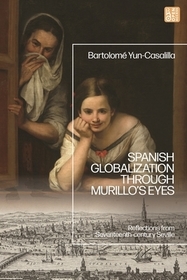
Spanish Globalization through Murillo's Eyes
Reflections from Seventeenth-century Seville
-
20% KEDVEZMÉNY?
- A kedvezmény csak az 'Értesítés a kedvenc témákról' hírlevelünk címzettjeinek rendeléseire érvényes.
- Kiadói listaár GBP 85.00
-
38 377 Ft (36 550 Ft + 5% áfa)
Az ár azért becsült, mert a rendelés pillanatában nem lehet pontosan tudni, hogy a beérkezéskor milyen lesz a forint árfolyama az adott termék eredeti devizájához képest. Ha a forint romlana, kissé többet, ha javulna, kissé kevesebbet kell majd fizetnie.
- Kedvezmény(ek) 20% (cc. 7 675 Ft off)
- Kedvezményes ár 30 702 Ft (29 240 Ft + 5% áfa)
- A kedvezmény érvényes eddig: 2026. június 30.
Iratkozzon fel most és részesüljön kedvezőbb árainkból!
Feliratkozom
38 377 Ft

Beszerezhetőség
Becsült beszerzési idő: A Prosperónál jelenleg nincsen raktáron, de a kiadónál igen. Beszerzés kb. 3-5 hét..
A Prosperónál jelenleg nincsen raktáron.
Why don't you give exact delivery time?
A beszerzés időigényét az eddigi tapasztalatokra alapozva adjuk meg. Azért becsült, mert a terméket külföldről hozzuk be, így a kiadó kiszolgálásának pillanatnyi gyorsaságától is függ. A megadottnál gyorsabb és lassabb szállítás is elképzelhető, de mindent megteszünk, hogy Ön a lehető leghamarabb jusson hozzá a termékhez.
A termék adatai:
- Kiadó Bloomsbury Publishing (UK)
- Megjelenés dátuma 2026. február 19.
- Kötetek száma Hardback
- ISBN 9781350528772
- Kötéstípus Keménykötés
- Terjedelem328 oldal
- Méret 236x160x22 mm
- Súly 680 g
- Nyelv angol
- Illusztrációk 50 colour illus 681
Kategóriák
Hosszú leírás:
This open access book examines the work of the 17th-century Baroque painter, Bartolom- Esteban Murillo (1618-1682) - a figure who barely left the city of Seville - as a way of understanding globalization, its consequences, and its limits.
Full of saints, friars, virgins, and Christs, or poor people and cheerful p-caros oblivious to social injustice, Murillo's painting has been considered representative of the Counter-Reformation and the exponent of an immobile, even introverted, society that regressed with the 'crisis of the 17th century'. Spanish Globalization through Murillo's Eyes introduces a global perspective by considering the Atlantic art market and developing comparisons with Protestant paintings and an analysis of Murillo's iconography alongside the social and political theory of his time. Such comparisons and analyses illuminate a different image, emphasizing the idea of a common European path towards modernity, individualism, emotional self-control and social change.
The book also examines how Murillo's contemporaries interpreted his iconography. The result is a new and sharper understanding of the tensions created by globalization in the field of art, in the construction of imagined communities, and in social relations in the early modern era.
The ebook editions of this book are available open access under a CC BY-NC-ND 4.0 licence on bloomsburycollections.com.
Tartalomjegyzék:
List of Illustrations
Foreword
Introduction: Seville and Murillo
Part 1 - Seville and Murillo in Atlantic Pictorial Networks
1. Art Markets, Colonial Trade, and Painters in a Global City
Part 2 - Between America and Europe
2. American Experiences and Sevillian Traditions
3. Globalization and Confessionalization: Family, Women, and Virtue in the Dutch Mirror
Part 3 - Globalization and Seville's Elites
4. Passions, Self-Discipline, Religious Conversion, and Family Conflicts: The Theme of the Prodigal Son
5. Self-Representation: Aristocracy, Individualism, and Noble Values
Part 4 - Globalization, Christian Tradition, and Popular Conflict
6. Work and Family: A Franciscan and an Artisans' Painter
7. Egalitarian Images, the Moral Economy, and Layers of Globalization in the City of God
Part 5 - Global Contexts and Symbols of Nationhood
8. The 'Republic' and the 'Monarchy' of Spain in Sevillian painting: On the Immaculate Conception and Ferdinand III
Conclusion: Murillo, Spain and seventeenth-century Seville
Bibliography
Index

