

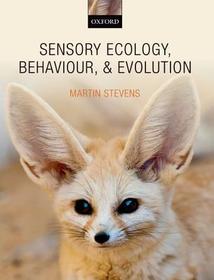
Sensory Ecology, Behaviour, and Evolution
-
10% KEDVEZMÉNY?
- A kedvezmény csak az 'Értesítés a kedvenc témákról' hírlevelünk címzettjeinek rendeléseire érvényes.
- Kiadói listaár GBP 155.00
-
69 982 Ft (66 650 Ft + 5% áfa)
Az ár azért becsült, mert a rendelés pillanatában nem lehet pontosan tudni, hogy a beérkezéskor milyen lesz a forint árfolyama az adott termék eredeti devizájához képest. Ha a forint romlana, kissé többet, ha javulna, kissé kevesebbet kell majd fizetnie.
- Kedvezmény(ek) 10% (cc. 6 998 Ft off)
- Kedvezményes ár 62 984 Ft (59 985 Ft + 5% áfa)
Iratkozzon fel most és részesüljön kedvezőbb árainkból!
Feliratkozom
69 982 Ft

Beszerezhetőség
Megrendelésre a kiadó utánnyomja a könyvet. Rendelhető, de a szokásosnál kicsit lassabban érkezik meg.
Why don't you give exact delivery time?
A beszerzés időigényét az eddigi tapasztalatokra alapozva adjuk meg. Azért becsült, mert a terméket külföldről hozzuk be, így a kiadó kiszolgálásának pillanatnyi gyorsaságától is függ. A megadottnál gyorsabb és lassabb szállítás is elképzelhető, de mindent megteszünk, hogy Ön a lehető leghamarabb jusson hozzá a termékhez.
A termék adatai:
- Kiadó OUP Oxford
- Megjelenés dátuma 2013. február 7.
- ISBN 9780199601776
- Kötéstípus Keménykötés
- Terjedelem260 oldal
- Méret 254x192x16 mm
- Súly 724 g
- Nyelv angol
- Illusztrációk 68 colour line drawings, 45 colour halftones 0
Kategóriák
Rövid leírás:
This is the first modern textbook of sensory ecology. It provides an introduction to the key ideas, theories, and examples, describes how sensory systems work, and explores the links between the senses, animal signals, behaviour, and evolution. The book also tackles mechanistic and functional questions, integrating theoretical and empirical work.
TöbbHosszú leírás:
Throughout their lives animals must complete many tasks, including finding food, avoiding predators, attracting mates, and navigating through a complex and dynamic environment. Consequently, they have evolved a staggering array of sensory organs that are fundamental to survival and reproduction and shape much of their evolution and behaviour. Sensory ecology deals with how animals acquire, process, and use information in their lives, and the sensory systems involved. It investigates the type of information that is gathered by animals, how it is used in a range of behaviours, and the evolution of such traits. It deals with both mechanistic questions (e.g. how sensory receptors capture information from the environment, and how the physical attributes of the environment affect information transmission) and functional questions (e.g. the adaptive significance of the information used by the animal to make a decision). Recent research has dealt more explicitly with how sensory systems are involved with and even drive evolutionary change, including the formation of new species.
Sensory Ecology, Behaviour, and Evolution provides a broad introduction to sensory ecology across a wide range of taxonomic groups, covering all the various sensory modalities (e.g. sound, visual, chemical, magnetic, and electric) relating to diverse areas spanning anti-predator strategies, foraging, mate choice, navigation and more, with the aim being to illustrate key principles and differences. This accessible textbook is suitable for senior undergraduates, graduate students, and professional academics taking courses or conducting research in sensory ecology/biology, neuroethology, behavioural and evolutionary ecology, communication, and signalling. It will also be of relevance and use to psychologists interested in sensory information and behaviour.
This book is an ambitious and successful attempt to integrate mechanistic and functional aspects of communication by the authors ... essential reading.
Tartalomjegyzék:
Part 1: Introduction
Sensory Ecology, Information, and Decision Making
Part 2: Sensory Processing
Sensing the World
Encoding Information
Sensory Systems: Trade-Offs, Costs, and Sensory Integration
Part 3: Communication
Signalling and Communication
Multimodal Signals and Communication
Trade-Offs and Costs in Signalling
Deception, Mimicry, and Sensory Exploitation
Part 4: Diversification and Divergence
Arms Races, Coevolution, and Diversification
Adapting to the Environment
Divergence, Sensory Drive, and Speciation
Part 5: Conclusions
Concluding Remarks

