

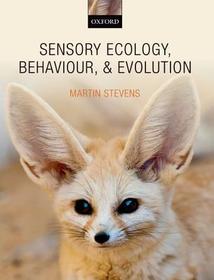
Sensory Ecology, Behaviour, and Evolution
- Publisher's listprice GBP 155.00
-
69 982 Ft (66 650 Ft + 5% VAT)
The price is estimated because at the time of ordering we do not know what conversion rates will apply to HUF / product currency when the book arrives. In case HUF is weaker, the price increases slightly, in case HUF is stronger, the price goes lower slightly.
- Discount 10% (cc. 6 998 Ft off)
- Discounted price 62 984 Ft (59 985 Ft + 5% VAT)
Subcribe now and take benefit of a favourable price.
Subscribe
69 982 Ft

Availability
printed on demand
Why don't you give exact delivery time?
Delivery time is estimated on our previous experiences. We give estimations only, because we order from outside Hungary, and the delivery time mainly depends on how quickly the publisher supplies the book. Faster or slower deliveries both happen, but we do our best to supply as quickly as possible.
Product details:
- Publisher OUP Oxford
- Date of Publication 7 February 2013
- ISBN 9780199601776
- Binding Hardback
- No. of pages260 pages
- Size 254x192x16 mm
- Weight 724 g
- Language English
- Illustrations 68 colour line drawings, 45 colour halftones 0
Categories
Short description:
This is the first modern textbook of sensory ecology. It provides an introduction to the key ideas, theories, and examples, describes how sensory systems work, and explores the links between the senses, animal signals, behaviour, and evolution. The book also tackles mechanistic and functional questions, integrating theoretical and empirical work.
MoreLong description:
Throughout their lives animals must complete many tasks, including finding food, avoiding predators, attracting mates, and navigating through a complex and dynamic environment. Consequently, they have evolved a staggering array of sensory organs that are fundamental to survival and reproduction and shape much of their evolution and behaviour. Sensory ecology deals with how animals acquire, process, and use information in their lives, and the sensory systems involved. It investigates the type of information that is gathered by animals, how it is used in a range of behaviours, and the evolution of such traits. It deals with both mechanistic questions (e.g. how sensory receptors capture information from the environment, and how the physical attributes of the environment affect information transmission) and functional questions (e.g. the adaptive significance of the information used by the animal to make a decision). Recent research has dealt more explicitly with how sensory systems are involved with and even drive evolutionary change, including the formation of new species.
Sensory Ecology, Behaviour, and Evolution provides a broad introduction to sensory ecology across a wide range of taxonomic groups, covering all the various sensory modalities (e.g. sound, visual, chemical, magnetic, and electric) relating to diverse areas spanning anti-predator strategies, foraging, mate choice, navigation and more, with the aim being to illustrate key principles and differences. This accessible textbook is suitable for senior undergraduates, graduate students, and professional academics taking courses or conducting research in sensory ecology/biology, neuroethology, behavioural and evolutionary ecology, communication, and signalling. It will also be of relevance and use to psychologists interested in sensory information and behaviour.
This book is an ambitious and successful attempt to integrate mechanistic and functional aspects of communication by the authors ... essential reading.
Table of Contents:
Part 1: Introduction
Sensory Ecology, Information, and Decision Making
Part 2: Sensory Processing
Sensing the World
Encoding Information
Sensory Systems: Trade-Offs, Costs, and Sensory Integration
Part 3: Communication
Signalling and Communication
Multimodal Signals and Communication
Trade-Offs and Costs in Signalling
Deception, Mimicry, and Sensory Exploitation
Part 4: Diversification and Divergence
Arms Races, Coevolution, and Diversification
Adapting to the Environment
Divergence, Sensory Drive, and Speciation
Part 5: Conclusions
Concluding Remarks

