

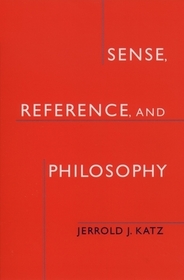
Sense, Reference, and Philosophy
-
10% KEDVEZMÉNY?
- A kedvezmény csak az 'Értesítés a kedvenc témákról' hírlevelünk címzettjeinek rendeléseire érvényes.
- Kiadói listaár GBP 102.50
-
46 278 Ft (44 075 Ft + 5% áfa)
Az ár azért becsült, mert a rendelés pillanatában nem lehet pontosan tudni, hogy a beérkezéskor milyen lesz a forint árfolyama az adott termék eredeti devizájához képest. Ha a forint romlana, kissé többet, ha javulna, kissé kevesebbet kell majd fizetnie.
- Kedvezmény(ek) 10% (kb. 4 627 Ft)
- Kedvezményes ár 41 651 Ft (39 668 Ft + 5% áfa)
Iratkozzon fel most és részesüljön kedvezőbb árainkból!
Feliratkozom
46 278 Ft

Beszerezhetőség
Megrendelésre a kiadó utánnyomja a könyvet. Rendelhető, de a szokásosnál kicsit lassabban érkezik meg.
Why don't you give exact delivery time?
A beszerzés időigényét az eddigi tapasztalatokra alapozva adjuk meg. Azért becsült, mert a terméket külföldről hozzuk be, így a kiadó kiszolgálásának pillanatnyi gyorsaságától is függ. A megadottnál gyorsabb és lassabb szállítás is elképzelhető, de mindent megteszünk, hogy Ön a lehető leghamarabb jusson hozzá a termékhez.
A termék adatai:
- Kiadó OUP Oxford
- Megjelenés dátuma 2004. február 19.
- ISBN 9780195158137
- Kötéstípus Keménykötés
- Terjedelem224 oldal
- Méret 152x229x17 mm
- Súly 526 g
- Nyelv angol
- Illusztrációk numerous figures 0
Kategóriák
Rövid leírás:
Sense, Reference, and Philosophy develops the far-reaching consequences for philosophy of adopting non-Fregean intensionalism, showing that long-standing problems in the philosophy of language, and indeed other areas, that appeared intractable can now be solved. Katz proceeds to examine some of those problems in this new light, including the problem of the names, natural kind terms, the Liar Paradox, the distinction between logical and extra-logical vocabulary, and the Raven paradox. In each case, a non-Fregean intentionalism provides a philosophically more satisfying solution.
TöbbHosszú leírás:
Sense, Reference, and Philosophy develops the far-reaching consequences for philosophy of adopting non-Fregean intensionalism, showing that long-standing problems in the philosophy of language, and indeed other areas, that appeared intractable can now be solved. Katz proceeds to examine some of those problems in this new light, including the problem of names, natural kind terms, the Liar Paradox, the distinction between logical and extra-logical vocabulary, and the Raven paradox. In each case, a non-Fregean intentionalism provides a philosophically more satisfying solution.
Katz's book is a welcome addition to the literature, the product of a masterful philosopher of language and linguistics which lives up to expectations.

