

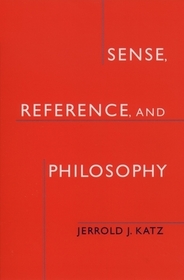
Sense, Reference, and Philosophy
- Publisher's listprice GBP 102.50
-
46 278 Ft (44 075 Ft + 5% VAT)
The price is estimated because at the time of ordering we do not know what conversion rates will apply to HUF / product currency when the book arrives. In case HUF is weaker, the price increases slightly, in case HUF is stronger, the price goes lower slightly.
- Discount 10% (cc. 4 627 Ft off)
- Discounted price 41 651 Ft (39 668 Ft + 5% VAT)
Subcribe now and take benefit of a favourable price.
Subscribe
46 278 Ft

Availability
printed on demand
Why don't you give exact delivery time?
Delivery time is estimated on our previous experiences. We give estimations only, because we order from outside Hungary, and the delivery time mainly depends on how quickly the publisher supplies the book. Faster or slower deliveries both happen, but we do our best to supply as quickly as possible.
Product details:
- Publisher OUP Oxford
- Date of Publication 19 February 2004
- ISBN 9780195158137
- Binding Hardback
- No. of pages224 pages
- Size 152x229x17 mm
- Weight 526 g
- Language English
- Illustrations numerous figures 0
Categories
Short description:
Sense, Reference, and Philosophy develops the far-reaching consequences for philosophy of adopting non-Fregean intensionalism, showing that long-standing problems in the philosophy of language, and indeed other areas, that appeared intractable can now be solved. Katz proceeds to examine some of those problems in this new light, including the problem of the names, natural kind terms, the Liar Paradox, the distinction between logical and extra-logical vocabulary, and the Raven paradox. In each case, a non-Fregean intentionalism provides a philosophically more satisfying solution.
MoreLong description:
Sense, Reference, and Philosophy develops the far-reaching consequences for philosophy of adopting non-Fregean intensionalism, showing that long-standing problems in the philosophy of language, and indeed other areas, that appeared intractable can now be solved. Katz proceeds to examine some of those problems in this new light, including the problem of names, natural kind terms, the Liar Paradox, the distinction between logical and extra-logical vocabulary, and the Raven paradox. In each case, a non-Fregean intentionalism provides a philosophically more satisfying solution.
Katz's book is a welcome addition to the literature, the product of a masterful philosopher of language and linguistics which lives up to expectations.

