

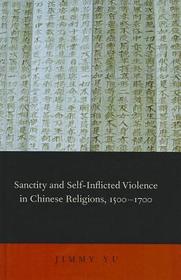
Sanctity and Self-Inflicted Violence in Chinese Religions, 1500-1700
-
10% KEDVEZMÉNY?
- A kedvezmény csak az 'Értesítés a kedvenc témákról' hírlevelünk címzettjeinek rendeléseire érvényes.
- Kiadói listaár GBP 68.00
-
32 487 Ft (30 940 Ft + 5% áfa)
Az ár azért becsült, mert a rendelés pillanatában nem lehet pontosan tudni, hogy a beérkezéskor milyen lesz a forint árfolyama az adott termék eredeti devizájához képest. Ha a forint romlana, kissé többet, ha javulna, kissé kevesebbet kell majd fizetnie.
- Kedvezmény(ek) 10% (cc. 3 249 Ft off)
- Kedvezményes ár 29 238 Ft (27 846 Ft + 5% áfa)
Iratkozzon fel most és részesüljön kedvezőbb árainkból!
Feliratkozom
32 487 Ft

Beszerezhetőség
Megrendelésre a kiadó utánnyomja a könyvet. Rendelhető, de a szokásosnál kicsit lassabban érkezik meg.
Why don't you give exact delivery time?
A beszerzés időigényét az eddigi tapasztalatokra alapozva adjuk meg. Azért becsült, mert a terméket külföldről hozzuk be, így a kiadó kiszolgálásának pillanatnyi gyorsaságától is függ. A megadottnál gyorsabb és lassabb szállítás is elképzelhető, de mindent megteszünk, hogy Ön a lehető leghamarabb jusson hozzá a termékhez.
A termék adatai:
- Kiadó OUP USA
- Megjelenés dátuma 2012. május 24.
- ISBN 9780199844883
- Kötéstípus Keménykötés
- Terjedelem288 oldal
- Méret 163x239x22 mm
- Súly 567 g
- Nyelv angol
- Illusztrációk 4 illustrations 0
Kategóriák
Rövid leírás:
Jimmy Yu reveals that in the sixteenth and seventeenth centuries, self-inflicted violence was an essential and sanctioned part of Chinese culture. He examines a wide range of practices, including blood writing, filial body-slicing, chastity mutilations and suicides, ritual exposure, and self-immolation, arguing that each practice was public, scripted, and a signal of certain cultural expectations.
TöbbHosszú leírás:
In this illuminating study of a vital but long overlooked aspect of Chinese religious life, Jimmy Yu reveals that in the sixteenth and seventeenth centuries, self-inflicted violence was an essential and sanctioned part of Chinese culture. He examines a wide range of practices, including blood writing, filial body-slicing, chastity mutilations and suicides, ritual exposure, and self-immolation, arguing that each practice was public, scripted, and a signal of certain cultural expectations.
Yu shows how individuals engaged in acts of self-inflicted violence to exercise power and to affect society, by articulating moral values, reinstituting order, forging new social relations, and protecting against the threat of moral ambiguity. Self-inflicted violence was intelligible both to the person doing the act and to those who viewed and interpreted it, regardless of the various religions of the period: Buddhism, Daoism, Confucianism, and other religions.
Self-inflicted violence as a category reveals scholarly biases that tend to marginalize or exaggerate certain phenomena in Chinese culture. Yu offers a groundbreaking contribution to scholarship on bodily practices in late imperial China, challenging preconceived ideas about analytic categories of religion, culture, and ritual in the study of Chinese religions.
this is an important and original study that should be widely read by students of Chinese culture and society.
Tartalomjegyzék:
List of illustrations
Acknowledgement
A Note on Dynasties and Reigns
Introduction
1. A Culture in Flux: Historical Background
2. Embodying the Text through Blood Writing
3. Nourishing the Parent with One's Own Flesh
4. Chaste Widows as Entertainment and Revenants
5. Exposing and Burning the Body for Rain
6. Conclusion
Character Glossary
Abbreviations and Conventions
Bibliography
Index

