

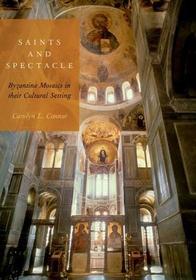
Saints and Spectacle
Byzantine Mosaics in their Cultural Setting
-
10% KEDVEZMÉNY?
- A kedvezmény csak az 'Értesítés a kedvenc témákról' hírlevelünk címzettjeinek rendeléseire érvényes.
- Kiadói listaár GBP 110.00
-
49 665 Ft (47 300 Ft + 5% áfa)
Az ár azért becsült, mert a rendelés pillanatában nem lehet pontosan tudni, hogy a beérkezéskor milyen lesz a forint árfolyama az adott termék eredeti devizájához képest. Ha a forint romlana, kissé többet, ha javulna, kissé kevesebbet kell majd fizetnie.
- Kedvezmény(ek) 10% (cc. 4 967 Ft off)
- Kedvezményes ár 44 699 Ft (42 570 Ft + 5% áfa)
Iratkozzon fel most és részesüljön kedvezőbb árainkból!
Feliratkozom
49 665 Ft

Beszerezhetőség
Megrendelésre a kiadó utánnyomja a könyvet. Rendelhető, de a szokásosnál kicsit lassabban érkezik meg.
Why don't you give exact delivery time?
A beszerzés időigényét az eddigi tapasztalatokra alapozva adjuk meg. Azért becsült, mert a terméket külföldről hozzuk be, így a kiadó kiszolgálásának pillanatnyi gyorsaságától is függ. A megadottnál gyorsabb és lassabb szállítás is elképzelhető, de mindent megteszünk, hogy Ön a lehető leghamarabb jusson hozzá a termékhez.
A termék adatai:
- Kiadó OUP USA
- Megjelenés dátuma 2016. április 7.
- ISBN 9780190457624
- Kötéstípus Keménykötés
- Terjedelem232 oldal
- Méret 257x178x17 mm
- Súly 699 g
- Nyelv angol
- Illusztrációk 54 illustrations, 31 in color 0
Kategóriák
Rövid leírás:
Saints and Spectacle explains, for the first time, how the spectacurlar gold ground mosaics of the Middle Byzantine period were likely conceived. Through a recreation of the circumstances of this time, Saints and Spectacle brings the Middle Byzantine church to life as the witness to a compelling and fascinating drama.
TöbbHosszú leírás:
Saints and Spectacle examines the origins and reception of the Middle Byzantine program of mosaic decoration. This complex and colorful system of images covers the walls and vaults of churches with figures and compositions seen against a dazzling gold ground. The surviving eleventh-century churches with their wall and vault mosaics largely intact, Hosios Loukas, Nea Moni and Daphni in Greece, pose the challenge of how, when and where this complex and gloriously conceived system was created.
Using an interdisciplinary approach, Connor explores the urban culture and context of church-building in Constantinople, capital of the Byzantine Empire, during the century following the end of Iconoclasm, of around 843 to 950. The application of an innovative frame of reference, through ritual studies, helps recreate the likely scenario in which the medium of mosaics attained its highest potential, in the mosaiced Byzantine church. For mosaics were enlisted to convey a religious and political message that was too nuanced to be expressed in any other way. At a time of revival of learning and the arts, and development of ceremonial practices, the Byzantine emperor and patriarch were united in creating a solution to the problem of consolidating the Greek Orthodox Byzantine Empire. It was through promoting a vision of the unchallengeable authority residing in God and his earthly representative, the emperor. The beliefs and processional practices affirming the protective role of the saints in which the entire city participated, were critical to the reception of this vision by the populace as well as the court. Mosaics were a luxury medium that was ideally situated aesthetically to convey a message at a particularly important historical moment--a brilliant solution to a problem that was to subtly unite an empire for centuries to come. Supported by a wealth of testimony from literary sources, Saints and Spectacle brings the Middle Byzantine church to life as the witness to a compelling and fascinating drama.
The origins of the Middle-Byzantine system in church decoration, as well as the capital/provinces dichotomy, have remained open questions since the fundamental studies by Otto Demus. By highlighting performative facets of this system, which reflect the ritual art of the palace and patriarchate that was used to forge the Empire's cultural and political identity, Connor succeeds in illuminating the diversity of the more or less subtle nuances of the medium.
Tartalomjegyzék:
List of Illustrations
Abbreviations
Acknowledgments
Introduction
Chapter One Byzantine Mosaics: Appearance and Character
Chapter Two The Lost Mosaics of Constantinople and the Middle Byzantine Program of Church Decoration
Chapter Three Urban Culture of the Ninth and Tenth Centuries
Chapter Four Feasting the Saints: The Sanctoral Topography of Constantinople
Chapter Five Mosaics as a Ritual Art: Byzantine Mosaics at Work
Appendices
Bibliography
Index

