

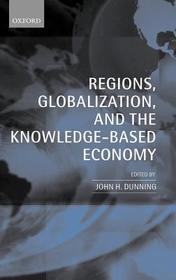
Regions, Globalization, and the Knowledge-Based Economy
-
10% KEDVEZMÉNY?
- A kedvezmény csak az 'Értesítés a kedvenc témákról' hírlevelünk címzettjeinek rendeléseire érvényes.
- Kiadói listaár GBP 250.00
-
112 875 Ft (107 500 Ft + 5% áfa)
Az ár azért becsült, mert a rendelés pillanatában nem lehet pontosan tudni, hogy a beérkezéskor milyen lesz a forint árfolyama az adott termék eredeti devizájához képest. Ha a forint romlana, kissé többet, ha javulna, kissé kevesebbet kell majd fizetnie.
- Kedvezmény(ek) 10% (cc. 11 288 Ft off)
- Kedvezményes ár 101 588 Ft (96 750 Ft + 5% áfa)
Iratkozzon fel most és részesüljön kedvezőbb árainkból!
Feliratkozom
112 875 Ft

Beszerezhetőség
Megrendelésre a kiadó utánnyomja a könyvet. Rendelhető, de a szokásosnál kicsit lassabban érkezik meg.
Why don't you give exact delivery time?
A beszerzés időigényét az eddigi tapasztalatokra alapozva adjuk meg. Azért becsült, mert a terméket külföldről hozzuk be, így a kiadó kiszolgálásának pillanatnyi gyorsaságától is függ. A megadottnál gyorsabb és lassabb szállítás is elképzelhető, de mindent megteszünk, hogy Ön a lehető leghamarabb jusson hozzá a termékhez.
A termék adatai:
- Kiadó OUP Oxford
- Megjelenés dátuma 2000. szeptember 21.
- ISBN 9780198295365
- Kötéstípus Keménykötés
- Terjedelem520 oldal
- Méret 242x164x32 mm
- Súly 905 g
- Nyelv angol 0
Kategóriák
Rövid leírás:
A rich and informative book which considers the key dynamics and characteristics of the new global economy. How can we explain the paradox of growing transnationalization of the production of goods and services and the tendency for certain kinds of activities to be concentrated or 'clustered' in one place? In today's changing economic environment how do firms make decisions about location and about the development and deployment of their distinctive capabilities? John Dunning heads a team of leading international contributors in this follow-up to the highly successful Governments, Globalization, and International Business (OUP, 1997).
TöbbHosszú leírás:
What are the links between the impact of increasing globalization and the advent of the knowledge economy on the spatial distribution of economic activity? How can we explain the paradox of growing trans-nationalization of the production of goods and services and the tendency for certain kinds of activity–particularly knowledge intensive activities - to be concentrated or clustered in one place? In this changing environment how do firms make decisions about location, and the development and deployment of their distinctive capabilities?
These are some of the important questions addressed in this volume by a team of leading international scholars looking at these dynamics in broad scope. The book presents different disciplinary approaches to the knowledge economy viewed from an international perspective, and includes detailed case analysis of its impact in different parts of the world. It moves between the supra- national macro region and the micro cluster, as well as looking at associated infrastructural and policy responses.
This is a rich and informative book that attempts to explain some of the key dynamics and characteristics of the new global economy. It will be essential reading for academics in business, economics, geography and political science wanting to get to grips with current thinking and developments.
Interesting and stimulating ... a highly readable set of essays on globalisation and knowledge-based economy. The book will undoubtedly be of great interest to business practitioners, policy makers and academics.
Tartalomjegyzék:
Part I: Analytical Foundations
Chapter 1: Regions, Globalization, and the Knowledge Economy: The issues stated
Chapter 2: Globalization and Knowledge Flows: An industrial geographer's perspective
Chapter 3: Knowledge, Globalization, and Regions: An economist's perspective
Chapter 4: Multinational Enterprises and the Knowledge Economy: Leveraging global practices
Part II: Macro-Regional Integration and the Knowledge Based Economy
Chapter 5: Regional Integration and Foreign Direct Investment: Some general issues
Chapter 6: The Impact of the Completion of the European Internal Market on FDI
Chapter 7: Regional Integration: NAFTA and the reconfiguration of North American industry
Part III: Country Case Studies
Chapter 8: Foreign Direct Investment into the United States: A sub-national investigation
Chapter 9: Policy Partnership in the Development of Knowledge Industries in Scotland
Chapter 10: De-Regionalization, Re-Regionalization, and the Uncertain Future of European Industrial Districts: Thoughts mostly on Baden Wurttemberg in the late 1990s
Chapter 11: Firms, Regions, and Strategy in a Diverging World: The Australian case
Chapter 12: Innovation Systems, Networks, and the Knowledge-Based Economy in Korea
Chapter 13: The Software Cluster in Bangalore
Chapter 14: Singapore: Destination for multinationals
Chapter 15: Globalization, Regionalization, and the Knowledge-Based Economy in Hong Kong
Part IV: Policy Implications
Chapter 16: Towards a Theory of Regional Policy
Chapter 17: The Changing Nature of Foreign Investment Policy in Europe: From promotion to management
Chapter 18: Silicon Valley and the Resurgence of Route 128: Systems integration and regional innovation

