

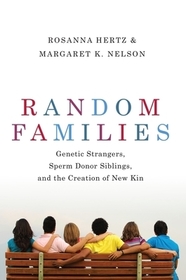
Random Families
Genetic Strangers, Sperm Donor Siblings, and the Creation of New Kin
-
20% KEDVEZMÉNY?
- A kedvezmény csak az 'Értesítés a kedvenc témákról' hírlevelünk címzettjeinek rendeléseire érvényes.
- Kiadói listaár GBP 18.99
-
8 573 Ft (8 165 Ft + 5% áfa)
Az ár azért becsült, mert a rendelés pillanatában nem lehet pontosan tudni, hogy a beérkezéskor milyen lesz a forint árfolyama az adott termék eredeti devizájához képest. Ha a forint romlana, kissé többet, ha javulna, kissé kevesebbet kell majd fizetnie.
- Kedvezmény(ek) 20% (cc. 1 715 Ft off)
- Kedvezményes ár 6 859 Ft (6 532 Ft + 5% áfa)
- A kedvezmény érvényes eddig: 2026. június 30.
Iratkozzon fel most és részesüljön kedvezőbb árainkból!
Feliratkozom
8 573 Ft

Beszerezhetőség
Becsült beszerzési idő: A Prosperónál jelenleg nincsen raktáron, de a kiadónál igen. Beszerzés kb. 3-5 hét..
A Prosperónál jelenleg nincsen raktáron.
Why don't you give exact delivery time?
A beszerzés időigényét az eddigi tapasztalatokra alapozva adjuk meg. Azért becsült, mert a terméket külföldről hozzuk be, így a kiadó kiszolgálásának pillanatnyi gyorsaságától is függ. A megadottnál gyorsabb és lassabb szállítás is elképzelhető, de mindent megteszünk, hogy Ön a lehető leghamarabb jusson hozzá a termékhez.
A termék adatai:
- Kiadó OUP USA
- Megjelenés dátuma 2020. szeptember 8.
- ISBN 9780197519981
- Kötéstípus Puhakötés
- Terjedelem312 oldal
- Méret 234x155x20 mm
- Súly 454 g
- Nyelv angol
- Illusztrációk 1 line drawing ; 6 halftones 36
Kategóriák
Rövid leírás:
The ready availability of donated sperm and eggs has made possible an entirely new form of family. Children of the same donor and their families, with the help of social media and the internet, can now locate each other and make contact. Based on over 350 interviews with children and parents, Rosanna Hertz and Margaret K. Nelson share how these remarkable relationships woven from tenuous bits of information and fueled by intense curiosity are expanding the possibilities for kinship. Random Families is a highly readable account of life at the intersection of reproductive technology, social media, and the human desire for intimacy and identity.
TöbbHosszú leírás:
Random Families is about the unprecedented families that have grown up at the intersection of new reproductive technologies, social media, and the human desire for belonging. Children of the same donor and their families, with the help of the internet, can now locate each other and make contact. Based on over 350 interviews with children (ages 10-28), their parents and related donors from all over the U.S., Random Families chronicles the chain of choices that couples and single mothers make from what donor to use to how to participate (or not) in donor sibling networks. Children reveal their understanding of a donor, the donor's spot on the family tree and the meaning of their donor siblings. Through rich first-person accounts of network membership, the book illustrates how these extraordinary relationships-woven from bits of online information and shared genetic ties-are transformed into new possibilities for kinship. Random Families offers down-to-earth stories from real families to highlight just how truly distinctive these contemporary new forms of family are.
The scope of Random Families is astounding...Hertz and Nelson have made a significant contribution to what is an area of research in its infancy and have sparked an important conversation on what it means to be a family.
Tartalomjegyzék:
Introduction: Unprecedented Relationships
Part I: Making Sense of the Donor and Donor Siblings
Chapter 1. Choosing Donors
Chapter 2. Inventing the Donor / Inventing the Self
Chapter 3. Parents Make Contact with Genetic Strangers
Chapter 4. The Surprise of donor siblings
Part II: Networks of Donor Siblings
Chapter 5. Michael's Clan: The Arrival of the Father
Chapter 6. 7008 Builders: We are Family
Chapter 7. The Tourists: Just Related Strangers
Chapter 8. Connected Soul Mates: Emotional Ties
Chapter 9. The Social Capitalists: Joining The Preschoolers Group
Chapter 10. Donor Sibling Networks: Continuity and Change
Conclusion: Choice in Donor Sibling Networks
Appendix A: Respondents
Appendix B: Interviews, Virtual Ethnography And Language In The Book
Endnotes
Bibliography

