

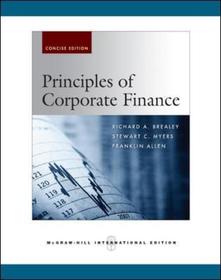
Principles of Corporate Finance Concise w/Bind-in Card--Mandatory Package
-
10% KEDVEZMÉNY?
- A kedvezmény csak az 'Értesítés a kedvenc témákról' hírlevelünk címzettjeinek rendeléseire érvényes.
- Kiadói listaár GBP 52.99
-
23 924 Ft (22 785 Ft + 5% áfa)
Az ár azért becsült, mert a rendelés pillanatában nem lehet pontosan tudni, hogy a beérkezéskor milyen lesz a forint árfolyama az adott termék eredeti devizájához képest. Ha a forint romlana, kissé többet, ha javulna, kissé kevesebbet kell majd fizetnie.
- Kedvezmény(ek) 10% (cc. 2 392 Ft off)
- Kedvezményes ár 21 532 Ft (20 507 Ft + 5% áfa)
Iratkozzon fel most és részesüljön kedvezőbb árainkból!
Feliratkozom
23 924 Ft

Beszerezhetőség
Bizonytalan a beszerezhetőség. Érdemes még egyszer keresni szerzővel és címmel. Ha nem talál másik, kapható kiadást, forduljon ügyfélszolgálatunkhoz!
Why don't you give exact delivery time?
A beszerzés időigényét az eddigi tapasztalatokra alapozva adjuk meg. Azért becsült, mert a terméket külföldről hozzuk be, így a kiadó kiszolgálásának pillanatnyi gyorsaságától is függ. A megadottnál gyorsabb és lassabb szállítás is elképzelhető, de mindent megteszünk, hogy Ön a lehető leghamarabb jusson hozzá a termékhez.
A termék adatai:
- Kiadó McGraw-Hill Higher Education
- Megjelenés dátuma 2008. április 1.
- ISBN 9780071275613
- Kötéstípus Puhakötés
- Terjedelem oldal
- Méret 254x203x23 mm
- Súly 1230 g
- Nyelv angol 0
Kategóriák
Hosszú leírás:
Throughout the book the authors show how managers use financial theory to solve practical problems and as a way of learning how to respond to change by showing not just how but why companies and management act as they do. The first eleven chapters are essentially the same as those in Principles. They cover the time value of money, the valuation of bonds and stocks, and practical capital budgeting decisions. The remaining chapters discuss market efficiency, payout policy, and capital structure, option valuation, and long and short-term financial planning.
The text is modular, so that Parts can be introduced in an alternative order.
Tartalomjegyzék:
Part One: Value
1- Finance and the Financial Manager
2- Present Values, the Objectives of the Firm and Corporate Governance
3- How to Calculate Present Values
4- Valuing Bonds
5- The Value of Common Stocks
6- Why Net Present Value Leads to Better Investment Decisions than Other Criteria
7- Making Investment Decisions with the Net Present Value Rule
Part Two: Risk
8- Introduction to Risk, Return, and the Opportunity Cost of Capital
9- Risk and Return
10- Capital Budgeting and Risk
Part Three: Best Practices in Capital Budgeting
11- Project Analysis
Part Four: Financing Decisions and Market Efficiency
12- Efficient Markets and Behavioral Finance
Part Five: Payout Policy and Capital Structure
13- Payout Policy
14- Does Debt Policy Matter?
15- How Much Should a Firm Borrow?
16- Financing and Valuation
Part Six: Options
17- Understanding Options
18- Valuing Options
Part Seven: Financial Planning and the Management of Working Capital
19- Financial Analysis and Planning
20- Short-Term Financial Planning
Több
2- Present Values, the Objectives of the Firm and Corporate Governance
3- How to Calculate Present Values
4- Valuing Bonds
5- The Value of Common Stocks
6- Why Net Present Value Leads to Better Investment Decisions than Other Criteria
7- Making Investment Decisions with the Net Present Value Rule
Part Two: Risk
8- Introduction to Risk, Return, and the Opportunity Cost of Capital
9- Risk and Return
10- Capital Budgeting and Risk
Part Three: Best Practices in Capital Budgeting
11- Project Analysis
Part Four: Financing Decisions and Market Efficiency
12- Efficient Markets and Behavioral Finance
Part Five: Payout Policy and Capital Structure
13- Payout Policy
14- Does Debt Policy Matter?
15- How Much Should a Firm Borrow?
16- Financing and Valuation
Part Six: Options
17- Understanding Options
18- Valuing Options
Part Seven: Financial Planning and the Management of Working Capital
19- Financial Analysis and Planning
20- Short-Term Financial Planning
Több
4- Valuing Bonds
5- The Value of Common Stocks
6- Why Net Present Value Leads to Better Investment Decisions than Other Criteria
7- Making Investment Decisions with the Net Present Value Rule
Part Two: Risk
8- Introduction to Risk, Return, and the Opportunity Cost of Capital
9- Risk and Return
10- Capital Budgeting and Risk
Part Three: Best Practices in Capital Budgeting
11- Project Analysis
Part Four: Financing Decisions and Market Efficiency
12- Efficient Markets and Behavioral Finance
Part Five: Payout Policy and Capital Structure
13- Payout Policy
14- Does Debt Policy Matter?
15- How Much Should a Firm Borrow?
16- Financing and Valuation
Part Six: Options
17- Understanding Options
18- Valuing Options
Part Seven: Financial Planning and the Management of Working Capital
19- Financial Analysis and Planning
20- Short-Term Financial Planning
Több
6- Why Net Present Value Leads to Better Investment Decisions than Other Criteria
7- Making Investment Decisions with the Net Present Value Rule
Part Two: Risk
8- Introduction to Risk, Return, and the Opportunity Cost of Capital
9- Risk and Return
10- Capital Budgeting and Risk
Part Three: Best Practices in Capital Budgeting
11- Project Analysis
Part Four: Financing Decisions and Market Efficiency
12- Efficient Markets and Behavioral Finance
Part Five: Payout Policy and Capital Structure
13- Payout Policy
14- Does Debt Policy Matter?
15- How Much Should a Firm Borrow?
16- Financing and Valuation
Part Six: Options
17- Understanding Options
18- Valuing Options
Part Seven: Financial Planning and the Management of Working Capital
19- Financial Analysis and Planning
20- Short-Term Financial Planning
Több
Part Two: Risk
8- Introduction to Risk, Return, and the Opportunity Cost of Capital
9- Risk and Return
10- Capital Budgeting and Risk
Part Three: Best Practices in Capital Budgeting
11- Project Analysis
Part Four: Financing Decisions and Market Efficiency
12- Efficient Markets and Behavioral Finance
Part Five: Payout Policy and Capital Structure
13- Payout Policy
14- Does Debt Policy Matter?
15- How Much Should a Firm Borrow?
16- Financing and Valuation
Part Six: Options
17- Understanding Options
18- Valuing Options
Part Seven: Financial Planning and the Management of Working Capital
19- Financial Analysis and Planning
20- Short-Term Financial Planning
Több
9- Risk and Return
10- Capital Budgeting and Risk
Part Three: Best Practices in Capital Budgeting
11- Project Analysis
Part Four: Financing Decisions and Market Efficiency
12- Efficient Markets and Behavioral Finance
Part Five: Payout Policy and Capital Structure
13- Payout Policy
14- Does Debt Policy Matter?
15- How Much Should a Firm Borrow?
16- Financing and Valuation
Part Six: Options
17- Understanding Options
18- Valuing Options
Part Seven: Financial Planning and the Management of Working Capital
19- Financial Analysis and Planning
20- Short-Term Financial Planning
Több
Part Three: Best Practices in Capital Budgeting
11- Project Analysis
Part Four: Financing Decisions and Market Efficiency
12- Efficient Markets and Behavioral Finance
Part Five: Payout Policy and Capital Structure
13- Payout Policy
14- Does Debt Policy Matter?
15- How Much Should a Firm Borrow?
16- Financing and Valuation
Part Six: Options
17- Understanding Options
18- Valuing Options
Part Seven: Financial Planning and the Management of Working Capital
19- Financial Analysis and Planning
20- Short-Term Financial Planning
Több
Part Four: Financing Decisions and Market Efficiency

