

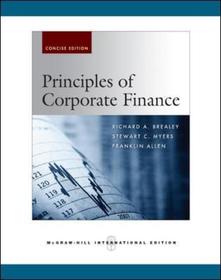
Principles of Corporate Finance Concise w/Bind-in Card--Mandatory Package
- Publisher's listprice GBP 52.99
-
23 924 Ft (22 785 Ft + 5% VAT)
The price is estimated because at the time of ordering we do not know what conversion rates will apply to HUF / product currency when the book arrives. In case HUF is weaker, the price increases slightly, in case HUF is stronger, the price goes lower slightly.
- Discount 10% (cc. 2 392 Ft off)
- Discounted price 21 532 Ft (20 507 Ft + 5% VAT)
Subcribe now and take benefit of a favourable price.
Subscribe
23 924 Ft

Availability
Uncertain availability. Please turn to our customer service.
Why don't you give exact delivery time?
Delivery time is estimated on our previous experiences. We give estimations only, because we order from outside Hungary, and the delivery time mainly depends on how quickly the publisher supplies the book. Faster or slower deliveries both happen, but we do our best to supply as quickly as possible.
Product details:
- Publisher McGraw-Hill Higher Education
- Date of Publication 1 April 2008
- ISBN 9780071275613
- Binding Paperback
- No. of pages pages
- Size 254x203x23 mm
- Weight 1230 g
- Language English 0
Categories
Long description:
Throughout the book the authors show how managers use financial theory to solve practical problems and as a way of learning how to respond to change by showing not just how but why companies and management act as they do. The first eleven chapters are essentially the same as those in Principles. They cover the time value of money, the valuation of bonds and stocks, and practical capital budgeting decisions. The remaining chapters discuss market efficiency, payout policy, and capital structure, option valuation, and long and short-term financial planning.
The text is modular, so that Parts can be introduced in an alternative order.
Table of Contents:
Part One: Value
1- Finance and the Financial Manager
2- Present Values, the Objectives of the Firm and Corporate Governance
3- How to Calculate Present Values
4- Valuing Bonds
5- The Value of Common Stocks
6- Why Net Present Value Leads to Better Investment Decisions than Other Criteria
7- Making Investment Decisions with the Net Present Value Rule
Part Two: Risk
8- Introduction to Risk, Return, and the Opportunity Cost of Capital
9- Risk and Return
10- Capital Budgeting and Risk
Part Three: Best Practices in Capital Budgeting
11- Project Analysis
Part Four: Financing Decisions and Market Efficiency
12- Efficient Markets and Behavioral Finance
Part Five: Payout Policy and Capital Structure
13- Payout Policy
14- Does Debt Policy Matter?
15- How Much Should a Firm Borrow?
16- Financing and Valuation
Part Six: Options
17- Understanding Options
18- Valuing Options
Part Seven: Financial Planning and the Management of Working Capital
19- Financial Analysis and Planning
20- Short-Term Financial Planning
More
2- Present Values, the Objectives of the Firm and Corporate Governance
3- How to Calculate Present Values
4- Valuing Bonds
5- The Value of Common Stocks
6- Why Net Present Value Leads to Better Investment Decisions than Other Criteria
7- Making Investment Decisions with the Net Present Value Rule
Part Two: Risk
8- Introduction to Risk, Return, and the Opportunity Cost of Capital
9- Risk and Return
10- Capital Budgeting and Risk
Part Three: Best Practices in Capital Budgeting
11- Project Analysis
Part Four: Financing Decisions and Market Efficiency
12- Efficient Markets and Behavioral Finance
Part Five: Payout Policy and Capital Structure
13- Payout Policy
14- Does Debt Policy Matter?
15- How Much Should a Firm Borrow?
16- Financing and Valuation
Part Six: Options
17- Understanding Options
18- Valuing Options
Part Seven: Financial Planning and the Management of Working Capital
19- Financial Analysis and Planning
20- Short-Term Financial Planning
More
4- Valuing Bonds
5- The Value of Common Stocks
6- Why Net Present Value Leads to Better Investment Decisions than Other Criteria
7- Making Investment Decisions with the Net Present Value Rule
Part Two: Risk
8- Introduction to Risk, Return, and the Opportunity Cost of Capital
9- Risk and Return
10- Capital Budgeting and Risk
Part Three: Best Practices in Capital Budgeting
11- Project Analysis
Part Four: Financing Decisions and Market Efficiency
12- Efficient Markets and Behavioral Finance
Part Five: Payout Policy and Capital Structure
13- Payout Policy
14- Does Debt Policy Matter?
15- How Much Should a Firm Borrow?
16- Financing and Valuation
Part Six: Options
17- Understanding Options
18- Valuing Options
Part Seven: Financial Planning and the Management of Working Capital
19- Financial Analysis and Planning
20- Short-Term Financial Planning
More
6- Why Net Present Value Leads to Better Investment Decisions than Other Criteria
7- Making Investment Decisions with the Net Present Value Rule
Part Two: Risk
8- Introduction to Risk, Return, and the Opportunity Cost of Capital
9- Risk and Return
10- Capital Budgeting and Risk
Part Three: Best Practices in Capital Budgeting
11- Project Analysis
Part Four: Financing Decisions and Market Efficiency
12- Efficient Markets and Behavioral Finance
Part Five: Payout Policy and Capital Structure
13- Payout Policy
14- Does Debt Policy Matter?
15- How Much Should a Firm Borrow?
16- Financing and Valuation
Part Six: Options
17- Understanding Options
18- Valuing Options
Part Seven: Financial Planning and the Management of Working Capital
19- Financial Analysis and Planning
20- Short-Term Financial Planning
More
Part Two: Risk
8- Introduction to Risk, Return, and the Opportunity Cost of Capital
9- Risk and Return
10- Capital Budgeting and Risk
Part Three: Best Practices in Capital Budgeting
11- Project Analysis
Part Four: Financing Decisions and Market Efficiency
12- Efficient Markets and Behavioral Finance
Part Five: Payout Policy and Capital Structure
13- Payout Policy
14- Does Debt Policy Matter?
15- How Much Should a Firm Borrow?
16- Financing and Valuation
Part Six: Options
17- Understanding Options
18- Valuing Options
Part Seven: Financial Planning and the Management of Working Capital
19- Financial Analysis and Planning
20- Short-Term Financial Planning
More
9- Risk and Return
10- Capital Budgeting and Risk
Part Three: Best Practices in Capital Budgeting
11- Project Analysis
Part Four: Financing Decisions and Market Efficiency
12- Efficient Markets and Behavioral Finance
Part Five: Payout Policy and Capital Structure
13- Payout Policy
14- Does Debt Policy Matter?
15- How Much Should a Firm Borrow?
16- Financing and Valuation
Part Six: Options
17- Understanding Options
18- Valuing Options
Part Seven: Financial Planning and the Management of Working Capital
19- Financial Analysis and Planning
20- Short-Term Financial Planning
More
Part Three: Best Practices in Capital Budgeting
11- Project Analysis
Part Four: Financing Decisions and Market Efficiency
12- Efficient Markets and Behavioral Finance
Part Five: Payout Policy and Capital Structure
13- Payout Policy
14- Does Debt Policy Matter?
15- How Much Should a Firm Borrow?
16- Financing and Valuation
Part Six: Options
17- Understanding Options
18- Valuing Options
Part Seven: Financial Planning and the Management of Working Capital
19- Financial Analysis and Planning
20- Short-Term Financial Planning
More
Part Four: Financing Decisions and Market Efficiency

