

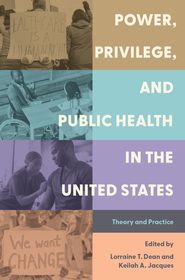
Power, Privilege, and Public Health in the United States
Theory and Practice
-
10% KEDVEZMÉNY?
- A kedvezmény csak az 'Értesítés a kedvenc témákról' hírlevelünk címzettjeinek rendeléseire érvényes.
- Kiadói listaár GBP 25.99
-
11 734 Ft (11 175 Ft + 5% áfa)
Az ár azért becsült, mert a rendelés pillanatában nem lehet pontosan tudni, hogy a beérkezéskor milyen lesz a forint árfolyama az adott termék eredeti devizájához képest. Ha a forint romlana, kissé többet, ha javulna, kissé kevesebbet kell majd fizetnie.
- Kedvezmény(ek) 10% (cc. 1 173 Ft off)
- Kedvezményes ár 10 560 Ft (10 058 Ft + 5% áfa)
Iratkozzon fel most és részesüljön kedvezőbb árainkból!
Feliratkozom
11 734 Ft

Beszerezhetőség
Becsült beszerzési idő: A Prosperónál jelenleg nincsen raktáron, de a kiadónál igen. Beszerzés kb. 3-5 hét..
A Prosperónál jelenleg nincsen raktáron.
Why don't you give exact delivery time?
A beszerzés időigényét az eddigi tapasztalatokra alapozva adjuk meg. Azért becsült, mert a terméket külföldről hozzuk be, így a kiadó kiszolgálásának pillanatnyi gyorsaságától is függ. A megadottnál gyorsabb és lassabb szállítás is elképzelhető, de mindent megteszünk, hogy Ön a lehető leghamarabb jusson hozzá a termékhez.
A termék adatai:
- Kiadó OUP USA
- Megjelenés dátuma 2025. május 23.
- ISBN 9780197760925
- Kötéstípus Puhakötés
- Terjedelem232 oldal
- Méret 234x157x16 mm
- Súly 277 g
- Nyelv angol
- Illusztrációk 8 figures 598
Kategóriák
Rövid leírás:
This first-of-its-kind textbook brings together academic and public health practice experts to discuss how power and privilege shows up in public health and medicine practice, teaching, and research. It covers theories for understanding anti-oppression, practical guidance on teaching these topics to health and medicine students, and successful classroom activities and examples.
TöbbHosszú leírás:
How can we teach health professionals, who are among the most privileged in American society, to best serve those who are the least privileged in American society? Power, Privilege, and Public Health in the United States discusses the ways in which power and privilege along intersectional axes of race, gender, sexual orientation, ability, and other characteristics show up in public health and medicine practice, teaching, and research. It provides foundational knowledge on theories in power and privilege as well as examples of the ways in which the health and medical fields have been complicit in creating health inequities and maintaining oppressive structures that can be used to understand health distribution, differences, and disparities. To enact change, the contributors to this text enrich their chapters with practical guidance for developing anti-oppression competencies as well as experiential activities to examine how our own power and privilege influence the design, implementation, and interpretation of health studies and public health practice.
In drawing attention to the actors and institutions that have led to inequitable health outcomes, Power, Privilege, and Public Health in the United States does more than simply highlight the problems that plague health in the US; it equips teachers and learners with the tools to enact change, straight from leading experts in academia and public health practice.
Tartalomjegyzék:
List of Figures and Tables
Preface
List of Contributors
Introduction
Power: A Foundational Look
Examining the Coin of Privilege in Health and Healthcare
Health Equity Frameworks for Structural and Behavioral Change
Guiding Principles for Conducting Research with a Health Equity Lens
Privilege and Intersectionality Frameworks in Public Health
Race Theories, Antiracism, and Applications for Health
Why Racial Capitalism and Scientific Racism Threaten Promoting Antiracism and Health Equity in Public Health
Orienting Public Health Pedagogy: Using Anti-oppression Tools for Teaching Privilege and Health
Developing a Social Justice-Informed Curriculum for Public Health and Medicine
Historical and Contemporary Examples of Power, Privilege, and Public Health for Classroom Teaching
Inclusive Classroom and Evaluation Activities: Deconstructing Privilege while Building Coalitions
Index

