

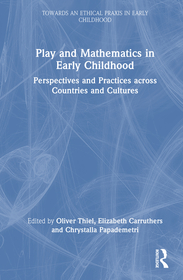
Play and Mathematics in Early Childhood
Perspectives and Practices across Countries and Cultures
Sorozatcím: Towards an Ethical Praxis in Early Childhood;
-
20% KEDVEZMÉNY?
- A kedvezmény csak az 'Értesítés a kedvenc témákról' hírlevelünk címzettjeinek rendeléseire érvényes.
- Kiadói listaár GBP 155.00
-
69 982 Ft (66 650 Ft + 5% áfa)
Az ár azért becsült, mert a rendelés pillanatában nem lehet pontosan tudni, hogy a beérkezéskor milyen lesz a forint árfolyama az adott termék eredeti devizájához képest. Ha a forint romlana, kissé többet, ha javulna, kissé kevesebbet kell majd fizetnie.
- Kedvezmény(ek) 20% (cc. 13 996 Ft off)
- Kedvezményes ár 55 986 Ft (53 320 Ft + 5% áfa)
- A kedvezmény érvényes eddig: 2026. június 30.
Iratkozzon fel most és részesüljön kedvezőbb árainkból!
Feliratkozom
62 984 Ft

Beszerezhetőség
Még nem jelent meg, de rendelhető. A megjelenéstől számított néhány héten belül megérkezik.
Why don't you give exact delivery time?
A beszerzés időigényét az eddigi tapasztalatokra alapozva adjuk meg. Azért becsült, mert a terméket külföldről hozzuk be, így a kiadó kiszolgálásának pillanatnyi gyorsaságától is függ. A megadottnál gyorsabb és lassabb szállítás is elképzelhető, de mindent megteszünk, hogy Ön a lehető leghamarabb jusson hozzá a termékhez.
A termék adatai:
- Kiadás sorszáma 1
- Kiadó Routledge
- Megjelenés dátuma 2026. július 3.
- ISBN 9781041238379
- Kötéstípus Keménykötés
- Terjedelem298 oldal
- Méret 234x156 mm
- Nyelv angol
- Illusztrációk 48 Illustrations, black & white; 48 Halftones, black & white; 26 Tables, black & white 700
Kategóriák
Rövid leírás:
This innovative book examines the intersection between play and mathematics in early childhood education, challenging traditional approaches. Through international perspectives and practices, it demonstrates how mathematical concepts naturally emerge through children's play and how educators can enhance mathematical learning.
Több
Hosszú leírás:
This innovative book examines the dynamic intersection between play and mathematics in early childhood education, challenging traditional educational approaches. Through international perspectives and practices, it demonstrates how mathematical concepts naturally emerge through children's play and how educators can enhance mathematical learning without disrupting the play experience.
Comprising 11 chapters with diverse cultural and educational perspectives, the book explores how children engage with mathematical concepts through play across different countries and contexts. It addresses critical issues for early childhood education and care practitioners, examining similarities and distinctions between mathematics and play while providing practical approaches for integrating mathematics into play for various age groups. The comparative international approach highlights both the universality of play in learning and unique cultural methods for facilitating mathematical understanding. Original research showcases how children's mathematical thinking surfaces in various play scenarios and offers pedagogical practices that support both play and mathematical development without compromising the integrity of either.
This essential resource serves early childhood educators, researchers, students, and policymakers committed to enhancing mathematics education quality and effectiveness. It provides practical guidance for promoting more equitable and engaging approaches to mathematical learning in the early years.
TöbbTartalomjegyzék:
FOREWORD
INTRODUCTION
1. Setting the stage for mathematics and play in early childhood education
Elizabeth Carruthers and Oliver Thiel
Introduction
Play
Mathematics
Play and mathematics
Praxeology
Structure of the book
References
PART I
CHILDREN’S PLAY
2. Reframing children’s mathematics in play: Perspectives from England and Greece
Maria Papandreou and Elizabeth Carruthers
Introduction
Theoretical background
The two case studies
Reframing children’s mathematics in play
Conclusion
Reflective questions
References
3. Children’s first-time exploration of a coding toy with teachers: supporting mathematical experiences
Francesca Granone, Elin Reikerås, and Maire Tuul
Introduction
Method
Results
Discussion
Reflective questions
References
4. ‘It will probably be good’: Emergent stochastics in children’s outdoor play
Zoi Nikiforidou, Oliver Thiel, and Lucía Casal-de-la-Fuente
Introduction
Play
Previous research
Theoretical framework
Methods
Participants
Quantitative findings
Qualitative findings
Discussion
Conclusion
Acknowledgements
Reflective questions
References
5. Mathematical play outdoors in the UK and the USA: Measurement, sorting, topology, pendulum, and meaningful mathematical practice arising from contextual events
Mandy Andrews and LeaAnn Christenson
Introduction
The contexts
Theoretical framework
Methods
The vignettes
Discussion and implications for practice
Concluding comments
Reflective questions
References
6. Play, blocks, and mathematics: Unveiling deep learning opportunities in early childhood
Chrystalla Papademetri, Annerieke Boland, Ronald Keijzer, and Andrea Eliadou
Introduction
Theoretical framework
Examples of practice
Discussion: Emerging themes
Reflective questions
References
PART II
PRACTITIONER’S REFLECTIONS
7. Mathematical learning during pretend play: A comparative study in Catalonia and Norway
Judith Fábrega, Mequè Edo, and Annette Furnes
Introduction
Research question
Theoretical framework
The Norwegian and Spanish curricula
Methods and materials
Results
Comparative analysis of the two datasets
Discussion
Conclusions
Reflective questions
References
8. Exploring how focus group discussions can support ECEC practitioners’ awareness of mathematical content in children’s play: Voices from Italy and Sweden
Benita Berg, Ester Catucci, and Laura Leonardi
Introduction
Aim and research question
Method
Result
Discussion
Reflective questions
References
9. Practitioner perspectives on mathematics in children’s play
Catherine Gripton, Anne Hjønnevåg Nakken, Beate Nergård, and Camilla Normann Justnes
Introduction
Mathematics and play
Researching mathematics in play
Findings
Discussion
Conclusion
Reflective questions
References
10. ‘Play’ and ‘Mathematics’ as concepts in preservice ECEC teachers’ reflections
Elena Severina, Chrystalla Papademetri, Magni Hope Lossius, and Marianna Efstathiadou
Introduction
Theoretical background
Methodology
Findings
Discussion
Reflective questions
References
CONCLUSION
11. Play and mathematics in early childhood education: Synthesising insights and paving the way forward
Chrystalla Papademetri
Introduction
Discussion: Insights for practitioners, teacher educators, and researchers
Bringing it together: Key insights for practice and research
Concluding reflections and the contribution of this book
References
APPENDIX
The early childhood education and care (ECEC) systems across the countries included in this book
Catalonia
Judith FábregaEngland
Catherine GriptonEstonia
Maire TuulGalicia
Lucía Casal-de-la-FuenteGreece
Zoi Nikiforidou and Maria PapandreouItaly
Laura Leonardi and Ester CatucciMaryland, USA
LeaAnn ChristensonThe Netherlands
Annerieke Boland, Ronald Keijzer, and Bert van OersNorway
Elin ReikeråsSweden
Benita Berg and Ester CatucciOverview of the ECEC systems in the countries included in the book
Oliver ThielReferences
Index
Több
