

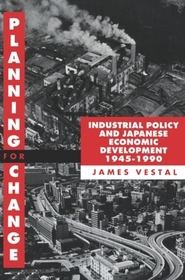
Planning for Change
Industrial Policy and Japanese Economic Development 1945-1990
-
10% KEDVEZMÉNY?
- A kedvezmény csak az 'Értesítés a kedvenc témákról' hírlevelünk címzettjeinek rendeléseire érvényes.
- Kiadói listaár GBP 26.49
-
12 655 Ft (12 052 Ft + 5% áfa)
Az ár azért becsült, mert a rendelés pillanatában nem lehet pontosan tudni, hogy a beérkezéskor milyen lesz a forint árfolyama az adott termék eredeti devizájához képest. Ha a forint romlana, kissé többet, ha javulna, kissé kevesebbet kell majd fizetnie.
- Kedvezmény(ek) 10% (cc. 1 266 Ft off)
- Kedvezményes ár 11 389 Ft (10 847 Ft + 5% áfa)
Iratkozzon fel most és részesüljön kedvezőbb árainkból!
Feliratkozom
12 655 Ft

Beszerezhetőség
Megrendelésre a kiadó utánnyomja a könyvet. Rendelhető, de a szokásosnál kicsit lassabban érkezik meg.
Why don't you give exact delivery time?
A beszerzés időigényét az eddigi tapasztalatokra alapozva adjuk meg. Azért becsült, mert a terméket külföldről hozzuk be, így a kiadó kiszolgálásának pillanatnyi gyorsaságától is függ. A megadottnál gyorsabb és lassabb szállítás is elképzelhető, de mindent megteszünk, hogy Ön a lehető leghamarabb jusson hozzá a termékhez.
A termék adatai:
- Kiadó OUP Oxford
- Megjelenés dátuma 1995. október 26.
- ISBN 9780198290278
- Kötéstípus Puhakötés
- Terjedelem256 oldal
- Méret 234x156x15 mm
- Súly 442 g
- Nyelv angol
- Illusztrációk line figures, tables 0
Kategóriák
Rövid leírás:
This book evaluates the role that government industrial policy, through agencies such as MITI, has played in Japan's extraordinary post-war development. It shows that a stable, gradual, and long-term perspective was the key to Japan's development, rather than `picking winners'. The author believes that Japan's experience has relevance to the challenges facing the transitional economies. He also points out the way that in recent years - when so much attention in the West has turned to Japan - that industrial policy has actually shrunk there.
TöbbHosszú leírás:
What has been the role of government industrial policy in Japan's extraordinary post-war development? How has the role changed in successive phases of growth? What "lessons" can be learnt from this experience by other nations, be they in the West, or developing countries or economies in transition attempting to introduce competitive market structures? These are some of the main questions addressed in this absorbing and thorough study.
Dividing the period into three main phases, the author shows that policy played a crucial role in the initial period of post-war recovery. It did so not by "picking winners" but by creating a stable base from which development could occur by spreading the cost of introducing market competition over time.
In the succeeding high growth period, and more recently, Japan's industrial policy attempts only to promote the development of new technology, and smoothe the decline of sectors that are no longer globally competitive. That Japan itself no longer practices industrial policy on a wide scale is an irony little appreciated by those advocating the adoption of a "Japan-style" industrial policy elswhere.
extensively researched book ... Japan's industrial policy has been debated with too much passion and too little data, and this book is a conscientious effort to rectify the situation

