

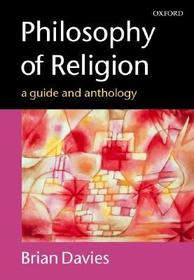
Philosophy of Religion
A Guide and Anthology
-
10% KEDVEZMÉNY?
- A kedvezmény csak az 'Értesítés a kedvenc témákról' hírlevelünk címzettjeinek rendeléseire érvényes.
- Kiadói listaár GBP 46.99
-
21 215 Ft (20 205 Ft + 5% áfa)
Az ár azért becsült, mert a rendelés pillanatában nem lehet pontosan tudni, hogy a beérkezéskor milyen lesz a forint árfolyama az adott termék eredeti devizájához képest. Ha a forint romlana, kissé többet, ha javulna, kissé kevesebbet kell majd fizetnie.
- Kedvezmény(ek) 10% (cc. 2 122 Ft off)
- Kedvezményes ár 19 094 Ft (18 185 Ft + 5% áfa)
Iratkozzon fel most és részesüljön kedvezőbb árainkból!
Feliratkozom
21 215 Ft

Beszerezhetőség
Megrendelésre a kiadó utánnyomja a könyvet. Rendelhető, de a szokásosnál kicsit lassabban érkezik meg.
Why don't you give exact delivery time?
A beszerzés időigényét az eddigi tapasztalatokra alapozva adjuk meg. Azért becsült, mert a terméket külföldről hozzuk be, így a kiadó kiszolgálásának pillanatnyi gyorsaságától is függ. A megadottnál gyorsabb és lassabb szállítás is elképzelhető, de mindent megteszünk, hogy Ön a lehető leghamarabb jusson hozzá a termékhez.
A termék adatai:
- Kiadó OUP Oxford
- Megjelenés dátuma 2000. július 27.
- ISBN 9780198751946
- Kötéstípus Puhakötés
- Terjedelem784 oldal
- Méret 246x172x39 mm
- Súly 1343 g
- Nyelv angol
- Illusztrációk 1 line drawing 0
Kategóriák
Rövid leírás:
Philosophy of Religion: A Guide and Anthology provides a comprehensive, authoritative, and accessible overview of the philosophy of religion. Under the careful editorship of Brian Davies, the book contains a selection of the best classical and contemporary writings on the philosophy of religion together with substantial commentary, introductory material, discussion questions, and detailed guides to further reading. The editorial material sets the extracts in context and guides the reader through them. Taken as a whole, the book offers the ideal, self-contained introduction to the questions which have most preoccupied Western philosophers when thinking about religion. The selection is both very comprehensive and very generous. 65 sizeable extracts map out the full range of topics most commonly encountered in courses on the philosophy of religion. Part I looks at the relation between philosophy and religious belief; Parts II-IV consider the existence and nature of God; Part V addresses the 'problem of evil'; and Parts VI and VII are devoted to the relationship between morality and religion and to the question of life after death.
TöbbHosszú leírás:
Philosophy of Religion: A Guide and Anthology provides a comprehensive, authoritative, and accessible overview of the philosophy of religion. Under the careful editorship of Brian Davies, the book contains a selection of the best classical and contemporary writings on the philosophy of religion together with substantial commentary, introductory material, discussion questions, and detailed guides to further reading. The editorial material sets the extracts in context and guides the reader through them. Taken as a whole, the book offers the ideal, self-contained introduction to the questions which have most preoccupied Western philosophers when thinking about religion. The selection is both very comprehensive and very generous. 65 sizeable extracts map out the full range of topics most commonly encountered in courses on the philosophy of religion. Part I looks at the relation between philosophy and religious belief; Parts II-IV consider the existence and nature of God; Part V addresses the 'problem of evil'; and Parts VI and VII are devoted to the relationship between morality and religion and to the question of life after death.
"Comprehensive, representative, good guidance and advice", Dr Andrew Dawson, Chester College
Tartalomjegyzék:
Preface
General Introduction
Advice on Reading
PART I. PHILOSOPHY AND RELIGIOUS BELIEF
Introduction
Faith and Reason in Harmony
The Ethics of Belief
The Presumption of Atheism
Religious Belief as 'Properly Basic'
Evidence and Religious Belief
Grammar and Religious Belief
The Groundlessness of Religious Belief
Questions for Discussion
Advice on Further Reading
PART II. THE PROBLEM OF GOD-TALK
Introduction
How Believers Find God-Talk Puzzling
God-Talk is Evidently Nonsense
God-Talk is Not Evidently Nonsense
'Death by a Thousand Qualifications'
One Way of Understanding God-Talk
Questions for Discussion
Advice on Reading
PART III. ARGUMENTS FOR GOD'S EXISTENCE
Introduction
Advice on Reading
Cosmological Arguments
Introduction
A Concise Cosmological Argument from the Eleventh Century
A Thirteenth Century Cosmological Argument
A Fourteenth-Century Cosmological Argument
A Seventeenth-Century Cosmological Argument
A Modern Cosmological Argument
Objections to Cosmological Arguments
More Objections to Cosmological Arguments
Why is a Cause Always Necessary?
'Whatever Has a Beginning of Existence Must Have a Cause'
Can there be an Endless Regress of Causes?
Questions for Discussion
Advice on Further Reading
IntroductionIs the world ruled by Providence?An especially famous design argumentWe cannot know that the world is designed by GodThe limits of the design argumentsGod, regularity, and David HumeCan design arguments be defended today?Questions for DiscussionAdvice on Further Reading Ontological Arguments
Introduction
Anselm Argues That God Cannot Be Thought Not To Exist
Gaunilo Argues that Anselm is Wrong
Anselm Replies to Gaunilo
Descartes Defends An Ontological Argument
Descartes Replies to Critics
A Classic Repudiation of Ontological Arguments
A Contemporary Defence of Ontological Arguments
Questions for Discussion
Advice on Reading
God and Human Experience
Introduction
Why 'Knowing God by Experience' is a Notion Open to Question
Can We Know God by Experience?
Why Should There Not Be Experience of God?
Questions for Discussion
Advice on Reading
PART IV. WHAT IS GOD?
Introduction
Advice on Further Reading
Omnipotent
Introduction
A Modern Discussion of Divine Omnipotence
Why Think of God as Omnipotent?
Miracles and Laws of Nature
Why We Should Disbelieve in Miracles
Questions for Discussion
Advice on Reading
Knowing
Introduction
Why Ascribe Knowledge to God?
Omniscience and Human Freedom: a Classic Discussion
Problems for the Notion of Divine Omniscience
Questions for Discussion
Advice on Further Reading
Eternal
Introduction
Why Call God 'Eternal'?
God is 'Everlasting', not 'Eternal'
A Modern Defence of Divine Eternity
Questions for Discussion
Advice on Reading
Simple
Introduction
A Classic Defence of Divine Simplicity
Problems with Divine Simplicity
A Modern Defence of Divine Simplicity
Questions for Discussion
Advice on Further Reading
Part V. THE PROBLEM OF EVIL
Introduction
Evil Shows that there is no God
What is Evil?
Evil Does Not Show That There Is No God
God, Evil, and Divine Responsibility
God and Human Freedom
Questions for Discussion
Advice on Reading
Part VI. MORALITY AND RELIGION
Introduction
God as a 'Postulate' of Sound Moral Thinking
Why Morality Implies the Existence of God
Moral Thinking as Awareness of God
Morality does not Imply the Existence of God
Questions for Discussion
Advice on Further Reading
Part VII. PEOPLE AND LIFE AFTER DEATH
Introduction
Philosophy and Life After Death: The Questions and the Options
Life After Death: An Ancient Greek View
Belief in Life After Death Comes from Emotion, not Reason
What Must be True of Me If I Survive My Death?
Questions for Discussion
Advice on Further Reading
Index

