

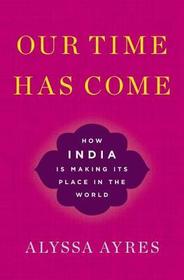
Our Time Has Come
How India is Making Its Place in the World
-
10% KEDVEZMÉNY?
- A kedvezmény csak az 'Értesítés a kedvenc témákról' hírlevelünk címzettjeinek rendeléseire érvényes.
- Kiadói listaár GBP 24.49
-
11 700 Ft (11 142 Ft + 5% áfa)
Az ár azért becsült, mert a rendelés pillanatában nem lehet pontosan tudni, hogy a beérkezéskor milyen lesz a forint árfolyama az adott termék eredeti devizájához képest. Ha a forint romlana, kissé többet, ha javulna, kissé kevesebbet kell majd fizetnie.
- Kedvezmény(ek) 10% (cc. 1 170 Ft off)
- Kedvezményes ár 10 529 Ft (10 028 Ft + 5% áfa)
Iratkozzon fel most és részesüljön kedvezőbb árainkból!
Feliratkozom
11 700 Ft

Beszerezhetőség
Megrendelésre a kiadó utánnyomja a könyvet. Rendelhető, de a szokásosnál kicsit lassabban érkezik meg.
Why don't you give exact delivery time?
A beszerzés időigényét az eddigi tapasztalatokra alapozva adjuk meg. Azért becsült, mert a terméket külföldről hozzuk be, így a kiadó kiszolgálásának pillanatnyi gyorsaságától is függ. A megadottnál gyorsabb és lassabb szállítás is elképzelhető, de mindent megteszünk, hogy Ön a lehető leghamarabb jusson hozzá a termékhez.
A termék adatai:
- Kiadó OUP USA
- Megjelenés dátuma 2018. március 22.
- ISBN 9780190494520
- Kötéstípus Keménykötés
- Terjedelem358 oldal
- Méret 239x157x33 mm
- Súly 590 g
- Nyelv angol 0
Kategóriák
Rövid leírás:
Long plagued by poverty, India's recent economic growth has vaulted it into the ranks of the world's emerging powers-but what kind of power it wants to be remains a mystery. Cautious Superpower explains why India behaves the way it does, and the role it is likely to play globally as its prominence grows.
TöbbHosszú leírás:
Over the last 25 years, India's explosive economic growth has vaulted it into the ranks of the world's emerging major powers. Long plagued by endemic poverty, until the 1990s the Indian economy was also hamstrung by a burdensome regulatory regime that limited its ability to compete on a global scale. Since then, however, the Indian government has gradually opened up the economy and the results have been stunning. India's middle class has grown by leaps and bounds, and the country's sheer scale-its huge population and $2 trillion economy-means its actions will have a major global impact. From world trade to climate change to democratization, India now matters.
While it is clearly on the path to becoming a great power, India has not abandoned all of its past policies: its economy remains relatively protectionist, and it still struggles with the legacy of its longstanding foreign policy doctrine of non-alignment. India's vibrant democracy encompasses a vast array of parties who champion dizzyingly disparate policies. And India isn't easily swayed by foreign influence; the country carefully guards its autonomy, in part because of its colonial past. For all of these reasons, India tends to move cautiously and deliberately in the international sphere.
In Our Time Has Come Alyssa Ayres looks at how the tension between India's inward-focused past and its ongoing integration into the global economy will shape its trajectory. Today, Indian leaders increasingly want to see their country feature in the ranks of the world's great powers-in fact, as a "leading power," to use the words of Prime Minister Narendra Modi. Ayres considers the role India is likely to play as its prominence grows, taking stock of the implications and opportunities for the US and other nations as the world's largest democracy defines its place in the world. As she shows, India breaks the mold of the typical "ally," and its vastness, history, and diversity render it incomparable to any other major democratic power. By focusing on how India's unique perspective shapes its approach to global affairs, Our Time Has Come will help the world make sense of India's rise.
A highly readable, acute and thoughtful book.
Tartalomjegyzék:
PART ONE: LOOKING BACK
Prologue
Chapter 1: Introduction
Chapter 2: India and the World
Chapter 3: Opening to the World
PART TWO: TRANSITION
Chapter 4: Seeking India's Rightful Place
Chapter 5: A Cautious Power
PART THREE: LOOKING AHEAD
Chapter 6: India's Changing Global Role
Chapter 7: A Changing Economic Future?
Chapter 8: How the United States Should Work with a Rising India
Epilogue
Bibliographic Note
Bibliography

