

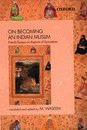
On Becoming an Indian Muslim
French Essays on Aspects of Syncretism
-
10% KEDVEZMÉNY?
- A kedvezmény csak az 'Értesítés a kedvenc témákról' hírlevelünk címzettjeinek rendeléseire érvényes.
- Kiadói listaár GBP 25.00
-
11 287 Ft (10 750 Ft + 5% áfa)
Az ár azért becsült, mert a rendelés pillanatában nem lehet pontosan tudni, hogy a beérkezéskor milyen lesz a forint árfolyama az adott termék eredeti devizájához képest. Ha a forint romlana, kissé többet, ha javulna, kissé kevesebbet kell majd fizetnie.
- Kedvezmény(ek) 10% (cc. 1 129 Ft off)
- Kedvezményes ár 10 159 Ft (9 675 Ft + 5% áfa)
Iratkozzon fel most és részesüljön kedvezőbb árainkból!
Feliratkozom
11 287 Ft

Beszerezhetőség
A kiadónál véglegesen elfogyott, nem rendelhető. Érdemes újra keresni a címmel, hátha van újabb kiadás.
Why don't you give exact delivery time?
A beszerzés időigényét az eddigi tapasztalatokra alapozva adjuk meg. Azért becsült, mert a terméket külföldről hozzuk be, így a kiadó kiszolgálásának pillanatnyi gyorsaságától is függ. A megadottnál gyorsabb és lassabb szállítás is elképzelhető, de mindent megteszünk, hogy Ön a lehető leghamarabb jusson hozzá a termékhez.
A termék adatai:
- Kiadó Oxford University Press
- Megjelenés dátuma 2003. április 3.
- ISBN 9780195658071
- Kötéstípus Keménykötés
- Terjedelem370 oldal
- Méret 215x140x23 mm
- Súly 581 g
- Nyelv angol 0
Kategóriák
Rövid leírás:
On Becoming an Indian Muslim is a collection of 14 essays translated from French on the various aspects of Indian Muslims, including their interactions with the Hindu world. They show an interesting yet little known 'regard' and sensitivity of the 20th Century scholarly community towards Islam in India
TöbbHosszú leírás:
This selection of fifteen essays by modern French intellectuals in translation is a sequel to Garcin de Tassy's Muslim Festivals in India (first published in the 1830s) and translated by M. Waseem (OUP, 1995). The focus of this collection is religious syncretism: how at the popular level, when Islam first came to India, may un-Islamic elements derived from Hinduism (some even at variance with Islam's normative and canonical aspects) came to be accepted as part of the
practice of Islam on the subcontinent. Relying on literary and other texts as well as field studies, well-known French scholars -such as Louis Massignon, Jules Bloch, Jean Filliozat, Charlotte Vaudeville, Francoise Mallison, Denis Matringe, Marc Gaborieau, and Dominique-Sila Khan among others - trace the various
ways in which Islam found popular support at the grass-roots level in India. The essays focus on the significant contributions of the Indian mystic Kabir, Sufism, Dara Shikoh, Jayasi, Pir Shams, Waris Shah, Ghazi Miyan, 'Ramdeo' Pir, the Bhartrhari Jogis of Gorakhpur and Mahatama Gandhi. The concluding essay is by the translator himself and focuses on the followers of the Agha Khan, otherwise known as the Ismaili Khojas. M. Waseem's translation of all the essays is clear and precise, and his
substantive Introduction outlines the gradual amalgamation of different religious elements during the spread of Islam as described by these French intellectuals.
Tartalomjegyzék:
Introduction
Hinduism and Islamic Mysticism
HAUD AL HAYAT: The Arabic Version of Amratkund
Medieval Indian Mystics: Kabir
An Experiment in Hindu Muslim Unity: Dara Shikoh
Dara Shikoh's Intervie with Baba La'l Das at Lahore
Dara Shikoh's Samundrasangam
The Spiritual Significance of Gandhi's Last Pilgrimmage
The Concept of Divine Love in Jayasi: virah and ishq
Pir Shams and his garabi Song
Waris Shah
The Ghazi Miyan Cult in Western Nepal and Northern India
The Isma'ili Origin of the Hindu Cult of 'Ramdeo'Pir
The Muslim Bhartrhari Jogis of Gorakhpur
Towards a Sociology of Indian Muslims
Conclusion: A Note on the Isma'ili Khojas

