

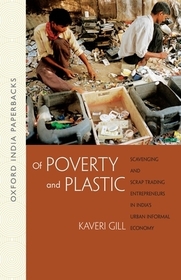
Of Poverty and Plastic
Scavenging and Scrap Trading Entrepreneurs in India's Urban Informal Economy
-
10% KEDVEZMÉNY?
- A kedvezmény csak az 'Értesítés a kedvenc témákról' hírlevelünk címzettjeinek rendeléseire érvényes.
- Kiadói listaár GBP 7.99
-
3 607 Ft (3 435 Ft + 5% áfa)
Az ár azért becsült, mert a rendelés pillanatában nem lehet pontosan tudni, hogy a beérkezéskor milyen lesz a forint árfolyama az adott termék eredeti devizájához képest. Ha a forint romlana, kissé többet, ha javulna, kissé kevesebbet kell majd fizetnie.
- Kedvezmény(ek) 10% (cc. 361 Ft off)
- Kedvezményes ár 3 246 Ft (3 092 Ft + 5% áfa)
Iratkozzon fel most és részesüljön kedvezőbb árainkból!
Feliratkozom
3 607 Ft

Beszerezhetőség
Bizonytalan a beszerezhetőség. Érdemes még egyszer keresni szerzővel és címmel. Ha nem talál másik, kapható kiadást, forduljon ügyfélszolgálatunkhoz!
Why don't you give exact delivery time?
A beszerzés időigényét az eddigi tapasztalatokra alapozva adjuk meg. Azért becsült, mert a terméket külföldről hozzuk be, így a kiadó kiszolgálásának pillanatnyi gyorsaságától is függ. A megadottnál gyorsabb és lassabb szállítás is elképzelhető, de mindent megteszünk, hogy Ön a lehető leghamarabb jusson hozzá a termékhez.
A termék adatai:
- Kiadó OUP India
- Megjelenés dátuma 2012. október 18.
- ISBN 9780198085508
- Kötéstípus Puhakötés
- Terjedelem308 oldal
- Méret 215x141x17 mm
- Súly 306 g
- Nyelv angol
- Illusztrációk 6 b/w photographs, 1 map 0
Kategóriák
Rövid leírás:
This book documents and analyses the various facets of labouring lives at different levels of the value chain in the waste scavenging and plastic recycling sector. It links the economic, social, and political factors that structure the well-being, agency, and activities of actors operating in this informal economy.
TöbbHosszú leírás:
This volume applies the interdisciplinary 'field economics' approach to poverty analysis. The work is based on extensive fieldwork in the pre-urban edge of the sprawling metropolis of Delhi It assesses the economic, social, and political institutions and processes that structure the well-being, agency, and activities of the poor who are waste scavengers and involved with plastic recycling.
Using a mix of survey and ethnographic data, it tells the complete story of how the waste picker at the lowest level of the chain fares in comparison to other kinds of occupational groups engaged in different parts of the scavenging and recycling chain, as well as in other parts of the informal economy. It focuses on the following themes: how occupational choices are dictated by low caste status; how these groups negotiate and surmount market failures and state failures to create a viable
informal economy supporting numerous livelihoods and businesses; and how these groups gain or lose from patronage links at the level of the state government and national political parties.
Tartalomjegyzék:
List of Photographs
List of Tables
Figures, and Boxes
Foreword
Acknowledgements
List of Abbreviations
Introduction
The City of Delhi
Waste as Informal Sector Work: Measuring Income Poverty, Inequality, and Deprivation
Interlinked Contracts and Social Power: Patronage and Exploitation in the Waste Recovery Market
Exploitation or Entrepreneurship? Scrap Traders and the Economics of Survival in the Informal Economy
From Pigs and Pollution to Plastics and Progress: Recasting Low Caste Status through an Informal Market
'Bourgeois Environmentalism', the State, the Judiciary, and the Urban Poor: The Political Mobilization of a Scheduled Caste Market;
Conclusion
Appendix
Plastics
Bibliography
Index

