

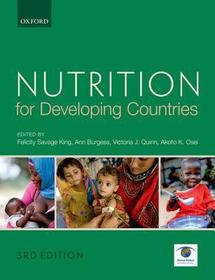
Nutrition for Developing Countries
-
10% KEDVEZMÉNY?
- A kedvezmény csak az 'Értesítés a kedvenc témákról' hírlevelünk címzettjeinek rendeléseire érvényes.
- Kiadói listaár GBP 66.00
-
29 799 Ft (28 380 Ft + 5% áfa)
Az ár azért becsült, mert a rendelés pillanatában nem lehet pontosan tudni, hogy a beérkezéskor milyen lesz a forint árfolyama az adott termék eredeti devizájához képest. Ha a forint romlana, kissé többet, ha javulna, kissé kevesebbet kell majd fizetnie.
- Kedvezmény(ek) 10% (cc. 2 980 Ft off)
- Kedvezményes ár 26 819 Ft (25 542 Ft + 5% áfa)
Iratkozzon fel most és részesüljön kedvezőbb árainkból!
Feliratkozom
29 799 Ft

Beszerezhetőség
Megrendelésre a kiadó utánnyomja a könyvet. Rendelhető, de a szokásosnál kicsit lassabban érkezik meg.
Why don't you give exact delivery time?
A beszerzés időigényét az eddigi tapasztalatokra alapozva adjuk meg. Azért becsült, mert a terméket külföldről hozzuk be, így a kiadó kiszolgálásának pillanatnyi gyorsaságától is függ. A megadottnál gyorsabb és lassabb szállítás is elképzelhető, de mindent megteszünk, hogy Ön a lehető leghamarabb jusson hozzá a termékhez.
A termék adatai:
- Kiadás sorszáma 3
- Kiadó OUP Oxford
- Megjelenés dátuma 2015. október 15.
- ISBN 9780199685226
- Kötéstípus Puhakötés
- Terjedelem400 oldal
- Méret 246x193x21 mm
- Súly 775 g
- Nyelv angol 0
Kategóriák
Rövid leírás:
Is fully revised and updated edition addresses both long standing problems of undernutrition and malnutrition, and the growing epidemic of overnutrition and obesity in clear simple language, and practical detail.
TöbbHosszú leírás:
Nutrition is an essential component of the work of all health and community workers, including those involved in humanitarian assistance, and yet it is often neglected in their basic training. Drawn from the experiences of an international editor team with extensive field experience, Nutrition for Developing Countries brings together the essential basics of nutrition in an easily accessible form which is accurate, up-to-date and practical, and suitable for a wide range of readers at different levels. The book covers the whole life cycle, including pregnancy, breastfeeding, complementary feeding, older children, adolescents, adults and the elderly, with an emphasis on the most vulnerable women and children.
The fully revised and updated edition addresses both the long standing problems of undernutrition and malnutrition, and the growing epidemic of overnutrition and obesity, which are responsible for the rapid increase in non-communicable diseases of later life. Generously illustrated, Nutrition for Developing Countries explains in clear simple language, and practical detail, how nutrition workers can help families with nutrition problems, including many ideas for exercises for training nutrition workers.
This book is a very good resource for training purposes especially to those new to the field of nutrition and also serves as a refresher for those already in the field.
Tartalomjegyzék:
Let's get started
Nutrients and how the body uses them
Macronutrients, water and energy
Micronutrients
Foods, food groups and food paths
Processing and fortifying foods
Keeping food safe and clean
Buying food
Feeding the household
Breastfeeding
Feeding from age six months to five years
Good nutrition for school-age children, adolescents and adults
Feeding sick people, especially children
Understanding malnutrition
Using body measurements to assess nutrition
Malnutrition in young children
Severe acute malnutrition
Malnutrition in adolescent girls and women
Malnutrition in school-age children, adolescent boys, men and old people
Vitamin A deficiency
Iron deficiency and anaemia
Iodine, zinc and other micronutrient deficiencies
Obesity and other nutrition-related non-communicable diseases
Diabetes - overview and nutritional management
Overview of community nutrition actions
Improving household food security
Improving community nutrition, care and health
Working with communities and households
Helping people learn about nutrition
Nutrition in schools
Training for nutrition
Appendix 1. Recommended energy and nutrient intakes
Appendix 2 Food composition tables
Appendix 3. Sources of selected nutrients
Appendix 4. Basic anthropometric information
Appendix 5. Keeping up-to-date
Appendix 6: Key actions to prevent the double burden of malnutrition

