

-
10% KEDVEZMÉNY?
- A kedvezmény csak az 'Értesítés a kedvenc témákról' hírlevelünk címzettjeinek rendeléseire érvényes.
- Kiadói listaár GBP 7.99
-
3 817 Ft (3 635 Ft + 5% áfa)
Az ár azért becsült, mert a rendelés pillanatában nem lehet pontosan tudni, hogy a beérkezéskor milyen lesz a forint árfolyama az adott termék eredeti devizájához képest. Ha a forint romlana, kissé többet, ha javulna, kissé kevesebbet kell majd fizetnie.
- Kedvezmény(ek) 10% (cc. 382 Ft off)
- Kedvezményes ár 3 435 Ft (3 272 Ft + 5% áfa)
Iratkozzon fel most és részesüljön kedvezőbb árainkból!
Feliratkozom
3 817 Ft

Beszerezhetőség
A kiadónál véglegesen elfogyott, nem rendelhető. Érdemes újra keresni a címmel, hátha van újabb kiadás.
Why don't you give exact delivery time?
A beszerzés időigényét az eddigi tapasztalatokra alapozva adjuk meg. Azért becsült, mert a terméket külföldről hozzuk be, így a kiadó kiszolgálásának pillanatnyi gyorsaságától is függ. A megadottnál gyorsabb és lassabb szállítás is elképzelhető, de mindent megteszünk, hogy Ön a lehető leghamarabb jusson hozzá a termékhez.
A termék adatai:
- Kiadó OUP Oxford
- Megjelenés dátuma 2004. július 8.
- ISBN 9780192803474
- Kötéstípus Puhakötés
- Terjedelem176 oldal
- Méret 175x112x10 mm
- Súly 145 g
- Nyelv angol
- Illusztrációk numerous halftones 0
Kategóriák
Rövid leírás:
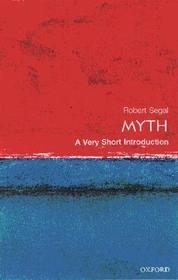
This book is not about myths, but about approaches to myth, from all of the major disciplines, including science, religion, philosophy, literature, and psychology. A survey of the past 300 years of theorizing on myth, this book takes into account the work of such prominent thinkers as Albert Camus, Claude Lévi-Strauss, Roland Barthes, C. G. Jung, and Sigmund Freud. Segal also considers the future study of myth, and the possible function of myth in the
world as the adult equivalent of play.
Hosszú leírás:
This book is not about myths, but about approaches to myth, from all of the major disciplines, including science, religion, philosophy, literature, and psychology. The fate of the preternaturally beautiful Adonis is one of the main fables upon which Segal focuses, in an attempt to analyse the various different theories of myth. Where the theory does not work, he substitutes another myth, showing that, for all their claims to all-inclusiveness, certain theories, in
fact, only apply to specific kinds of myths. A uniform set of questions is provided, to elucidate both the strengths and the weaknesses of the conjectures.
A survey of the past 300 years of theorizing on myth, this book takes into account the work of such prominent thinkers as Albert Camus, Claude Lévi-Strauss, Roland Barthes, C. G. Jung, and Sigmund Freud. Finally, Segal considers the future study of myth, and the possible function of myth in the world as the adult equivalent of play.
ABOUT THE SERIES: The Very Short Introductions series from Oxford University Press contains hundreds of titles in almost every subject area. These pocket-sized books are the perfect way to get ahead in a new subject quickly. Our expert authors combine facts, analysis, perspective, new ideas, and enthusiasm to make interesting and challenging topics highly readable.
The book provides a clear and insightful introduction to all the central theorists of myth...Robert Segal achieves a great deal in this short 150 page introduction to myth. It is a concise without being simplistic; intricate without being confusing; playful without being contrite - a must have on any student's (or indeed teacher's!) bookcase.
Tartalomjegyzék:
Introduction
Myth and Science
Myth and Religion
Myth and Philosophy
Myth and Literature
Myth and Society
Myth and Structure
Myth and the Mind
Conclusion

