

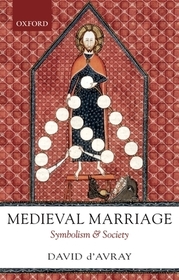
Medieval Marriage
Symbolism and Society
-
10% KEDVEZMÉNY?
- A kedvezmény csak az 'Értesítés a kedvenc témákról' hírlevelünk címzettjeinek rendeléseire érvényes.
- Kiadói listaár GBP 60.00
-
27 090 Ft (25 800 Ft + 5% áfa)
Az ár azért becsült, mert a rendelés pillanatában nem lehet pontosan tudni, hogy a beérkezéskor milyen lesz a forint árfolyama az adott termék eredeti devizájához képest. Ha a forint romlana, kissé többet, ha javulna, kissé kevesebbet kell majd fizetnie.
- Kedvezmény(ek) 10% (kb. 2 709 Ft)
- Kedvezményes ár 24 381 Ft (23 220 Ft + 5% áfa)
Iratkozzon fel most és részesüljön kedvezőbb árainkból!
Feliratkozom
27 090 Ft

Beszerezhetőség
Megrendelésre a kiadó utánnyomja a könyvet. Rendelhető, de a szokásosnál kicsit lassabban érkezik meg.
Why don't you give exact delivery time?
A beszerzés időigényét az eddigi tapasztalatokra alapozva adjuk meg. Azért becsült, mert a terméket külföldről hozzuk be, így a kiadó kiszolgálásának pillanatnyi gyorsaságától is függ. A megadottnál gyorsabb és lassabb szállítás is elképzelhető, de mindent megteszünk, hogy Ön a lehető leghamarabb jusson hozzá a termékhez.
A termék adatai:
- Kiadó OUP Oxford
- Megjelenés dátuma 2007. december 20.
- ISBN 9780199239788
- Kötéstípus Puhakötés
- Terjedelem336 oldal
- Méret 212x138x21 mm
- Súly 426 g
- Nyelv angol 0
Kategóriák
Rövid leírás:
Medieval Marriage shows how marriage symbolism emerged from the world of texts to become a social force affecting ordinary people. Building on d'Avray's Medieval Marriage Sermons, it broadens the scope of the argument and works from a wide range of manuscript sources of different genres.
TöbbHosszú leírás:
This study shows how marriage symbolism emerged from the world of texts to become a social force affecting ordinary people. It covers the whole medieval period but identifies the decades around 1200 as decisive. New arguments for regarding preaching as a mass medium from the thirteenth century are presented, building on the author's Medieval Marriage Sermons. In marriage preaching symbolism was central. Marriage symbolism also became a social force through law, and lay behind the combination of monogamy and indissolubility which made the medieval Church's marriage system a unique development in world history. Symbolism is not presented as an explanation on its own: it interacted with other causal factors, notably the eleventh-century Gregorian Reform's drive for celibacy, which made the higher clergy like a third gender and less sympathetic to patriarchal polygamous tendencies. Sexual intercourse as a symbol of Christ's union with the Church became central, not just in mysticism but in society as structured by Church law. Symbolism also explains apparently bizarre rules, such as the exemption from capital punishment of clerics in minor orders provided that they married a virgin not a widow. The rules about blessing second marriages are also connected with this nexus of thought.
The book is based on a wide range of manuscript sources: sermons, canon law commentaries, Apostolic Penitentiary registers, papal bulls, a gaol delivery roll, and pastoral handbooks. The collection of documents at the end of the book expands the source base for the history of medieval marriage generally as well as underpinning the thesis about symbolism.
Review from previous edition [d'Avray's] arguments on specific points are entirely convincing. He knows this material better than anyone, and he has taken care to set it out so that the reader can evaluate the argument. The appendix of documents, eighty pages of newly edited material from sermons, canon law quaestiones, letters and court cases is very valuable ... Anyone with a serious interest in medieval marriage, or medieval sermon studies, or indeed the transmission of knowledge in the Middle Ages, will need to read it.
Tartalomjegyzék:
Introduction
Mass Communication
Indissolubility
Bigamy
Consummation
Conclusion
Bibliography
Index

